








ABA Therapy Medicaid Coverage
Table of Contents
ABA Therapy Medicaid Coverage for Families in Missouri and Illinois
Understanding aba therapy medicaid coverage is vital for families in Missouri and Illinois. Because Medicaid is a joint federal-state program, rules for securing aba therapy covered by medicaid differ between the two states. As the Centers for Medicare & Medicaid Services outlines, the EPSDT benefit often requires states to cover medically necessary services for children under 21, including ABA therapy. At Heart Core ABA, we accept Medicaid in both states and help families verify coverage. Many families ask: Does Medicaid cover ABA therapy? We provide personalized guidance.
Since each state sets its own specifics–age limits, diagnostic requirements, and prior authorization–navigating the process can be confusing. That’s why we handle aba therapy medicaid assistance as part of your Personalized therapy plan, ensuring care that comes straight from the heart. Whether you’re exploring whether medicaid covers aba therapy, we’re here to support you. Once coverage is understood, the next step is enrollment. Verify insurance coverage and that prior authorization may be required.
Costs of ABA Therapy Under Medicaid
For many families, navigating the costs of ABA therapy can feel overwhelming. If you’re wondering whether aba therapy covered by insurance extends to Medicaid plans, we break down the details below. Understanding your state’s aba therapy medicaid coverage is the first step toward securing affordable, consistent support for your child. At Heart Core ABA, we provide care that comes straight from the heart, helping you make sense of what’s covered and how to plan ahead. Our goal is to take the guesswork out of Medicaid benefits so you can focus on what matters most.
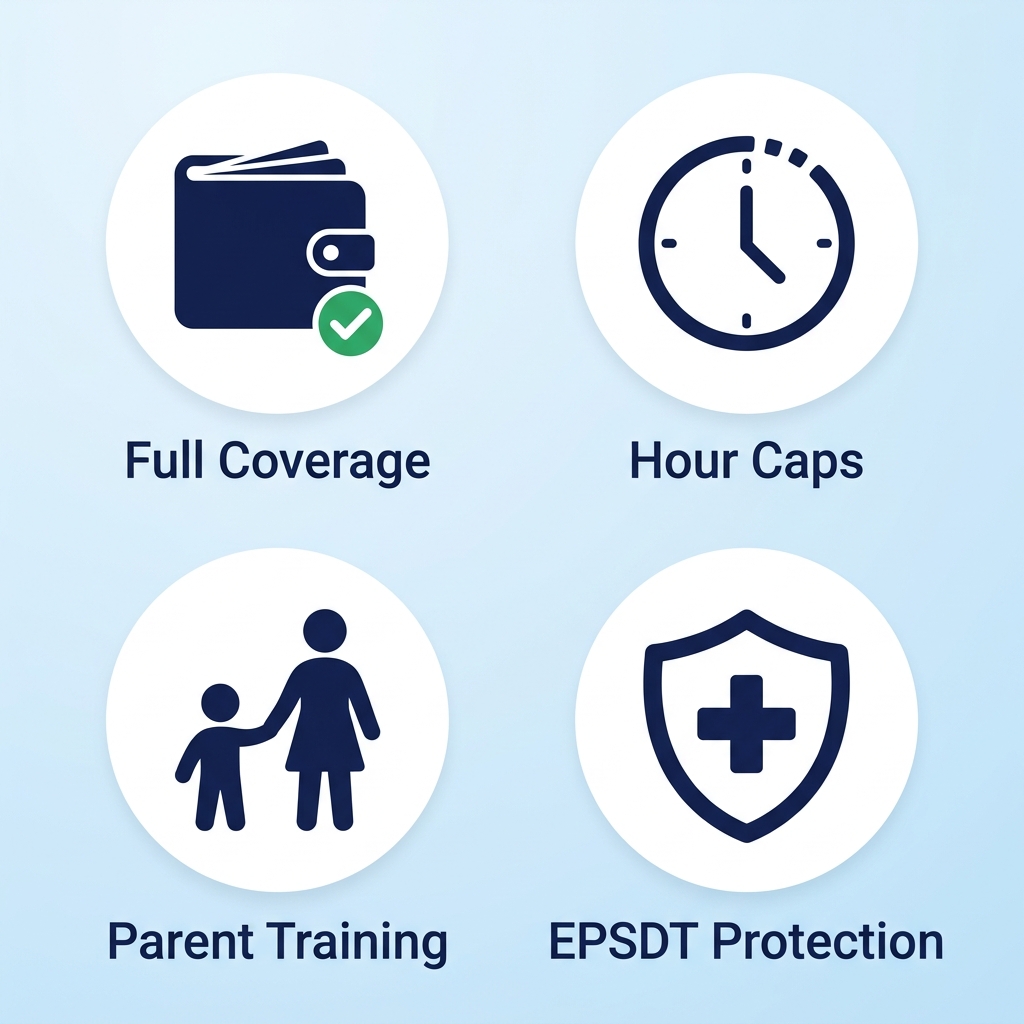
Medicaid ABA Therapy Cost Coverage Under EPSDT
Does Medicaid provide full coverage for ABA therapy, or are there out-of-pocket costs?
So, does Medicaid cover ABA therapy completely? In most cases, the answer is yes. Federal rules require state Medicaid programs to cover medically necessary treatments for eligible children with no monthly premium. However, some states may impose small copays or cost-sharing amounts. We encourage you to reach out–our team can help verify your specific plan details and clarify any potential out-of-pocket expenses so there are no surprises. That way you can focus on real progress, real connection for your child.
Are there annual hour caps for ABA therapy sessions covered by Medicaid?
Many families ask about limits: even when aba therapy covered by medicaid, annual hour caps often apply. While some states set generous limits, others cap sessions between 500 and 1,500 hours per year. Because intensive ABA often requires 25-40 hours weekly, a cap may impact therapy intensity. We help you navigate these boundaries–by working with your insurer and crafting a Personalized therapy plan that maximizes available hours. Our experience across Missouri and nearby communities means we understand how to make the most of your benefits.
Does Medicaid cover parent training and caregiver coaching alongside direct ABA therapy?
Parent training and caregiver coaching are almost always covered when they are part of a comprehensive treatment plan. This is a vital part of aba therapy medicaid benefits that helps extend progress beyond sessions. By learning strategies at home, you become an active partner in your child’s development. We incorporate parent coaching into every plan, giving you tools to reinforce skills daily. This approach builds real-world momentum and turns therapy into a family-centered journey–because care that sticks happens when the whole family grows together.
How does the EPSDT benefit protect my child’s access to ABA therapy?
The Early and Periodic Screening, Diagnostic and Treatment (EPSDT) benefit is a powerful safeguard for aba therapy medicaid coverage, ensuring that children under 21 receive all medically necessary services. According to the Centers for Medicare & Medicaid Services (CMS), this federal mandate prevents states from denying coverage for essential treatments like ABA. If your child’s therapy hours are reduced or denied, you can appeal by citing EPSDT protections. We help families understand these rights and support you through the process, so you never have to advocate alone.
Keep in mind that results may vary and this information is not a substitute for professional medical advice. Consult a healthcare professional for diagnosis and treatment, and verify insurance coverage and that prior authorization may be required. Understanding the costs is just the first step–next we’ll walk you through how to get started.
The Process of Getting Medicaid to Cover ABA Therapy
Getting aba therapy medicaid coverage may feel overwhelming, but we’re here to walk you through every step. At Heart Core ABA, we help families in Missouri and Illinois gather the right documents, understand the EPSDT benefit, and submit a complete request. Remember to verify insurance coverage and that prior authorization may be required.
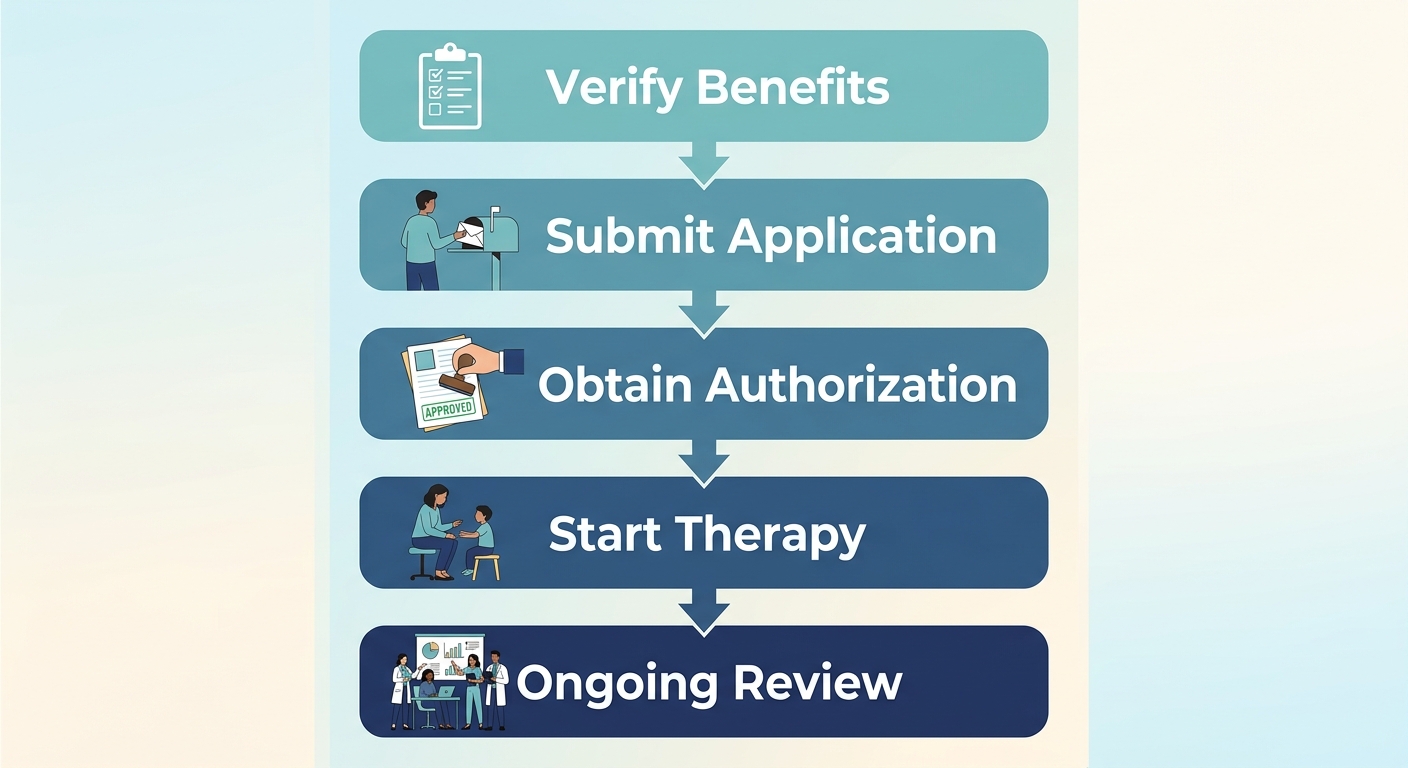
Five-step vertical process to secure Medicaid coverage for ABA therapy
With the right preparation, the process becomes manageable. Let’s walk through exactly what you’ll need.
What specific documents are required to initiate ABA therapy coverage under Medicaid?
To start the application, you’ll need a formal autism diagnosis from a licensed professional, a physician’s prescription or referral for ABA therapy, a BCBA assessment report detailing recommended hours and goals, an individualized treatment plan with measurable objectives, and proof of medical necessity–often a letter from the diagnosing clinician. Gather these documents early, as they form the foundation of your request.
In addition, make sure your child’s Medicaid eligibility is up to date and that your chosen ABA provider is enrolled as a Medicaid provider. Heart Core ABA can help verify both. After submitting your paperwork, approval typically takes 30-60 days, though expedited review may be possible for urgent cases.
Does Medicaid cover ABA therapy for children with autism in both Missouri and Illinois?
Many families ask, does Medicaid cover ABA therapy? Under the federal EPSDT benefit, children under 21 in both Missouri and Illinois are entitled to medically necessary ABA services. This requirement ensures that if ABA is prescribed for a qualifying autism diagnosis, Medicaid must cover it. Although each state administers the benefit slightly differently, coverage is robust in both.
The ABA therapy Medicaid application process may vary a bit by state, but the core steps remain the same. Heart Core ABA helps families confirm that they’re working with an enrolled Medicaid provider and that all state-specific forms are completed correctly. Once you understand the EPSDT guarantee, you can move forward with confidence.
What steps should I take if my initial request for Medicaid-covered ABA therapy is denied?
If your request for ABA therapy covered by Medicaid is denied, don’t lose hope. You have the right to request a fair hearing–typically within 30-90 days, depending on your state. Before the hearing, gather additional documentation, such as a more detailed letter of medical necessity from your clinician or updated assessments. Our patient advocates at Heart Core ABA can help you prepare a stronger resubmission and guide you through the appeals process.
Acting promptly is key. With the right support, many denials are overturned. Once your coverage is in place, you can focus on starting therapy–we’ll guide you through that next.
Prior Authorization and Medical Necessity Documents
Once eligibility is confirmed, the next step is obtaining prior authorization — a standard procedure under Medicaid programs. Many families wondering does medicaid cover aba therapy find that understanding the submission process is key to a smooth experience. According to Medicaid.gov, prior authorization requirements apply to many covered services, including Applied Behavior Analysis.
How does the process of prior authorization work for Medicaid-covered ABA services?
Prior authorization for ABA therapy typically involves submitting an assessment report, a detailed treatment plan, and the child’s diagnosis documents to the state Medicaid plan. Each state manages its own timeline, but approval generally takes between two and six weeks, though individual cases can vary. Schedules depend on state workload, completeness of the paperwork, and specific plan criteria.
We handle the full submission on behalf of families, helping ensure their aba therapy covered by medicaid journey goes smoothly. Our team coordinates directly with the insurer, gathers all clinical documentation, and tracks the request from submission through decision. This hand-on support lets you focus on your child while we manage the administrative steps behind the scenes.
Is ABA therapy considered a medically necessary treatment under Medicaid programs?
Yes, ABA therapy is widely recognized as medically necessary for children with autism when prescribed by a qualified professional — typically a licensed physician or a Board Certified Behavior Analyst. Medicaid programs across the country accept that evidence-based behavioral intervention is a critical component of autism care. As the federal framework outlines, medical necessity determinations rest on individual patient need and state-defined criteria.
To establish medical necessity, plans require thorough documentation, including a formal autism diagnosis, a comprehensive functional behavior assessment, and individualized treatment goals that form a Personalized therapy plan. For families pursuing aba therapy medicaid support, we compile these records and present a clear clinical rationale. Hands-on ABA therapy for children who learn differently is built on exactly this kind of careful documentation, showing why the service is essential for your child’s development. After prior authorization is approved, your child can begin receiving ABA therapy. We coordinate the entire process — from authorization to scheduling — so you can move forward with confidence.
Timelines for Medicaid Approval and Age Limits
What is the typical approval timeline for starting ABA therapy through Medicaid?
When families begin exploring aba therapy medicaid coverage in Missouri, the typical approval timeline is 2-6 weeks from the submission of a complete application. Delays often arise from missing diagnostic documentation, pending prior authorization from the state, or incomplete initial assessments. Starting early with Heart Core ABA can make a difference–our team helps gather the necessary paperwork, coordinates with providers, and submits everything accurately to avoid unnecessary hold-ups. For a comprehensive look at what private insurance may cover, see does insurance cover aba therapy. Keep in mind that results may vary and approval is not guaranteed; timelines depend on state Medicaid processing.
What are the age limits for accessing ABA therapy services under Medicaid?
According to Medicaid.gov, the EPSDT benefit ensures that aba therapy is covered by medicaid for children from birth up to age 21. In Missouri, many young adults also qualify for continued aba therapy medicaid support through age 26 when treatment is medically necessary. Parents often ask: does medicaid cover aba therapy for adults? The answer depends on state policies. After turning 21, benefits may shift to an adult plan with different requirements. Heart Core ABA can help your family navigate the transition and determine what your state’s plan offers. We recommend always verifying coverage with your state’s Medicaid office. Please note: results may vary, and consult a healthcare professional for diagnosis and treatment. Always verify insurance coverage and that prior authorization may be required.
Coverage Guarantees and Ongoing Service Support
Can my child receive ABA therapy in school-based settings if funded by Medicaid?
Many parents ask, does medicaid cover aba therapy in school-based settings? The answer is that aba therapy medicaid coverage can include services delivered at school when they are medically necessary and educationally relevant, according to Medicaid.gov. The federal program allows ABA therapy under Medicaid to be funded as part of a child’s IEP or 504 plan if the therapy supports the child’s learning goals. However, this coverage is not automatic. Families must verify that their specific plan includes these benefits, and we work closely with you to navigate the requirements. Coverage for ABA therapy through Medicaid in schools depends on coordination between providers and school districts, and we help clarify what your plan offers.
How can I verify if Heart Core ABA is currently in-network with my specific Medicaid plan?
To see if your plan includes school-based coverage, you can check directly with us. We are in-network with several Medicaid plans in Missouri and Illinois, but not every plan covers these services, so we verify on a case-by-case basis. If you’re exploring aba therapy springfield, we can confirm your specific benefits. Call us at 417-888-5704 or complete our online insurance verification form. We verify aba therapy medicaid eligibility, walk through whether your aba therapy covered by medicaid includes school settings, and assist with prior authorization if needed. Our approach blends Real progress, real connection with care that comes straight from the heart, so you have transparent support every step of the way. verify insurance coverage and that prior authorization may be required.
Still Have Questions? Heart Core ABA Is Here to Help
Still wondering about ABA therapy Medicaid coverage? At Heart Core ABA, we know navigating Medicaid can feel overwhelming. Our team offers personalized assistance with insurance verification and will help you understand your ABA therapy Medicaid options. We’ll help you verify your eligibility and benefits through official Medicaid resources. If you are asking, ‘does Medicaid cover ABA therapy,’ we’re here to provide clear, friendly guidance. Our personalized therapy plans and compassionate BCBA-led teams ensure real progress, real connection for your child. We’re ready to support your family every step of the way. Reach out today–our care comes straight from the heart. Contact us to learn more. Verify insurance coverage and that prior authorization may be required.
Resources













 At-Home
ABA Therapy
At-Home
ABA Therapy Best
ABA Therapists
Best
ABA Therapists BCBAs
Near Me
BCBAs
Near Me RBTs
Near Me
RBTs
Near Me