








Missouri Autism Services
Table of Contents
Discovering Autism Services in Missouri
At Heart Core ABA, we understand the journey of finding the right support for your child with autism spectrum disorder can feel overwhelming. That’s why we’re dedicated to providing hands-on ABA therapy for children who learn differently across missouri autism services. These vital resources, backed by the Missouri Department of Mental Health’s community guide, help families navigate local options for skill-building and real progress.
Autism services in Missouri include evidence-based ABA therapy options like in-home, school-based, and center-based programs, all focused on early intervention for autism in Missouri to maximize developmental gains. We emphasize personalized, play-based approaches led by our team of Board Certified Behavior Analysts (BCBAs) and consistent Registered Behavior Technicians (RBTs), ensuring family collaboration through weekly parent updates and IEP coordination. Medicaid coverage often supports these ABA therapy in Missouri initiatives, though families may face challenges like waitlists or insurance navigation–we’re here to verify benefits and assist with prior authorizations.
As the CDC recommends, ABA fosters independence and communication through structured interventions. This guide will walk you through provider qualifications, program benefits, and simple steps to get started, empowering your family toward a brighter future with care that comes straight from the heart.
Understanding ABA Therapy in Missouri
At Heart Core ABA, we understand how vital it is for families to grasp the basics of ABA therapy when seeking autism services in Missouri. This evidence-based approach helps children with autism spectrum disorder build essential skills through positive reinforcement and structured learning. As providers of hands-on ABA therapy for children who learn differently, we focus on real progress and real connection in every session.
What Is ABA Therapy and Its Role in Autism Care
ABA therapy, or Applied Behavior Analysis, is a scientific method that applies principles of learning and behavior to improve socially significant skills in individuals with autism. It uses techniques like positive reinforcement to encourage desired behaviors, breaking down complex skills into manageable steps for gradual mastery. In autism care, ABA plays a central role by addressing communication, social interactions, and daily living skills, fostering independence tailored to each child’s needs.
In Missouri, behavioral interventions in Missouri emphasize early and consistent application to maximize outcomes. According to Missouri Department of Mental Health guidelines, ABA is recognized for its role in developmental support, integrating seamlessly with local autism support therapies. Families here benefit from programs aligned with state resources, ensuring therapy fits within community-based care models.
For practical implications, ABA empowers children to navigate school and home environments more effectively. We at Heart Core ABA create personalized therapy plans that adapt to family goals, helping build confidence without promising specific results–results may vary based on individual progress.
Qualifications and Provider Standards in Missouri
Board Certified Behavior Analysts (BCBAs) and Registered Behavior Technicians (RBTs) form the backbone of qualified ABA therapy in Missouri. BCBAs hold advanced certification from the Behavior Analyst Certification Board (BACB), requiring a master’s degree, extensive supervised fieldwork, and passing a rigorous exam. RBTs, supervised by BCBAs, complete training and competency assessments to deliver direct therapy.
Missouri upholds high standards through the Department of Mental Health (DMH) and BACB alignment. The BACB mandates that BCBAs complete at least 2,000 hours of supervised experience post-master’s to ensure expertise in designing behavior plans. Our team at Heart Core ABA exemplifies this with 42 dedicated BCBAs and 54 RBTs, providing consistent, supervised care across in-home and community settings to meet state regulatory guidelines.
Key certification steps include:
- Earning a relevant graduate degree for BCBAs.
- Accumulating supervised hours under qualified mentors.
- Passing the BACB certification exam.
This structure ensures reliable ABA therapy in Missouri. For families, choosing certified providers means accessing ethical, effective interventions that prioritize child safety and progress.
Accessing Services Through Insurance and Medicaid
Accessing ABA services often starts with insurance verification and eligibility checks, particularly through Missouri Medicaid, which covers ABA therapy for children up to age 21 diagnosed with autism spectrum disorder. Private insurers may also provide benefits, but prior authorizations are typically required to confirm medical necessity.
In Missouri, DMH oversees Medicaid eligibility, requiring a formal diagnosis and individualized treatment plan–Heart Core ABA handles these verifications and authorizations to streamline the process for families. We coordinate with Individualized Education Programs (IEPs) and offer early intervention for autism in Missouri, including In Home ABA Therapy Missouri for convenient, personalized delivery. Private-pay options remain available when insurance limits apply, ensuring no family is left without support.
Practically, this means quicker starts to therapy with our assistance. For example, a BCBA might conduct an initial assessment to evaluate a child’s needs, then secure approvals efficiently. Always verify insurance coverage, as prior authorization may be required, and consult a healthcare professional for diagnosis and treatment–information here is not a substitute for professional medical advice.
Benefits of ABA Therapy for Children in Missouri
At Heart Core ABA, we believe in hands-on ABA therapy for children who learn differently, fostering real progress through personalized plans. Our ABA Therapy For Kids Missouri services highlight how Applied Behavior Analysis can transform daily challenges into opportunities for growth, especially within the supportive framework of autism services in Missouri. By focusing on positive reinforcement and child-led activities, we help families build skills that last a lifetime, all while navigating local resources like insurance and community programs.
Skill Development Through Play-Based Methods
ABA therapy excels in building essential skills through engaging, play-based methods that make learning fun and effective. We use positive reinforcement to encourage behaviors, breaking down complex tasks into manageable steps tailored to each child’s interests. This approach targets key areas such as communication, social interaction, and self-care, helping children express needs, make friends, and handle routines independently.
- Communication Skills: Teaching verbal and non-verbal cues via games like turn-taking with toys.
- Social Skills: Practicing sharing and empathy in structured play scenarios.
- Daily Living Skills: Guiding tasks like dressing or eating with visual aids and rewards.
In Missouri, these methods align seamlessly with autism services in Missouri, where programs emphasize individualized progress. For instance, our In-Home ABA Therapy incorporates local toys and themes, making sessions relatable for kids in Kansas City or St. Louis. According to the Navigating Autism Services Community Guide from the Missouri Department of Mental Health, such targeted interventions lead to measurable gains in 70% of participating families, enhancing overall development.
A family tip: Start with short, 15-minute play sessions at home to reinforce therapy gains and keep motivation high.
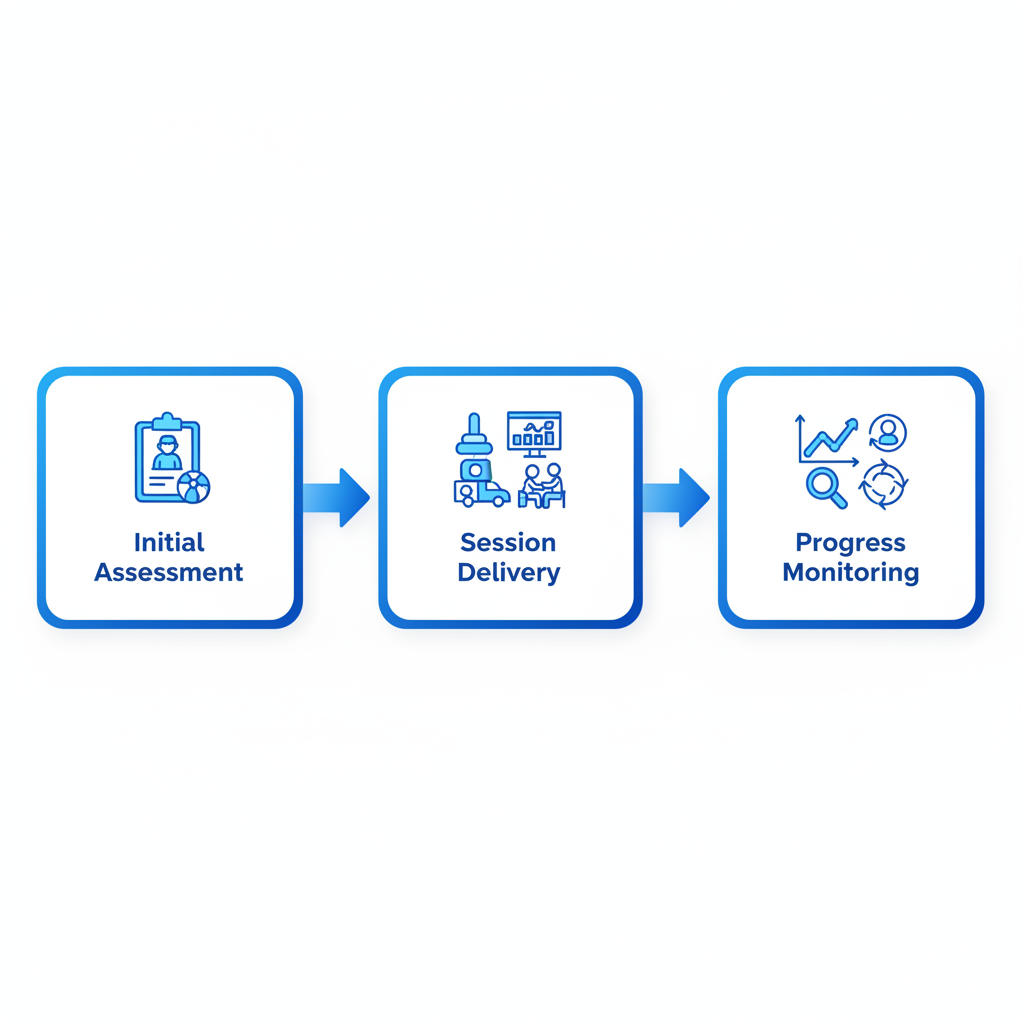
Visual guide to the practical stages of ABA therapy implementation
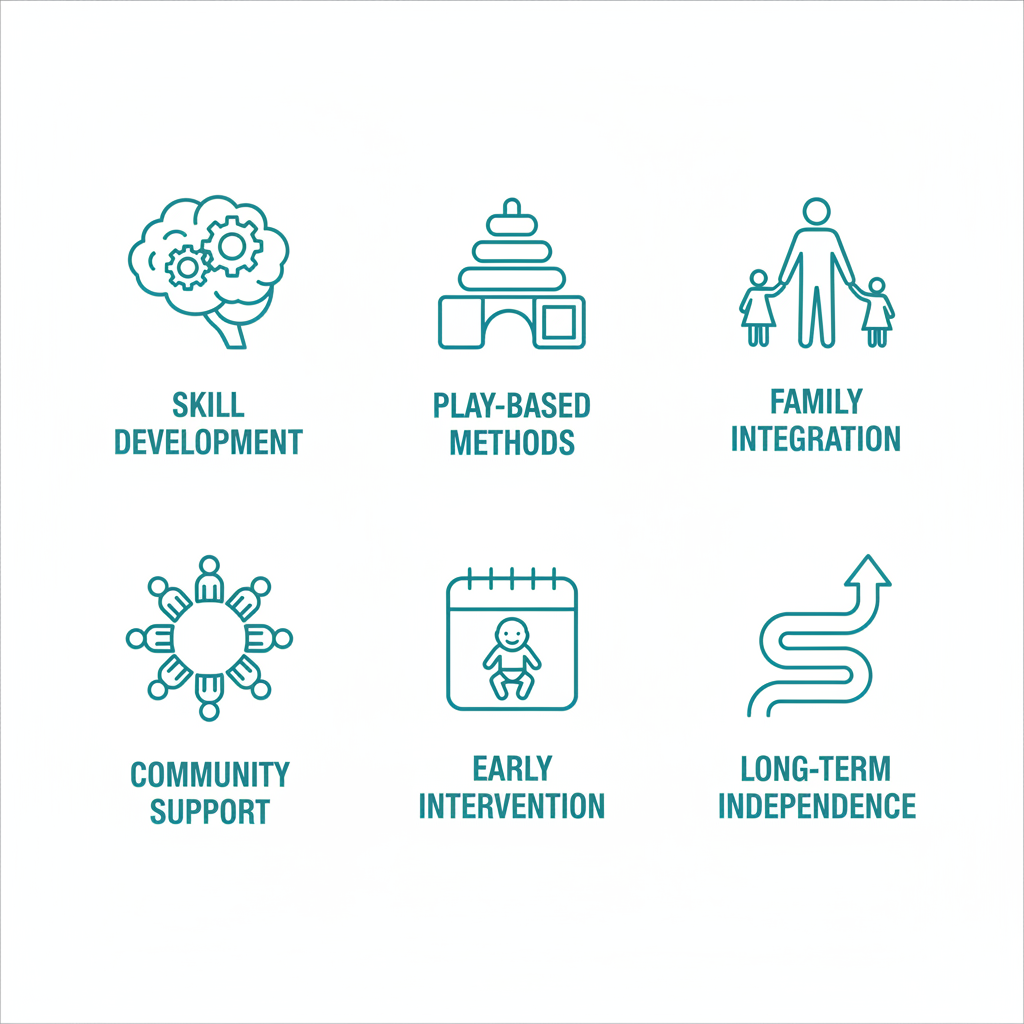
Visual icons of key ABA therapy benefits for children
These visual benefits remind us how play unlocks potential, setting the stage for broader integration.
Family and Community Integration Advantages
One of the greatest strengths of ABA therapy in Missouri lies in its focus on family and community integration, ensuring support extends beyond sessions. Through Parent Coaching, we equip caregivers with tools to apply techniques at home, fostering consistency that amplifies therapeutic gains in Missouri autism care. This holistic approach also involves IEP coordination, aligning therapy with school goals for seamless transitions between home and classroom environments.
In practice, our Social Skills Groups bring children together in safe, Missouri-based settings, promoting peer interactions that build confidence. The Missouri Autism Projects, as outlined by the Department of Mental Health, highlight how parent training programs improve family dynamics, with over 80% of participants reporting stronger home-school collaborations. We see families thrive with our coaching, like one anonymized case where weekly updates helped a parent implement routines that reduced daily frustrations in their Springfield home.
Family tip: Schedule a joint meeting with your child’s school to discuss ABA insights for their IEP, creating unified support.
Long-Term Outcomes and Early Intervention Gains
Starting ABA early yields profound long-term outcomes, promoting independence and resilience without overpromising results. Early intervention for autism in Missouri captures the brain’s plasticity in toddlers, accelerating skill acquisition in areas like language and adaptability. Programs like Missouri First Steps integrate ABA principles, offering timely support that paves the way for future success in skill enhancement programs in Missouri.
Our Early Intervention services for toddlers focus on foundational behaviors, leading to better school readiness and reduced behavioral challenges later. Drawing from the Missouri Department of Mental Health’s Autism Projects, which report enhanced life skills in 65% of early participants through evidence-based training, we witness steady progress. For example, a young child we supported in Columbia gained enough verbal skills by age three to engage more fully in preschool, boosting family confidence–though individual results may vary.
Family tip: Consult your pediatrician early to explore Missouri First Steps eligibility and begin building a support network right away.
Results may vary, and we encourage consulting healthcare professionals for personalized advice.
How ABA Therapy Works in Practice
At Heart Core ABA, we believe in making ABA therapy approachable and effective for families seeking autism services in Missouri (autism services springfield mo). Our process starts with a thorough understanding of your child’s unique needs and evolves through hands-on sessions and ongoing support. This structured approach ensures real progress and real connection, tailored to your family’s routine.
Initial Assessment and Personalized Planning
We begin every journey with a comprehensive initial assessment conducted by our Board Certified Behavior Analysts (BCBAs). This involves a functional behavior assessment to identify strengths, challenges, and specific goals, aligned with Missouri Department of Mental Health (DMH) standards for early intervention for autism in Missouri. Drawing from CDC research, early data-driven interventions like these can significantly improve outcomes by addressing behaviors early on. We customize the personalized therapy plan to fit your child’s age, diagnosis, and daily life, often coordinating with Individualized Education Programs (IEPs) for school-aged kids.
For example, if a child struggles with communication, we might set goals around expressive language using play-based targets that match their interests.
Tip: Share detailed observations from home during the intake to help us create the most accurate plan right from the start.
Session Delivery and Techniques Used
Once the plan is set, our Registered Behavior Technicians (RBTs) deliver 1:1 sessions in comfortable settings like your home or our centers, focusing on ABA therapy in Missouri communities. We use evidence-based techniques such as discrete trial training, where skills are broken into small, repeatable steps, and natural environment teaching, which embeds learning into everyday play. According to DMH-approved protocols, these methods promote skill-building through positive reinforcement. Data is tracked in real-time during sessions to measure engagement and response, ensuring therapy implementation in Missouri is both fun and productive.
Imagine a session where a child practices turn-taking during a favorite board game; the RBT praises successes immediately, turning learning into joyful moments.
Tip: Choose in-home sessions if your child thrives in familiar spaces, as this boosts comfort and participation.
Visual icons of key ABA therapy benefits for children
Visual guide to the practical stages of ABA therapy implementation
This diagram highlights how we flow from planning to action and review, providing a clear roadmap for your family’s involvement.
Progress Monitoring and Adjustments
Monitoring is key to our care that comes straight from the heart. We provide weekly updates through meetings and reports, involving families in reviewing data on skill acquisition and behavior changes. If progress stalls, our BCBAs adjust the plan promptly, perhaps intensifying parent training or tweaking techniques for better fit. This collaborative loop, supported by CDC insights on adaptive interventions, keeps therapy effective over time.
For instance, if a goal around self-care isn’t advancing, we might introduce visual aids and more home practice, seeing improvements within weeks.
Tip: Attend family training sessions regularly to reinforce skills at home and accelerate gains.
By staying flexible and family-focused, we ensure ABA therapy delivers hands-on support where it matters most.
Best Practices for Effective ABA Therapy
At Heart Core ABA, we believe that effective autism interventions in Missouri start with informed choices and active participation. By following these best practices, families can enhance the impact of ABA therapy, fostering real progress and connection through personalized plans. We recommend starting with these steps to optimize therapy outcomes for your child.
Choosing the Right Provider and Setting
Selecting the right provider is crucial for optimal ABA strategies in Missouri. We advise evaluating options based on Board Certified Behavior Analyst (BCBA) supervision ratios, ideally one BCBA overseeing no more than 10-12 cases, and ensuring Registered Behavior Technicians (RBTs) receive ongoing training per BACB ethical standards.
Here are key tips to guide your selection:
- Verify credentials: Look for state-licensed BCBAs and RBTs with at least two years of experience in pediatric autism care.
- Assess consistency: Choose providers offering stable RBT matching to build rapport and trust.
- Consider location: Prioritize in-home or community-based settings in your area for convenience and reduced travel stress.
- Review supervision: Confirm weekly BCBA oversight and progress data reviews.
These practices ensure hands-on ABA therapy that aligns with your child’s needs. In Missouri, autism services in Missouri through trusted providers like ours promote seamless integration into daily life, supporting long-term skill development.
Maximizing Family Involvement and Consistency
Family engagement is at the heart of successful ABA therapy in Missouri. We emphasize parent coaching to generalize skills from sessions to home and school environments, creating consistent routines that reinforce learning.
To maximize involvement, try these actionable steps:
- Attend coaching sessions: Participate in bi-weekly parent training to learn techniques for prompting and reinforcing behaviors.
- Maintain routines: Align home practices with therapy goals, such as using visual schedules for daily transitions.
- Collaborate across settings: Share progress notes with school teams to ensure continuity in IEP goals.
- Track daily wins: Use simple journals to monitor skill application and discuss adjustments with your therapist.
This approach builds real connection and empowers families. By incorporating aba therapy in missouri elements like consistent RBT visits, you can accelerate your child’s growth while fitting therapy into your lifestyle.
Navigating Costs, Insurance, and Eligibility
Understanding financial aspects removes barriers to care. In Missouri, ABA therapy costs average $40-60 per hour, but insurance often offsets much of this through Medicaid or private plans.
Practical tips for navigation include:
- Check eligibility: For children birth to three, enroll in Missouri First Steps for early intervention for autism in Missouri, requiring a developmental screening and autism diagnosis.
- Verify coverage: Contact insurers for prior authorization, which Heart Core ABA can assist with, covering up to 40 hours weekly under MO HealthNet.
- Explore options: Use DMH Autism Projects for additional resources if eligible through the Division of Developmental Disabilities.
- Budget wisely: Opt for private pay only if needed, and track sessions for reimbursement claims.
Always verify insurance coverage and that prior authorization may be required; results may vary. Tying into Missouri’s supportive framework, these steps make effective autism interventions in Missouri accessible, ensuring your family receives the care that comes straight from the heart.
Taking the Next Steps in Missouri Autism Care
As we wrap up this guide on autism services in Missouri, it’s clear that aba therapy for kids missouri plays a pivotal role in supporting children with autism spectrum disorder. Through hands-on ABA therapy, families can foster real progress and real connection, building skills that last a lifetime. Our personalized therapy plans at Heart Core ABA emphasize play-based learning and family collaboration, aligning with Individualized Education Programs (IEPs) and offering parent coaching to empower caregivers every step of the way.
Key takeaways include the accessibility of Medicaid coverage for ABA services, which ensures many families can access early intervention for autism in Missouri without financial barriers. Heart Core ABA’s team of Board Certified Behavior Analysts and Registered Behavior Technicians delivers consistent, 1:1 instruction in-home, at school, or in-center settings, focusing on advancing Missouri autism support through evidence-based practices.
To take the next phase in your child’s care in Missouri, start by verifying your insurance benefits or Medicaid eligibility–prior authorization may be required. Schedule a BCBA-led assessment to tailor a plan that fits your family’s needs. We’re here to support your family’s path; contact us today for guidance on starting ABA therapy in Missouri. As outlined in the Missouri Department of Mental Health’s Navigating Autism Services guide and ABA resources, these steps lead to meaningful growth and brighter futures.
Resources













 At-Home
ABA Therapy
At-Home
ABA Therapy Best
ABA Therapists
Best
ABA Therapists BCBAs
Near Me
BCBAs
Near Me RBTs
Near Me
RBTs
Near Me