








ABA Therapy In Kansas City MO
Table of Contents
Discovering ABA Therapy in Kansas City, Missouri
At Heart Core ABA, we understand the challenges families face when seeking effective support for children with autism spectrum disorder. aba therapy in kansas city mo is a science-backed approach that uses positive reinforcement to teach essential skills like communication, social interaction, and daily living. It’s particularly vital for preschool and school-aged children, helping them build independence and thrive in their communities right here in the Kansas City area.
We offer personalized, hands-on ABA therapy through in-home, school-based, and center-based options, ensuring flexibility for your family’s needs. Our team of 42 Board Certified Behavior Analysts (BCBAs) and 54 Registered Behavior Technicians (RBTs) delivers consistent, 1:1 care with a focus on real progress and measurable outcomes. As trusted autism therapy providers in Kansas City, Missouri, we handle insurance verification, Medicaid support, and prior authorizations to make access easier. Early intervention ABA in Kansas City, Missouri, is especially beneficial, with CDC research showing that starting before age 3 can significantly improve long-term skills, aligning with Missouri Department of Mental Health guidelines for eligibility and positive supports.
In the sections ahead, we’ll dive deeper into understanding ABA fundamentals, exploring its benefits, how it works in practice, and best practices for families. We invite you to join us on this journey toward skill-building programs for children with ASD, fostering behavioral support for autism locally through close family collaboration and care that comes straight from the heart.
Understanding ABA Therapy Fundamentals
Applied Behavior Analysis, or ABA therapy, is a scientifically validated approach to supporting children with autism spectrum disorder. It focuses on understanding and modifying behaviors through evidence-based techniques. In Kansas City, Missouri, families often seek this therapy to help their children build essential skills for daily life and social interactions.
Core Principles of ABA Therapy
At its heart, ABA therapy relies on positive reinforcement to encourage desired behaviors and skills. This means rewarding children for small successes, like using words to request a toy instead of grabbing it, which builds confidence and motivation over time. Data-driven progress tracking is another key element; therapists collect detailed observations to measure improvements and adjust strategies accordingly. Board Certified Behavior Analysts, or BCBAs, lead this process by conducting thorough assessments to identify a child’s strengths and challenges, then developing individualized goals tailored to their needs.
In Kansas City, Missouri, ABA therapy aligns with Missouri Department of Mental Health standards, where eligibility often starts at age 18 months for early diagnosis cases, covering up to 40 hours weekly for intensive support as per state guidelines.
We assess each child’s unique needs with compassion, creating plans that incorporate fun, play-based activities to foster real progress.
ABA Therapy Components in Kansas City
ABA therapy includes several interconnected elements designed to promote comprehensive development. Key components involve 1:1 instruction, where a Registered Behavior Technician, or RBT, works closely with the child on targeted skills like communication or self-care. Parent coaching empowers families by teaching strategies to reinforce learning at home, while social skills groups help children practice interactions in a supportive setting. Data collection throughout sessions ensures measurable outcomes, with BCBAs reviewing progress weekly to refine approaches. Therapy can occur in various modes, such as in-home for comfort, school-based to integrate with education, or center-based for structured group experiences.
Local autism therapy kansas city programs emphasize these components to meet community needs, drawing from CDC evidence that shows ABA improves social and adaptive behaviors in up to 47% of young children with autism.
- 1:1 Instruction: Hands-on ABA therapy for children who learn differently, delivered by our consistent RBT matches.
- Parent Coaching: Weekly updates and training to build family collaboration.
- Social Skills Groups: Fun activities where we help children learn to greet friends.
These elements support behavior analysis for ASD right here in the area.
Local Availability and Eligibility
Accessing ABA therapy in Kansas City, Missouri, involves understanding state regulations and family circumstances. Missouri Medicaid mandates coverage for ABA services for children under 21 with autism, including assessments and up to 25 hours weekly without prior authorization for those meeting diagnostic criteria, as outlined in federal benefits guidelines. Private insurance often follows suit, requiring a prescription and individualized plan. Early intervention ABA in Kansas City, Missouri, is particularly vital, with the best starting age around 2-3 years to maximize developmental gains, though toddlers as young as 18 months qualify through programs like First Steps.
Eligibility ties closely to Individualized Education Programs, or IEPs, allowing seamless school integration for ongoing support.
As autism therapy providers in Kansas City, Missouri, we verify insurance benefits and coordinate authorizations, offering personalized therapy plans that align with IEPs for real connection and care that comes straight from the heart. This collaborative approach sets the stage for the proven outcomes we’ll explore next in our benefits discussion.
Key Benefits of ABA Therapy
Applied Behavior Analysis, or ABA therapy, offers transformative support for children with autism, helping them build essential skills and thrive in everyday life. At Heart Core ABA, we focus on Best ABA Therapy Kansas City through our hands-on, play-based approach that fosters real progress and genuine connections. Families in the Kansas City area often see remarkable gains when starting early, from improved communication to stronger family dynamics.
Skill Development Advantages
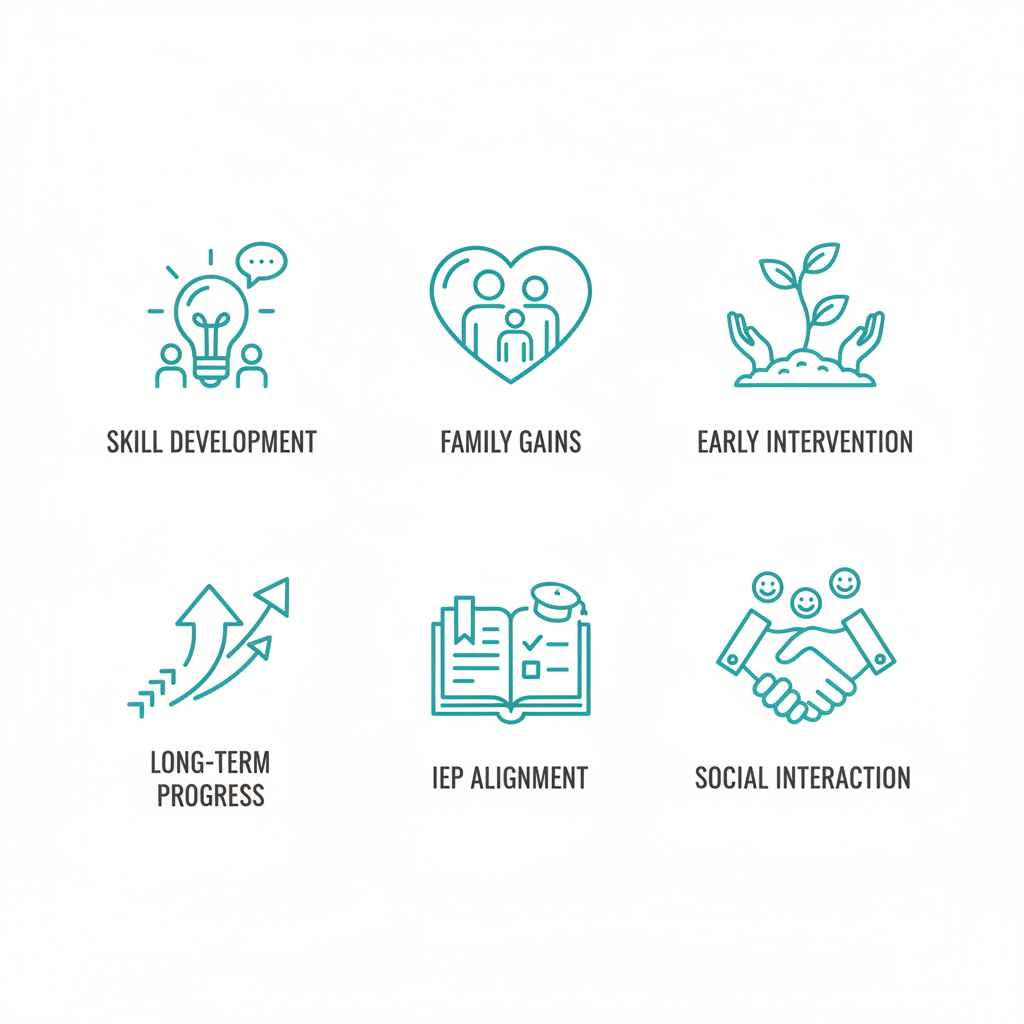
ABA therapy excels at building foundational skills like communication, social interaction, and daily living routines, which are crucial for children with autism. Through targeted techniques, children learn to express needs verbally or non-verbally, engage with peers, and manage self-care tasks independently. We see many children experience enhanced confidence as they master these abilities, reducing frustration and opening doors to more joyful interactions.
Evidence from the CDC shows that ABA can lead to a 47% improvement in skill acquisition for participants. Local insights from the Autism Society of the Heartland highlight how Kansas City programs contribute to community-wide successes, with families reporting better adaptive behaviors after consistent sessions.
In our ABA therapy in Kansas City, Missouri, we apply these principles via 1:1 RBT sessions tailored to each child’s interests, ensuring personalized growth in a supportive environment.
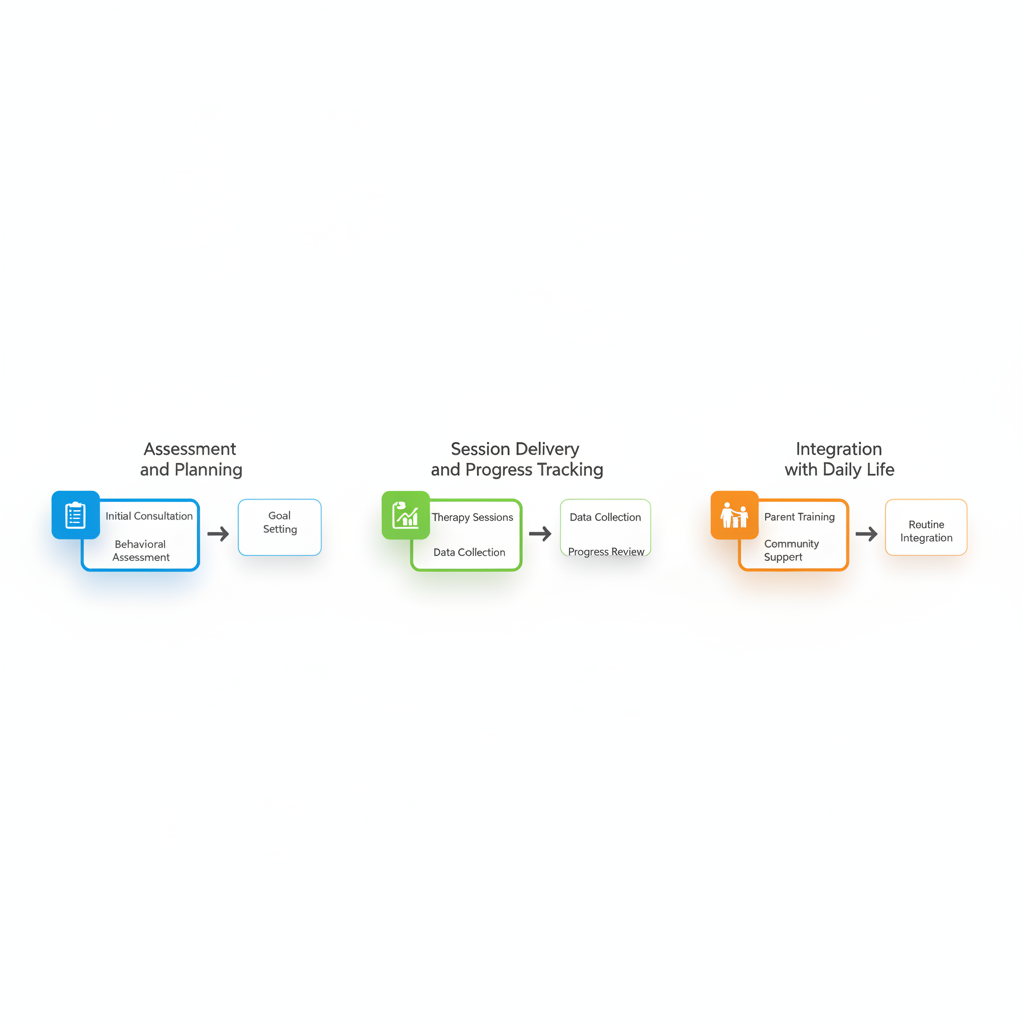
Key stages of ABA therapy implementation in practice
Visual icons of ABA therapy benefits for autism support
These visual benefits underscore the holistic impact of ABA, extending beyond individual skills to enrich family life and long-term independence. As we explore further, the role of family involvement becomes clear in sustaining these advancements.
Family and Long-Term Gains
One of the standout advantages of ABA is its emphasis on family empowerment, where parent coaching equips caregivers with tools to reinforce learning at home. This collaborative model aligns therapy with daily routines, promoting sustained progress and reducing behavioral challenges over time. We often witness families growing closer as parents gain confidence in supporting their child’s development.
Studies from the Autism Society of the Heartland emphasize local outcomes, noting that coordinated efforts lead to improved family quality of life in Missouri communities. Parent training, in particular, has shown to extend therapy benefits, with many reporting fewer disruptions and more positive home interactions after just a few months.
As autism therapy providers in Kansas City, Missouri, we integrate IEP coordination and consistent team assignments to build trust and ensure seamless school transitions. Our care that comes straight from the heart makes these long-term gains feel achievable and rewarding.
Early Intervention Impacts
Starting ABA early taps into the brain’s natural plasticity, offering profound developmental benefits for toddlers on the autism spectrum. Early intervention helps establish critical neural pathways for language, social cues, and emotional regulation, setting a strong foundation for future learning. Many young children experience accelerated milestones, like improved eye contact and play skills, when therapy begins before age three.
The CDC underscores these impacts, with data indicating early ABA participants show up to 47% greater gains in adaptive skills compared to later starters. In the Kansas City area, community reports from local autism resources validate this, as families note enhanced responsiveness and reduced delays through timely support.
We deliver early intervention ABA in Kansas City, Missouri, with specialized toddler programs that blend play-based activities and caregiver coaching. This personalized therapy plan maximizes potential while aligning with family goals for autism skill-building benefits.
How ABA Therapy Works in Practice
At Heart Core ABA, we deliver hands-on ABA therapy for children who learn differently, focusing on real progress through structured yet flexible processes. Our approach in Kansas City, Missouri, ensures families receive personalized support from initial evaluation to daily skill application. We’ll guide you through each phase, emphasizing collaboration and measurable steps toward independence.
Assessment and Planning Process
We begin with a thorough evaluation led by our Board Certified Behavior Analysts (BCBAs) to understand your child’s unique strengths and needs. This initial step involves comprehensive observations, parent interviews, and standardized tools to assess communication, social skills, and adaptive behaviors. Drawing from best practices at institutions like Children’s Mercy Autism Clinic, we prioritize early identification, especially for toddlers, to align with recommended guidelines for timely support.
In this phase, we develop an individualized treatment plan outlining specific, achievable goals. Methods include functional behavior assessments and preference inventories to tailor interventions effectively. For early intervention ABA in Kansas City, Missouri, we focus on foundational skills like play and language development.
As leading autism therapy providers in Kansas City, Missouri, our BCBAs create customized plans for homes or centers, handling insurance authorizations through Medicaid processes to ensure accessibility. This sets a strong foundation for behavioral intervention processes that fit your family’s routine.
Session Delivery and Progress Tracking
Our sessions are delivered one-on-one by Registered Behavior Technicians (RBTs) under BCBA supervision, using evidence-based techniques like discrete trial training and natural environment teaching. These 1:1 interactions occur in comfortable settings, such as in-home ABA therapy or center-based programs, lasting 2-3 hours several times a week based on your child’s needs.
Progress is tracked meticulously through real-time data collection on targeted behaviors, graphed weekly to visualize improvements. Adjustments are made promptly using autism treatment workflows, ensuring interventions evolve with your child’s development. We incorporate play-based activities to keep sessions engaging and effective.
In our Missouri programs, aba therapy services kansas city include consistent RBT matches for rapport-building, with BCBA oversight guaranteeing quality. This hands-on approach fosters real connection and steady advancement.
Visual icons of ABA therapy benefits for autism support
Key stages of ABA therapy implementation in practice
The diagram above illustrates how these stages interconnect seamlessly in our care model. Building on session insights, we refine strategies to support long-term growth.
Integration with Daily Life
We extend ABA principles beyond therapy sessions by collaborating with schools and providing parent coaching to embed skills in everyday activities. This includes aligning our plans with Individualized Education Programs (IEPs) for school-based ABA therapy, ensuring consistency across environments like home and classroom.
Parent training sessions teach techniques for reinforcement and prompting, empowering families to apply strategies during routines such as mealtimes or playtime. Social skills groups offer small-group practice for peer interactions, while weekly updates keep everyone informed on milestones.
Our family training emphasizes practical application, helping sustain skills through caregiver coaching and home adaptations. As trusted autism therapy providers in Kansas City, Missouri, we coordinate these elements for holistic support, verifying insurance and offering private-pay options when needed. Results may vary, so we encourage consulting healthcare professionals for personalized advice.
Best Practices for Effective ABA Therapy
Implementing effective ABA therapy requires thoughtful planning and collaboration. At Heart Core ABA, we focus on hands-on ABA therapy for children who learn differently, ensuring real progress through personalized plans. These best practices help families in Kansas City maximize outcomes while building strong support networks.
Selecting and Collaborating with Providers
Choosing the right provider is crucial for successful ABA therapy in Kansas City, Missouri. Look for teams with Board Certified Behavior Analysts (BCBAs) who oversee sessions and maintain high supervision standards, as outlined by the Missouri Department of Mental Health. Ideal ratios include one Registered Behavior Technician (RBT) per child for individualized attention, fostering consistent progress.
To build effective provider partnerships:
- Ask about therapist experience and training in autism spectrum needs.
- Inquire how they match families with consistent RBTs for rapport.
- Discuss goals alignment during initial consultations.
We help families by verifying credentials and connecting you with trusted behavior therapy kansas city options, making the process smoother. We emphasize measurable goals and regular progress reviews to keep families informed and engaged together.
Maximizing Home and School Integration
Integrating ABA techniques at home and school enhances skill generalization for children. For early intervention ABA in Kansas City, Missouri, start with parent coaching to reinforce behaviors through play-based activities. Aligning with Individualized Education Programs (IEPs) in Missouri settings ensures seamless transitions between environments, supported by local resources like family involvement programs.
Practical tips include:
- Practice daily routines using ABA prompts at home.
- Share progress notes with school teams for collaborative adjustments.
- Join social skills groups for peer interaction practice.
We support integration by offering caregiver coaching and IEP coordination, helping autism therapy providers in Kansas City, Missouri, work hand-in-hand with your family for real connection. We incorporate play-based strategies that build independence and communication across settings consistently.
Navigating Costs and Insurance
Understanding costs helps families access quality care without barriers. ABA therapy expenses vary by session length and intensity, with federal Medicaid guidelines covering autism services after verification. In Kansas City, prior authorizations typically take 30-60 days, while private-pay options start around $100 per hour for flexible scheduling.
Steps for insurance navigation for therapy:
- Contact insurers to confirm ABA coverage details.
- Gather medical documentation for approvals.
- Explore Medicaid eligibility for Missouri residents.
We assist by handling verifications and billing for Medicaid and major plans, easing the process so you can focus on care that comes straight from the heart. Remember, results may vary, and we recommend consulting professionals for personalized advice.
Embracing ABA Therapy for Your Family
Embracing ABA therapy in Kansas City, Missouri, can transform your family’s daily life with autism. As a cornerstone of evidence-based treatment endorsed by the CDC, this approach builds essential skills through positive reinforcement and structured play. We’ve seen firsthand how hands-on ABA therapy for children who learn differently fosters real progress and real connection in local autism support journeys.
Key takeaways include the power of early intervention ABA in Kansas City, Missouri, which helps toddlers develop communication and social abilities sooner. Our family-centered behavioral care emphasizes collaboration, with personalized therapy plans tailored to your child’s needs. We offer autism therapy providers in Kansas City, Missouri, who deliver consistent, BCBA-led sessions in-home, school, or center-based settings. Plus, we’re here to partner with you on insurance verification and Medicaid assistance to ease the process.
Ready to take the next step? Contact us today for a free assessment or to explore In Home ABA Therapy Kansas City. Our team provides parent coaching and IEP coordination to support your goals.
With community resources like those from the Autism Society of the Heartland guiding families to trusted providers, your journey holds great potential. Results may vary, but we’re committed to care that comes straight from the heart.
Resources











 At-Home
ABA Therapy
At-Home
ABA Therapy Best
ABA Therapists
Best
ABA Therapists BCBAs
Near Me
BCBAs
Near Me RBTs
Near Me
RBTs
Near Me