Table of Contents
- Fostering Meaningful Sibling Involvement in ABA Therapy
- Why Siblings Matter in Autism Treatment
- The Science Behind Sibling-Mediated Interventions
- Practical Strategies for Including Siblings in ABA Sessions
- Advanced Considerations: Tailoring Sibling Participation for Long-Term Growth
- Frequently Asked Questions About Sibling Involvement
- Partnering with Heart Core ABA for Family-Centered Care
Fostering Meaningful Sibling Involvement in ABA Therapy
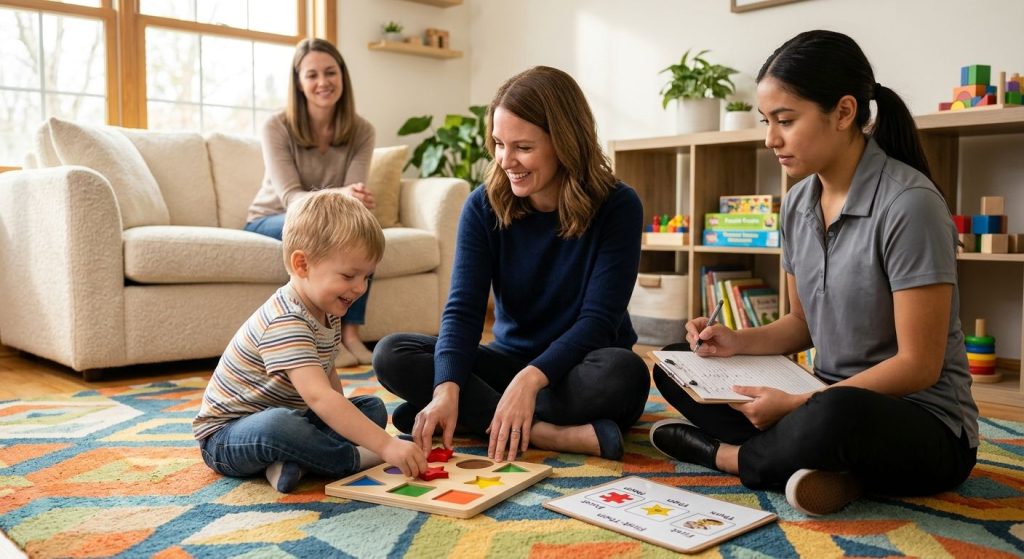
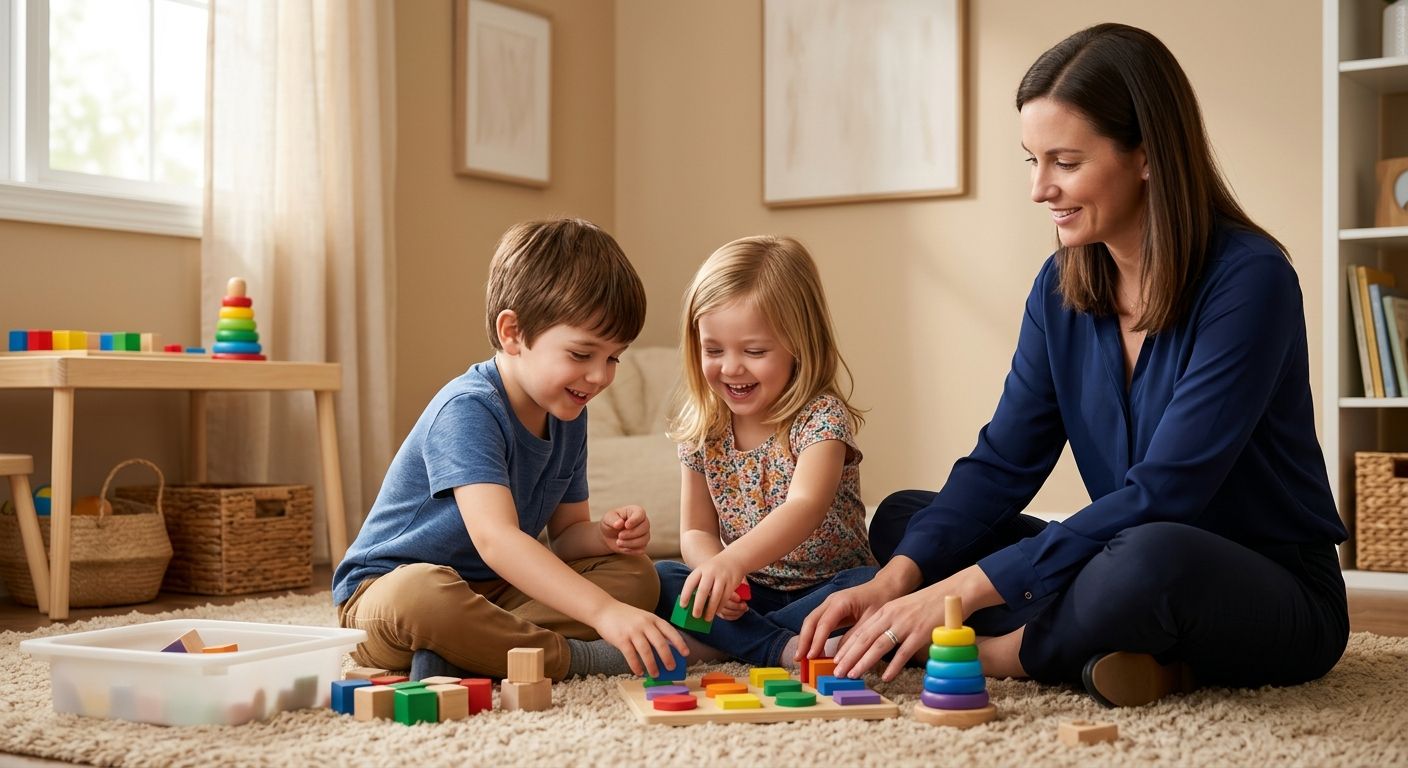
Sibling involvement in ABA therapy means including brothers and sisters in therapy sessions and daily routine activities to help the child with autism work on various skills with a familiar peer. This means siblings may help with a puzzle during a center-based activity or act out a social skill during an in-home activity, allowing for learning opportunities during family activities.
Research published in Cognitive and Behavioral Practice and indexed by the Education Resources Information Center (ERIC) demonstrates that including siblings in behavioral intervention provides mutual gains. Typically developing siblings often develop greater patience and empathy, while the child with autism shows improved generalization of social and communication skills when they work alongside a sibling. The ERIC article highlights that without purposeful involvement, these sibling relationships may lack the rich interactions seen in neurotypical pairs, reinforcing the need for structured inclusion. Sibling-mediated approaches, where brothers or sisters are taught to model and prompt specific behaviors, help carry therapy goals from the clinic into real-life settings.
At Heart Core ABA, we have sibling involvement in ABA therapy as part of our standard practice. We encourage caregivers to include siblings in play-based practice—such as turn-taking games or following simple instructions together—because these moments build stronger relationships and naturally reinforce therapy concepts. When practicing together often, the child with autism starts accepting the process and positively impacts skill generalization.
Key Takeaways
- We believe sibling involvement in ABA therapy creates measurable benefits for both children.
- Research on sibling involvement in ABA therapy demonstrates that when typically developing siblings are trained to apply behavioral techniques, they can make a meaningful contribution to their brother or sister’s progress.
- Research suggests that involving siblings in ABA therapy enhances skill generalization and social play.
- Understanding how sibling dynamics influence outcomes beyond immediate skill-building goals helps families and clinicians develop more effective, personalized approaches to care.
- We hear common questions about sibling involvement in ABA therapy, research offers evidence-based answers.
Why Siblings Matter in Autism Treatment
We believe sibling involvement in ABA therapy creates measurable benefits for both children. Research reveals that brothers and sisters of kids with autism often have fewer positive interactions, but when they participate in treatment, the dynamic changes. Including siblings in ABA sessions helps children with autism generalize skills like communication and play, while neurotypical siblings build patience and feel more connected to their family.
Key findings from research indexed by the Institute of Education Sciences (ERIC) include:
- Children with autism demonstrate stronger social engagement and more frequent initiations when practicing with a sibling
- Sibling-led play and practice sessions support skill generalization across environments, such as home and school
- Systematic reviews of eight intervention studies confirm that sibling-implemented techniques improve skill retention and consistency in daily routines
- Neurotypical siblings report greater empathy, understanding, and a deeper sense of belonging
- Families experience improved bonding and reduced stress when all members learn ABA strategies together
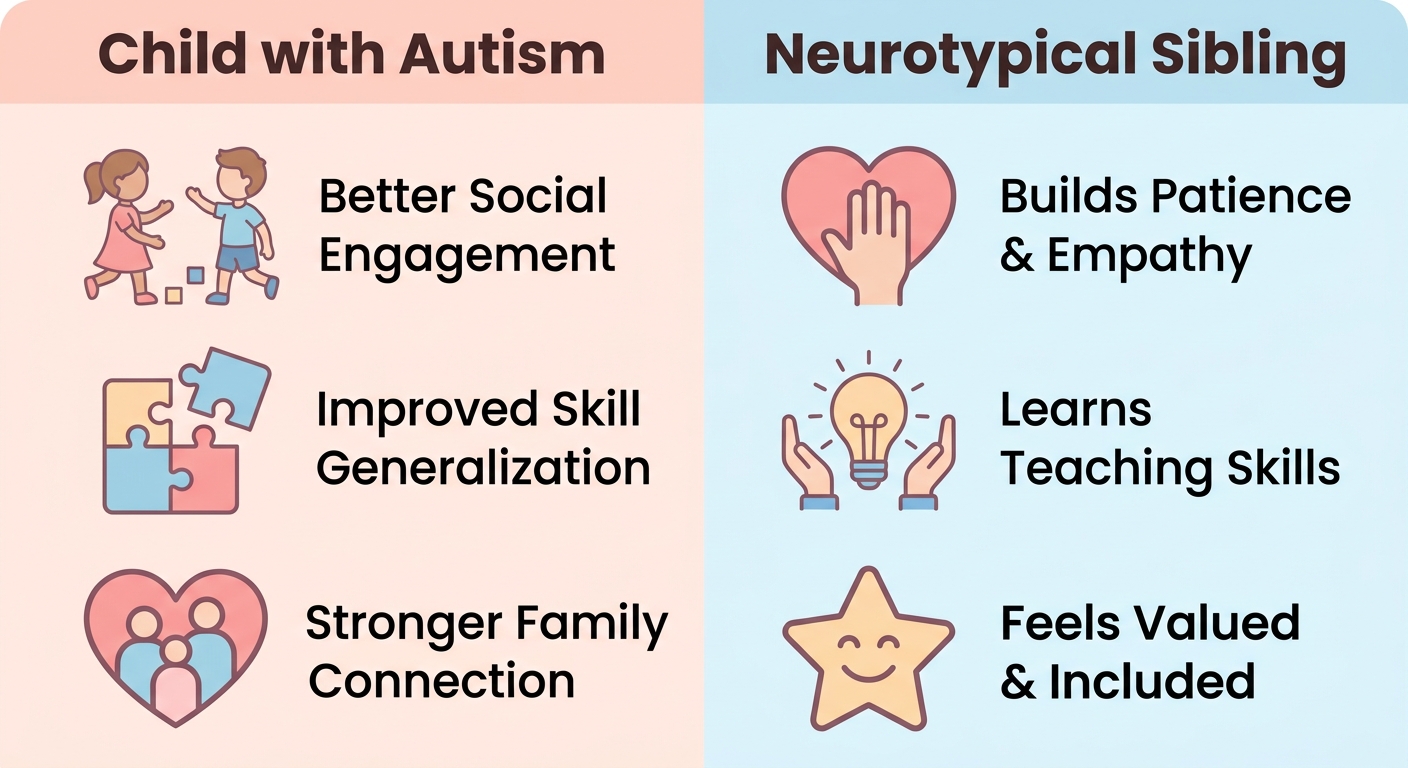
These findings emerge from multiple studies documenting the shared benefits of sibling participation. The table below captures the mutual advantages that sibling involvement brings to both children.
| Benefit Area | Child with Autism | Neurotypical Sibling |
|---|---|---|
| Social Engagement | Increased interaction with sibling | Builds patience and empathy |
| Skill Generalization | Practice in natural sibling interactions | Practices teaching and problem solving |
| Family Bonding | Stronger engagement with sibling | Feeling valued and included |
These gains don’t happen automatically; they require guided practice and collaboration with a BCBA. Real progress occurs when therapy extends beyond structured sessions, and sibling interactions become a powerful, naturalistic reinforcement of new skills. At Heart Core ABA, our team weaves sibling participation into treatment plans whenever it aligns with a child’s goals, transforming everyday moments like playtime or mealtime into teachable opportunities. Parents who observe their children learning together often report a more peaceful home and greater optimism about the future.
The science supporting sibling-mediated strategies continues to grow, giving families practical tools to strengthen relationships and increase skill development. By involving brothers and sisters in ABA therapy, parents create a home environment where all children learn from one another—and where lasting improvements take root.
The Science Behind Sibling-Mediated Interventions
Research on sibling involvement in ABA therapy demonstrates that when typically developing siblings are trained to apply behavioral techniques, they can make a meaningful contribution to their brother or sister’s progress.
Research on Sibling-Involved ABA
Sibling-involved ABA refers to programs that equip brothers and sisters with the skills to deliver specific behavioral strategies during play and daily routines. A landmark research synthesis by Kim and Horn, published in 2010, reviewed eight single-case design studies spanning 1975 to 2008. The analysis found that sibling-implemented interventions were effective in teaching children with disabilities new skills across social and adaptive domains. Importantly, the authors emphasized the need for future studies to examine how these gains generalize to everyday settings and maintain over time.
Families benefit because, as Ferraioli et al. (2012) note, sibling relationships in autism often feature fewer positive interactions than neurotypical pairs. By equipping siblings with ABA tools, we transform these relationships from potentially limited ones into active therapeutic partnerships.
Comparing Sibling-Mediated, Parent-Mediated, and Therapist-Only Interventions
| Intervention Type | Key Characteristics | Research Support | Impact on Sibling Relationship |
|---|---|---|---|
| Sibling-Mediated | Trained siblings implement ABA techniques during daily routines | Supported by literature review and clinical examples (Ferraioli et al., 2012) | Can improve interaction quality and promote generalization without negative psychosocial effects |
| Parent-Mediated | Parents deliver strategies under BCBA guidance | See broader ABA therapy literature for research support | Often strengthens parent-child bond; sibling involvement is secondary |
| Therapist-Only | Sessions delivered by certified professionals (BCBA/RBT) | Well-established efficacy in ABA | Sibling relationship not directly addressed; participation is generally passive |
These distinctions highlight the added value of sibling involvement, which not only reinforces therapy across natural contexts but also deepens the relationship between the children. With that in mind, we turn to the mutual benefits that both siblings experience.
Mutual Benefits for Both Children
A 2012 study by Cebula examined the psychosocial adjustment of siblings in families using intensive home-based ABA programs compared to a control group. The results revealed no significant differences in behavioral adjustment, self-concept, or sibling relationship quality between the two groups. However, both parents and siblings perceived improvements in their interaction quality since starting therapy. Parents especially noted more positive exchanges during daily routines.
These findings reassure us that involving siblings in treatment does not burden them emotionally, while the qualitative improvements point to a real connection that emerges through shared therapeutic activities.
Enhancing Generalization Through Sibling Participation
Ferraioli et al. (2012) advocate including siblings because it promotes generalization of learned skills. The Kim and Horn synthesis similarly called for future research on generalization and maintenance as critical next steps. Clinical case examples illustrate that children who receive sibling-mediated ABA often demonstrate skills outside of therapy sessions more readily than those who do not.
By embedding intervention within the natural sibling dynamic, we create a bridge between structured therapy and real-world application.
Practical Strategies for Including Siblings in ABA Sessions
Research suggests that involving siblings in ABA therapy enhances skill generalization and social play. Our approach to sibling involvement in ABA therapy focuses on practical strategies backed by our in-home and center-based services in Springfield.
Below is a table describing various practical strategies to include siblings in therapy, based on the setting.
| Setting | Advantages | Key Strategies | Heart Core ABA Support |
|---|---|---|---|
| In-Home ABA Sessions | Natural environment encourages generalization. | Teach siblings praise and modeling. | Siblings trained during in-home therapy. |
| Center-Based ABA Sessions | Structured, supervised peer play. | Scheduled sibling playtime with self-monitoring. | Sibling-inclusive activities at our Springfield center. |
| Home and Center Combined | Flexibility and consistency across settings. | Combine home routines with center-based practice. | Coordinated care with parent coaching. |
Teaching Play and Encouragement Skills to Siblings
The strategies above require the teaching of siblings specific skills to help turn everyday situations into therapeutic opportunities. According to an ERIC-cataloged study, when non-autistic siblings were taught methods such as verbal praise and self-monitoring, the length and frequency of social play with their autistic siblings increased. Our BCBAs teach siblings techniques such as use of compliments and following simple routines to engage in play. In addition, siblings are taught to use self-checklist to stay engaged and provide feedback. Since siblings are often looking up to ABA therapists as role models, they are usually quick to learn and practice these techniques. Siblings are often happy and feel empowered to take the role of the ‘helper’ in the family.
Creating Structured Sibling Interaction Time at Home and Center
Reliable routines can be easily developed from consistent and planned sibling play time. We suggest 15-20 minutes daily for planned therapy play. During home-based ABA therapy sessions in the Springfield, Missouri area, and surrounding communities, siblings are invited to play with their family members right in the play or living room. Families that elect center-based ABA therapy services have sibling play strongly structured and supervised by a Board Certified Behavior Analyst (BCBA). This positive play routine that is incorporated into the family’s daily life aids generalization of skills learned in therapy.
Parent Coaching for Positive Sibling Dynamics
Parent coaching ensures that the sibling play practice and strategies learned during therapy carry over into everyday family life. We offer parent coaching that focuses on promoting prosocial behavior and sibling play, as well as teaching effective behavior management strategies. This coaching is based on social support, which has been evidenced to help buffer siblings of children with autism, and is in line with our passion to support and uplift the families that we work with. Whether a family needs help setting up a sibling play practice or guidance on handling frustration, our team provides supportive, hands-on coaching. As a part of our program, it all starts with a free consultation where we discuss how to include siblings in your child’s plan.
Advanced Considerations: Tailoring Sibling Participation for Long-Term Growth
Understanding how sibling dynamics influence outcomes beyond immediate skill-building goals helps families and clinicians develop more effective, personalized approaches to care. A personalized therapy plan that strategically involves a brother or sister can shape a child’s developmental trajectory well into adulthood, making these decisions important to consider early in the treatment process.
The research supporting these advanced considerations comes from a landmark 17-year longitudinal study, which tracked individuals with autism spectrum disorder from childhood through age 26. This government-funded investigation, available through ERIC (the U.S. Department of Education’s Education Resources Information Center), examined how the presence of siblings, birth order, and gender dynamics affect adaptive behavior growth over nearly two decades. The evidence provides clinicians with a foundation for tailoring sibling participation to maximize long-term benefits.
| Group | Adaptive Growth Rate | Key Finding |
|---|---|---|
| With Sibling Involvement | Faster | Siblings contribute to faster adaptive behavior growth rates over the 17-year period |
| Without Sibling Involvement | Slower | Baseline growth rate without sibling presence |
| Gender-Matched Sibling Dyads | Fastest (steepest) | Associated with steepest adaptive skill development trajectories |
These patterns support the hypothesis that sibling relationships improve adaptive functioning trajectories for individuals on the spectrum. Notably, the growth rate advantages appeared across both Black and White participant populations, though the effects were particularly pronounced among Black participants. Among those with siblings, having a gender-matched dyad, where the child and their closest-age sibling share the same gender, was linked to the steepest skill development. This suggests that when families have the opportunity to encourage involvement from siblings who match the child’s gender, those relationships may offer uniquely powerful developmental support.
These considerations often lead families to ask practical questions about how to implement sibling participation in daily therapy routines.
Frequently Asked Questions About Sibling Involvement
We hear common questions about sibling involvement in ABA therapy, research offers evidence-based answers.
Will my other children adjust well during ABA therapy?
A peer-reviewed ERIC study found no significant psychosocial drawbacks or benefits for siblings in home-based ABA versus controls; parents reported improvements in sibling interactions.
Can sibling support groups help?
A randomized trial showed a 10-week support group produced significant improvements in sibling relationship quality; autism severity and externalizing behaviors moderated the benefit.
Does social support make a difference for brothers and sisters?
Social support consistently correlated with better developmental outcomes for siblings.
How does Heart Core ABA bring siblings into the process?
Our family training offers parents strategies and coaching to foster positive interaction and support sibling involvement in Springfield, MO therapy.
We are ready to provide the guidance you need to bring your family together.
Partnering with Heart Core ABA for Family-Centered Care
Bringing siblings into the therapy process creates natural opportunities for children to practice communication and play skills. We we build this collaboration into every treatment plan through weekly parent updates and hands-on help navigating insurance. We believe sibling involvement in ABA therapy strengthens family bonds. Contact us to learn more about services.
Individual results may vary. This information is not a substitute for professional medical advice. Consult your healthcare professional for diagnosis and treatment. Contact your insurance company to verify insurance coverage. Prior authorization may be required.
Start Your Family-Centered ABA Journey
Now that you understand the powerful role siblings play in ABA therapy—from enhancing skill generalization to building stronger family bonds—you can take the next step toward family-centered care. We support families in Springfield, Missouri, with personalized ABA plans that meaningfully include siblings, guided by compassionate BCBAs and RBTs. Our approach ensures that both your child with autism and their siblings benefit, fostering real connections that extend beyond therapy sessions. We provide weekly parent updates and assist with insurance navigation, so you always know how your child is progressing. To explore how sibling involvement can work for your family, we invite you to schedule a free consultation where we will answer your questions and design a plan that integrates the strategies discussed in this article. Together, we can help your child and your whole family thrive.
Start Your Family-Centered ABA Journey
Resources
- Discover How Including Siblings Improves Autism Treatment
- Understand Sibling Adjustment During Home-Based ABA Therapy
- Explore Sibling-Implemented Interventions for Disability Skill Development
- Learn About Sibling Support Groups for Autism Families
- Discover How Sibling Presence Boosts Adaptive Behavior in Autism
- Teach Siblings to Encourage Play for Better Autism Interactions