Table of Contents
- The Power of BCBA-Led ABA Therapy
- The BCBA Supervised Treatment Plan: What It Means for Your Child
- Clinical Oversight Requirements for Effective ABA Therapy
- Designing a Skill Acquisition Plan That Delivers Results
- Measuring Progress: How BCBA Supervision Elevates Therapy Quality
- Putting the Treatment Plan into Action: Supervision and Family Partnership
- Committing to Quality ABA with Expert BCBA Oversight
The Power of BCBA-Led ABA Therapy
When families begin exploring autism support, they quickly discover that not all ABA therapy is the same. BCBA-led ABA therapy brings a level of clinical expertise and personalized attention that makes a real difference in a child’s progress. At Heart Core ABA, we believe that a Board Certified Behavior Analyst (BCBA) should be the architect of every treatment plan, not just a name on a file. Our BCBAs design individualized strategies, supervise each session, and continually adapt goals to match each child’s unique strengths and needs. This hands-on clinical oversight ensures that every moment of therapy is purposeful and grounded in research, ultimately improving quality of life for the entire family. We work closely with families to build practical communication, social, and daily living skills that foster confidence and independence. A well-crafted BCBA-supervised treatment plan is the first step in turning this commitment into measurable growth.
The BCBA Supervised Treatment Plan: What It Means for Your Child
At Heart Core ABA, we understand that the BCBA supervised treatment plan guides your child’s learning the most when ABA therapy first begins. We believe this plan should be something parents understand and feel confident about, because it defines exactly how we will work together to build skills, reduce challenging behaviors, and celebrate real progress.
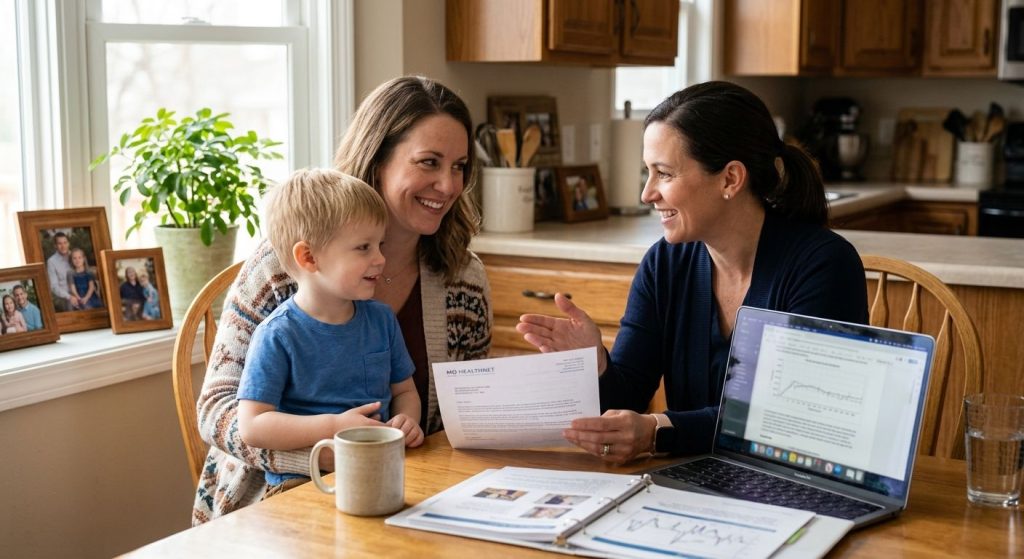
The plan starts with a functional behavior assessment (FBA), where our BCBA observes and talks with you to learn about your child’s strengths, needs, and the situations that matter most to your family. We collect baseline data — concrete information about current skills and behaviors — so we know precisely where your child is today. From there, we create a written treatment plan that includes measurable goals you can review. For example, a goal might target independent communication, daily routines, or play skills, each broken down into small, achievable steps. The plan also includes data-collection methods so our team can track every session and make sure progress stays on course.
What differentiates a BCBA-supervised plan is that it is always a living, breathing document. A plan is only as good as the continuous clinical oversight and monitoring of the child’s data.
You are a vital part of the process, and you deserve to understand the data, the goals, and the reasons behind each update. The treatment plan is the operational expression of BCBA supervision: it turns expert knowledge into daily, data-driven action that helps your child reach meaningful milestones.
With regular reviews, caregiver training woven in, and full transparency, we make sure every session is purposeful. Through this plan, our BCBA team turns the principles of ABA into real-world achievements that matter for your family, and you remain an informed, empowered partner every step of the way. Our transparent and active partnership with families is the bedrock of the success of our plan.
Clinical Oversight Requirements for Effective ABA Therapy
When families begin ABA therapy, the quality of clinical oversight can be just as important as the treatment goals themselves. A Board Certified Behavior Analyst (BCBA) designs a personalized plan, but without consistent, knowledgeable supervision, even the best plan can drift off course.
How BCBA Supervision Keeps the Treatment Plan on Track
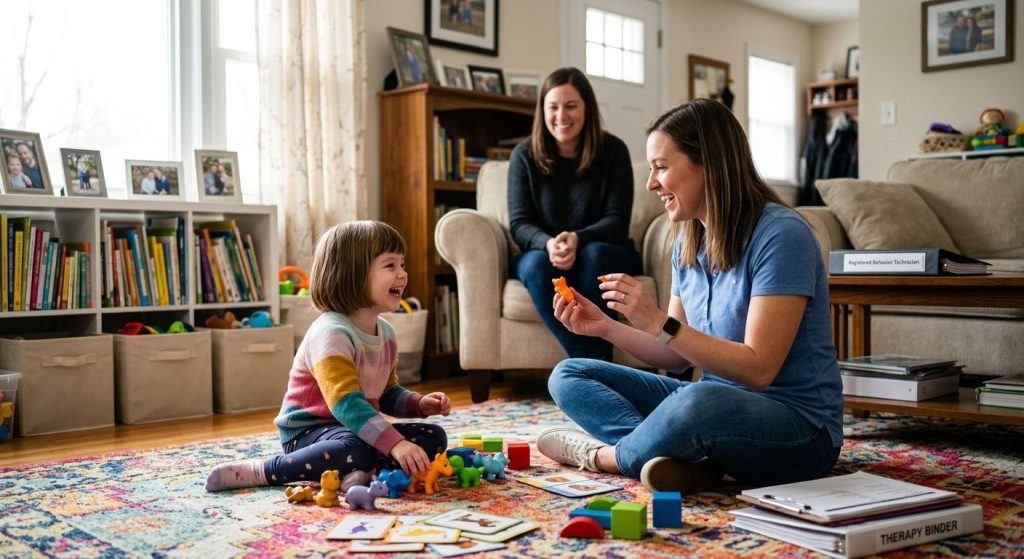
The BCBA creates the roadmap, but it’s the Registered Behavior Technicians (RBTs) who bring it to life each day. RBTs work directly with the child, running the programs and collecting data on everything from communication attempts to social interactions. The BCBA regularly reviews that data, typically on a weekly or biweekly schedule, looking for meaningful patterns. If a child masters a skill faster than expected, the BCBA adjusts the goal upward. If progress stalls, the BCBA tweaks the teaching approach or breaks the skill into smaller steps. This cycle of data review and real-time adjustment is what keeps therapy dynamic and effective.
Beyond the numbers, the BCBA also ensures treatment fidelity. That means checking that sessions are being run exactly as intended, with the right prompting techniques. When an RBT encounters an unexpected behavior, the BCBA provides coaching and updates the plan to address it. This level of oversight transforms a set of goals on paper into a responsive, living process that adapts to the child’s real-world needs.
We believe supervision intensity should match each child’s unique situation. Some children thrive with less frequent, targeted check-ins after a plan is running smoothly, while others benefit from more frequent, hands-on observation to fine-tune techniques. As a parent, you have every right to ask clear questions: “How often will the BCBA directly observe my child’s sessions?” and “How will progress updates be shared with me?” In our practice, we provide regular written updates and open lines of communication so families never feel in the dark about how things are going.
This structured oversight is the foundation that keeps the skill acquisition plan from becoming stagnant. When a BCBA stays actively involved, the plan remains a living document—one that evolves with the child’s growth and paves the way for genuine, measurable progress.
Designing a Skill Acquisition Plan That Delivers Results
After the comprehensive assessment and clinical oversight described earlier, the next step is a thoughtful skill acquisition plan crafted for the individual learner. Effective planning requires moving from broad goals to precise, teachable actions.
Every plan begins with an observable and measurable target skill. Instead of a general objective such as “improve communication,” our team defines the exact behavior to teach — perhaps requesting a preferred item by handing a picture card to a therapist. This clarity lets everyone on the team recognize success the moment it happens. Before instruction starts, we take a baseline measurement of the child’s current performance without any prompts, creating a clear starting point that documents growth from day one.
Breaking complex skills into manageable pieces is what makes ambitious goals achievable. Using task analysis, we sequence each step a child needs to perform, similar to how a structured home repair guide walks through a project in logical order. A daily living skill like hand-washing becomes a chain of discrete actions — turning on the water, wetting hands, pumping soap, scrubbing for 20 seconds, rinsing, and drying — each taught and reinforced until the entire routine flows independently.
Meaningful short-term objectives keep motivation high and allow for quick adjustments under BCBA supervision. Our team typically sets 2- to 4-week goals and pairs them with longer-term mastery criteria, such as demonstrating a skill with 80 percent independence across three consecutive sessions. We determine the reinforcement system up front, deciding whether a child initially receives praise or a preferred item after every correct response on a continuous schedule, then gradually shifting to an intermittent schedule so skills maintain naturally.
Data collection is woven into every session because evidence drives all our decisions. A Registered Behavior Technician or BCBA records the agreed measurement — frequency of a replacement behavior, duration of play engagement, or rate of correct responses — and our supervisors review that data weekly. This rhythm of plan-teach-measure-adjust keeps the program responsive and honors the trust families place in our clinical team.
Measuring Progress: How BCBA Supervision Elevates Therapy Quality
Once we’ve mapped out a personalized therapy plan, the question families ask is: “How do we know it’s actually working?” The answer lies in BCBA supervision — consistent, data-driven oversight that turns daily therapy hours into measurable progress.
Our Board Certified Behavior Analysts review each session’s data to determine whether an intervention is effective, needs adjustment, or should be replaced. Instead of relying on subjective impressions or infrequent check-ins, this clinical oversight ensures every therapy hour is guided by objective information.
For example, a child learning to request a snack might be measured by the percentage of opportunities in a two-week period when they independently say or sign “cracker” instead of crying or grabbing. The supervising BCBA graphs these data points alongside the RBT’s session notes. If the percentage isn’t climbing, the supervisory relationship prompts a real-time adjustment, perhaps a different prompting strategy or a stronger reinforcer. These data are reviewed at least weekly, not just at monthly plan meetings, so interventions can pivot quickly. This cycle of measure-review-adjust is what turns a static plan into a living, responsive program.
Data-based decision making is the hallmark of quality oversight. It transforms therapy from a sequence of activities into a dynamic process that adapts to the child’s actual learning patterns. We use systematic data collection, daily graphing, and regular team discussions to ensure no session goes unexamined. Objective metrics, like counts, percentages, or latency, replace guesswork and give families a clear view of their child’s growth.
This measurement isn’t a behind-the-scenes activity — it’s a shared language. We invite families to review progress graphs during parent coaching sessions, so they understand what’s improving and can share observations that refine the plan. This partnership means parents aren’t just hearing about progress — they’re helping to shape it. When caregivers and supervisors look at the same data, therapy becomes a true partnership.
That’s why we treat progress measurement as the glue that holds the entire treatment plan together, connecting the careful skill design of earlier steps with the hands-on execution that happens in every session.
When everyone — the BCBA, the RBT, and the family — tracks progress together, therapy shifts from hope to evidence.
Putting the Treatment Plan into Action: Supervision and Family Partnership
The most effective ABA therapy happens when a treatment plan moves from paper into daily life through a true partnership between your family and our clinical team. Instead of feeling like a passive bystander, parents and caregivers become active participants in their child’s progress, working alongside Board Certified Behavior Analysts (BCBAs) and Registered Behavior Technicians (RBTs) who bring the strategies to life in real-world settings.
Your child’s BCBA provides the supervision and clinical direction that keeps the plan on track. They design the individualized goals and then train the RBTs who work directly with your child during sessions. More importantly, they train you. Through parent coaching sessions woven into the program, you gain confidence using the same prompting strategies, reinforcement techniques, and language that the therapy team uses, creating consistency that helps your child feel secure and supported no matter who is interacting with them.
This collaboration extends well beyond scheduled session times. When our team shares simple, practical strategies for you to use during everyday routines like mealtime, bath time, or play, skills begin to stick. Using consistent phrases for requests or practicing turn-taking during a board game reinforces what was learned earlier in the day. These small, intentional moments transform your home into an extension of the learning environment.
Regular supervision touchpoints strengthen this family-clinician partnership. Your BCBA meets with the RBT team to review data, adjust goals, and ensure procedures remain consistent. Progress meetings with you provide a dedicated space to discuss what is working, troubleshoot challenges, and celebrate breakthroughs together. These check-ins are not just administrative tasks, they are the collaborative engine that keeps the treatment plan responsive to your child’s changing needs.
Ultimately, this shared commitment to action is what helps your child generalize skills across settings. A greeting practiced during a session becomes a greeting shared with a sibling at breakfast. A coping strategy used with an RBT becomes a strategy your child draws on at the park. By combining professional supervision with your dedicated, informed involvement, we help your child build skills that truly become part of who they are.
Committing to Quality ABA with Expert BCBA Oversight
We think that steady progress occurs when a careful, customized plan is implemented by a supervising Board Certified Behavior Analyst (BCBA). We make sure that a BCBA oversees and designs every single aspect of your program. When a BCBA oversees the entire program, families can be confident that treatment is anchored by assessments and is evolving to meet the needs of the child.
Active family involvement and open communication with the supervising BCBA make that plan truly come to life. We partner with you to practice skills during everyday routines, so the therapy isn’t just written on paper; it becomes part of your family’s day. That partnership is what turns a clinical plan into meaningful, real-life progress.
We know how important the therapeutic process is for children and families. It can support your child’s development. For families considering BCBA-supervised in-home ABA therapy, we invite you to contact us to explore how it can support your child’s development. We will answer your questions and help you take the next step with confidence. Reach out today, and let’s build a brighter future together.
Get Your Free Consultation
You’ve explored the essential role of BCBA supervision in creating effective, data-driven treatment plans. Now that you understand how a BCBA-supervised plan tailors goals and tracks progress, it’s time to see how your child can benefit from expert oversight. We provide in-home ABA therapy across Missouri, with a dedicated BCBA directing every phase of care. From skill acquisition to family partnership, our programs integrate therapy naturally into daily life. We offer a free consultation to discuss your child’s specific needs and verify your insurance coverage. Reach out today to take the first step toward meaningful progress and the support your family deserves.