Table of Contents
- Your Family’s Journey with RBT Sessions for Autism
- What Are RBT Sessions for Autism and How Do They Work?
- Supervision and Personalization in RBT Sessions
- Bringing RBT Sessions into Your Child’s Everyday Life
- Maximizing RBT Progress with Family Coaching and IEPs
- Common Questions About RBT Sessions for Autism
- Moving Forward with Confidence in RBT Therapy
Your Family’s Journey with RBT Sessions for Autism
Now let’s walk through what the journey looks like for your family. It begins with a welcoming BCBA assessment, followed by a personalized therapy plan created for your child. Knowing what to expect during RBT sessions for autism can reduce anxiety and build excitement.
According to CDC public health information, autism affects 1 in 36 children, making early intervention essential.
After a welcoming BCBA assessment, we design a personalized therapy plan that builds on your child’s strengths. This roadmap guides every step during RBT sessions for autism, blending play with skill-building.
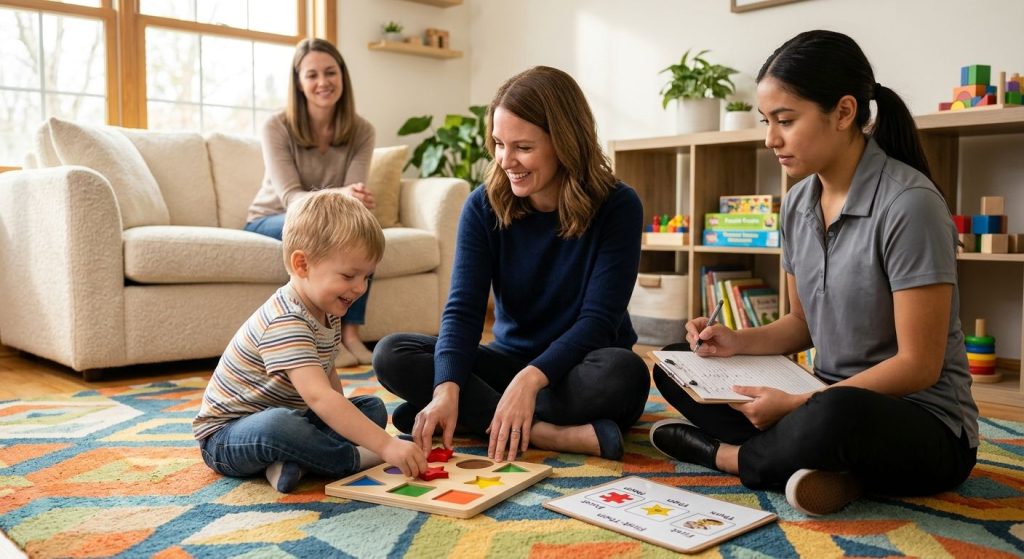
A consistent RBT uses naturalistic teaching and discrete trial training to work on communication, social, and daily living skills. Sessions blend play with intentional teaching, and happen in your home, at our center, or at school.
Here’s what you can expect:
- Comprehensive BCBA assessment in your home
- Personalized therapy plan with measurable goals
- One-on-one RBT sessions with engaging activities
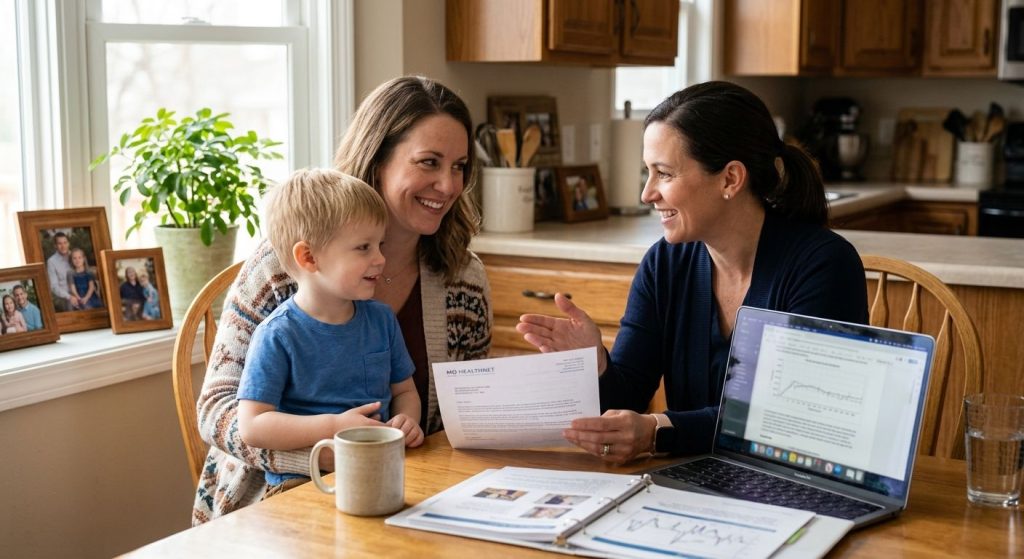
- Weekly parent coaching and progress updates
Throughout the journey, we provide parent coaching so you can reinforce skills at home. Our BCBA adjusts the plan constantly based on data, ensuring your child makes real progress. Care that comes straight from the heart is what we bring to every session.
From the first assessment to celebrating progress, we walk beside you every step of the way. Our team can’t wait to meet you. Ready to start your family’s journey? Contact us today.
What Are RBT Sessions for Autism and How Do They Work?
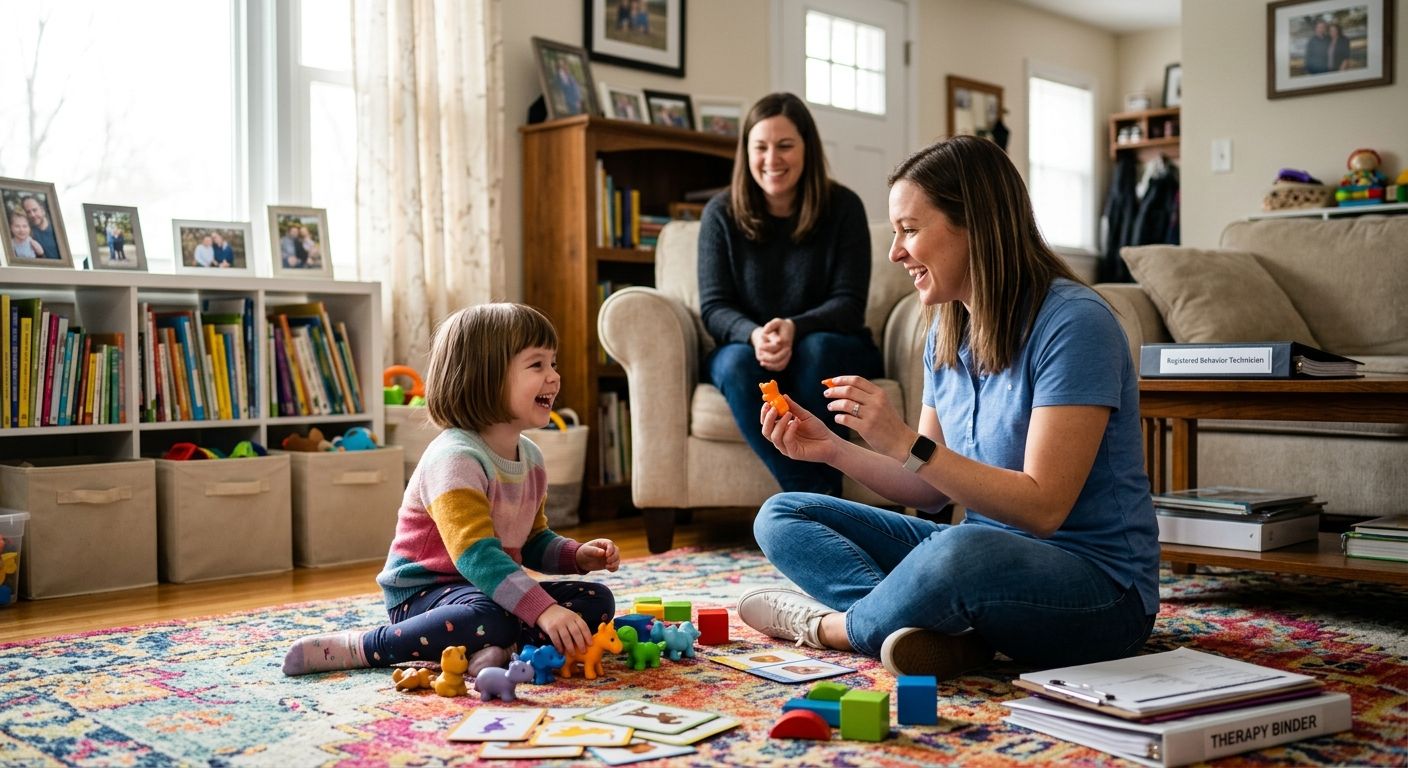
RBT sessions for autism are one-on-one therapy sessions led by a Registered Behavior Technician (RBT)—a trained professional who implements Applied Behavior Analysis (ABA) treatment plans under the supervision of a Board Certified Behavior Analyst (BCBA). These play-based sessions are the foundation of our approach, helping children build essential skills in communication, social interaction, and daily living. According to the Centers for Disease Control and Prevention (CDC), autism affects 1 in 36 children, making early ABA intervention critical.
An RBT works directly with your child in settings like in your home, at our center in Springfield, or at school, making each session engaging and tailored to your child’s unique goals. Here’s how the RBT and BCBA roles compare.
| Role | RBT (Registered Behavior Technician) | BCBA (Board Certified Behavior Analyst) |
|---|---|---|
| Education & Certification | 40-hour training, competency assessment, ongoing supervision | Master’s degree, board certification, state licensure |
| Primary Responsibilities | Implement treatment plans, collect data, work 1:1 with child | Assess, design plans, supervise RBTs, train families |
| Supervision | Receives at least 5% of hours supervised by BCBA | Provides supervision, reviews data, adjusts programs |
| Treatment Design | Follows BCBA’s written plan & protocols | Creates individualized goals & selects teaching procedures |
| Direct Work with Child | Daily hands-on teaching, play-based activities | Periodic direct observation & assessment sessions |
| Data Collection & Reporting | Records session data, notes progress | Analyzes data, writes reports, updates care teams |
| Insurance & Planning | Not involved in authorization | Coordinates prior auth, verifies benefits, sets plan hours |
Now let’s look at what a typical RBT session involves. Sessions usually last 2 to 4 hours and are scheduled several times per week. The RBT uses play-based activities and structured teaching to work on goals like requesting items, following instructions, or initiating play. Throughout, they collect detailed data on your child’s responses—this data is the backbone that our BCBAs use to refine the plan.
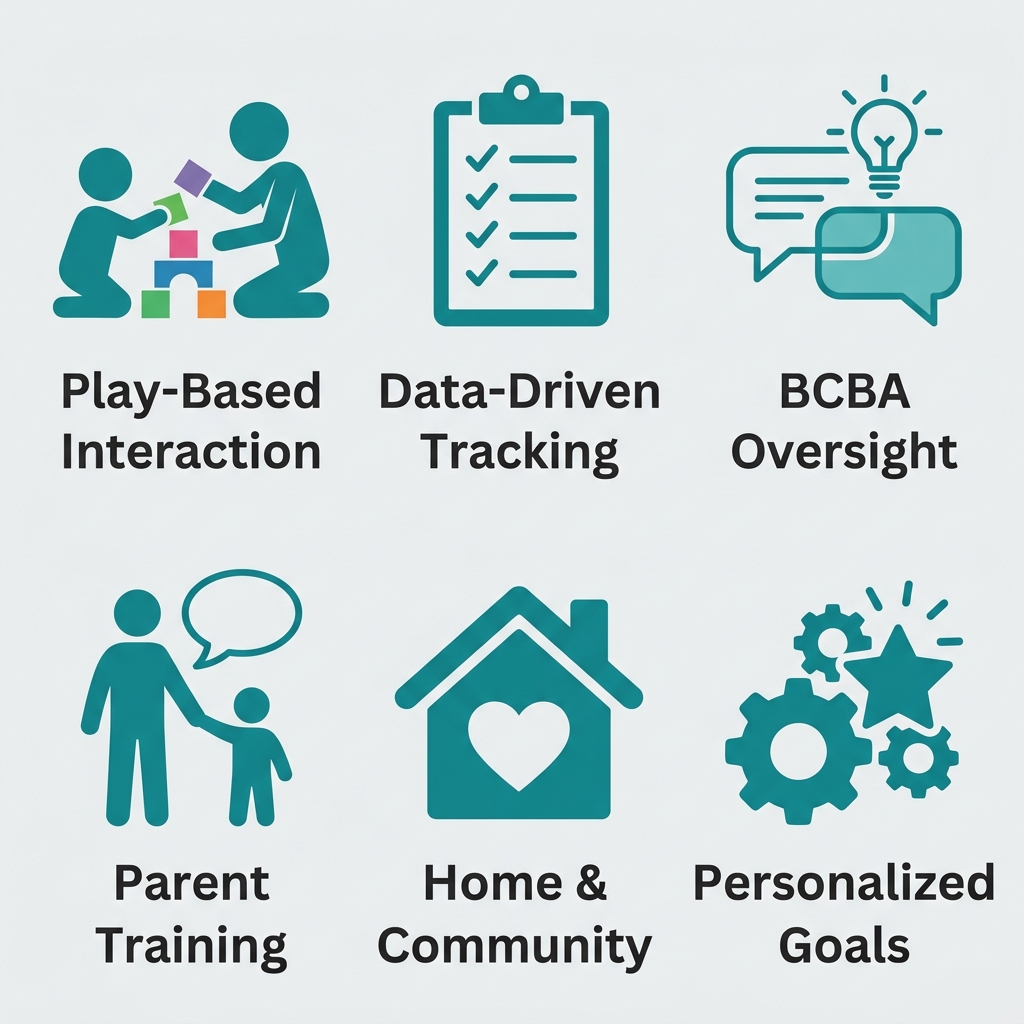
We also involve parents through coaching and weekly updates, because real progress happens when skills are practiced everywhere. Hands-on ABA therapy for children who learn differently leads to real progress, real connection. Ready to start? Reach out for a BCBA-led assessment to create a personalized plan. Results may vary. Consult a healthcare professional for diagnosis and treatment.
Now that you know what RBT sessions involve, let’s explore how they are tailored to your child’s unique needs.
Supervision and Personalization in RBT Sessions
Now that we understand the team structure, let’s explore how RBT sessions are tailored and supervised. RBT sessions for autism are the foundation of our personalized ABA therapy, bringing structured, play-based learning directly to your child.
How BCBAs Design Personalized Treatment Plans
Before therapy begins, one of our Board Certified Behavior Analysts (BCBAs) conducts a comprehensive assessment. Using tools like the VB-MAPP or ABLLS-R, they identify your child’s strengths, needs, and family priorities. This information shapes a personalized therapy plan with specific, measurable goals—from communication skills to daily routines. Our approach is grounded in hands-on ABA therapy for children who learn differently, so every plan is truly unique. Treatment objectives are not static; our BCBAs review progress every 1–3 months and adjust targets as your child grows. Families are involved from the start, sharing what matters most at home and in the community. This collaborative process ensures that every RBT session is built on a clear, intentional roadmap.
The RBT’s Role in Daily Therapy Implementation
During in our RBT therapy sessions, a Registered Behavior Technician carries out the BCBA-designed plan with warmth and consistency. RBTs use a blend of teaching methods: play-based instruction, natural environment training, and discrete trial teaching. For example, a session might involve practicing turn-taking during a board game, labeling objects around the house, or working on fine motor skills through arts and crafts. While guiding these activities, the RBT collects trial-by-trial or probe data—writing down whether your child responded correctly or needed a prompt. This information is the backbone of our data-driven model, showing what’s working and where adjustments are needed. For many families, rbt sessions for autism quickly become a positive part of the weekly routine, as their child builds skills through engaging, one-on-one interaction.
Supervision and Data-Driven Adjustments
We never set a plan and forget it. According to the Behavior Analyst Certification Board, each RBT receives supervision from a BCBA at least weekly. During supervision, the BCBA observes sessions live or via video, provides immediate feedback, and models techniques to ensure fidelity. Our BCBAs also review the data collected in every session—often using visual graphs that show your child’s progress over time. When a target isn’t being met, the team adjusts the approach: maybe changing the reinforcement schedule, introducing a visual support, or breaking a skill into smaller steps. This continuous loop of teaching, measuring, and refining is what turns everyday interactions into real progress and real connection. According to the CDC, early diagnosis and intervention lead to improved outcomes, and we are committed to maintaining that quality through rigorous oversight.
Comparing RBT Session Environments
Every child thrives in a different setting, so we offer in-home, school-based, and center-based RBT sessions. The table below highlights key differences to help you and your BCBA decide what fits your family’s lifestyle and your child’s goals. Consider factors like social opportunities, scheduling flexibility, and the level of parental involvement that feels right for you. Each environment has unique strengths, and your BCBA will guide you through the decision-making process as part of your personalized therapy plan.
| Feature | In-Home RBT Sessions | School-Based RBT Sessions | Center-Based RBT Sessions |
|---|---|---|---|
| Location | Family’s home | Classroom or childcare | Dedicated therapy center |
| Social Opportunities | Limited to household | Peer interactions, classroom routines | Structured groups, social skills focus |
| Parent Involvement | High – real-time coaching | Moderate – team meetings | Observation windows, weekly updates |
| IEP Integration | Coordinate with BCBA | Direct IEP goal support | Align with school goals via BCBA |
| Distraction Level | Variable – home routines | Classroom noise, transitions | Controlled, therapeutic setup |
| Scheduling Flexibility | Flexible around family | Must follow school calendar | Structured sessions, set times |
| Cost Considerations | No facility overhead | Often covered by district/IEP | May include facility fee |
At Heart Core ABA, our approach is care that comes straight from the heart, and we see choosing the right setting as a team decision. Choosing the right setting is just one part of the journey — next, we’ll cover how you can support therapy at home.
Information on this site is not a substitute for professional medical advice. Consult a healthcare professional for diagnosis and treatment.
Bringing RBT Sessions into Your Child’s Everyday Life
Now that you understand what an RBT does, let’s see how we bring rbt sessions for autism into your child’s everyday life. At Heart Core ABA, we design each personalized therapy plan to fit seamlessly into daily routines—at home, in school, or at our center. Care that comes straight from the heart means we meet your child where they are, turning everyday moments into learning opportunities.
Bringing RBT Therapy Home
In-home RBT sessions happen right in your child’s natural environment, making it easier to practice real-life skills. Our RBT may work on communication during meals, model sharing during play, or guide you in reinforcing positive behaviors throughout the day. Parent coaching equips you with strategies to continue between visits, so progress doesn’t stop when the session ends.
A consistent therapy space—like a corner of the living room or a quiet bedroom—helps your child feel comfortable and focused. Sessions are flexible, woven into your existing schedule, so therapy feels like a natural part of your day. With in-home ABA therapy, you’re an active partner in your child’s growth. Small daily interactions quickly add up to real progress and real connection.
RBT Support in School and Daycare Settings
When an RBT supports your child in school or daycare, they work discreetly alongside teachers to foster independence without disrupting the classroom. They collaborate on IEP goals, help with transitions between activities, and model social skills during group time. This school-based ABA therapy bridges the gap between home and academic settings, providing consistent reinforcement across environments.
Our RBTs use subtle prompts and natural cues so your child can practice skills like raising a hand or joining a game without drawing attention. We maintain regular communication with educators and keep you updated on progress, so everyone works toward the same goals. By weaving support into the daily routine, we help your child build confidence and stay engaged, turning the classroom into another place where learning feels natural.
Center-Based Programs for Social Growth
Our center-based programs offer a structured setting where children practice social skills with peers under clinician guidance. In a small group, your child might take turns in a game, initiate conversation, or learn to read facial expressions—all while receiving immediate feedback. Because the environment is consistent and distraction-controlled, children often feel more comfortable stepping out of their comfort zone.
Hands-on ABA therapy for children who learn differently thrives here, as kids benefit from interacting with multiple therapists and a variety of peers. This generalizes skills faster, so what’s learned at the center carries over into playdates, playgrounds, and family gatherings. We design center-based rbt sessions for autism to feel like a fun, safe community—not a clinical lesson.
Determining the Right Number of Weekly Sessions
The right weekly session frequency depends on your child’s unique profile—age, developmental level, family routine, insurance coverage, and a formal BCBA assessment. After that evaluation, we’ll propose a personalized schedule that fits your child’s needs and your lifestyle.
Below are typical weekly session hours based on age and focus areas—these are general guidelines, not strict prescriptions.
| Child’s Age Range | Typical Weekly Session Hours | Focus Areas |
|---|---|---|
| Toddlers (under 3) | 10–15 hours | Early communication, play skills, joint attention |
| Preschool (3–5) | 15–25 hours | Language, social interaction, pre-academics |
| School-Age (6–12) | 10–20 hours | Academics, self-regulation, peer relationships |
| Adolescents (13+) | 6–12 hours | Independence, vocational, social nuance |
The Centers for Disease Control and Prevention (CDC) notes that early intensive intervention often leads to the best outcomes, which is why younger children may benefit from more hours. Yet, we tailor every plan to your child’s progress and feedback, never forcing a one-size-fits-all approach. During the initial consultation, we have transparent conversations about costs so you know what to expect. With the right session frequency and setting, your child can make steady progress toward their goals. Results may vary; always consult a healthcare professional for diagnosis and treatment.
Maximizing RBT Progress with Family Coaching and IEPs
Beyond the basics of one-on-one rbt sessions for autism in Springfield, MO, family coaching and IEP coordination can greatly accelerate a child’s progress. At HeartCore ABA, we weave parent training and school alignment into every personalized therapy plan, because real progress happens when skills are practiced at home and reinforced at school.
The table below highlights how aligning RBT therapy with a child’s Individualized Education Program (IEP) creates a more coordinated and effective approach than therapy without school integration. It compares goal setting, school collaboration, progress monitoring, insurance, and parent involvement side by side.
| Aspect | IEP-Aligned RBT Therapy | General ABA without IEP |
|---|---|---|
| Goal Setting | Tied to IEP benchmarks | Based on clinical assessment alone |
| School Collaboration | BCBA attends IEP meetings, coordinates with teacher | Limited or no school input |
| Progress Monitoring | Shared data across home & school | Clinic-based data only |
| Insurance Coverage | May require IEP for some plans | Standard private insurance / Medicaid |
| Parent Involvement | Active role in IEP meetings & home carry-over | Training provided, less formal to school |
Family Coaching: Extending Skills Beyond Sessions
Our parent coaching teaches families to reinforce RBT goals like requesting during daily routines—mealtime, bath time, or play. Weekly coaching helps skills from rbt sessions for autism become part of everyday life. We tailor each session to the family’s unique rhythm, so they see real progress, real connection. Results may vary, but smoother routines and stronger communication are common.
IEP Alignment: Coordinating with School Teams
An IEP-aligned RBT plan often includes structured social skills groups autism, which help children practice peer interactions. Our BCBAs attend IEP meetings so therapy goals mirror school benchmarks—like joint attention or turn-taking—and we share data across home and school. When progress stalls, this shared insight lets us adjust strategies quickly. While an IEP may be required for some insurance plans, therapy is still available to children without one; the difference is in the depth of coordination.
With a clear IEP-aligned plan in place, families can begin exploring how insurance coverage supports these therapy services.
Common Questions About RBT Sessions for Autism
One of the most common questions we hear about RBT sessions for autism is what to expect. Here are answers to the top questions.
What is an RBT? An RBT is a credentialed professional who delivers 1:1, play-based ABA therapy under the supervision of a BCBA.
How long are sessions? Sessions typically last 1 to 3 hours, depending on your child’s age and needs.
What does a session look like? Sessions blend structured teaching with playful activities to practice communication, social, and daily living skills in a comfortable setting.
How are goals determined? A BCBA sets goals after an initial assessment and adjusts them using progress data, ensuring skills are meaningful for your child.
Do parents get coaching? Yes, parent coaching is central to our hands-on ABA therapy for children who learn differently. We teach you strategies to reinforce skills at home.
This information is not a substitute for professional medical advice. For more answers about RBT sessions for autism, reach out to Heart Core ABA.
Moving Forward with Confidence in RBT Therapy
With all this in mind, you can feel confident choosing Heart Core ABA. Our RBT sessions for autism combine play-based, BCBA-supervised therapy with care that comes straight from the heart—available in-home, at school, or at our center in Springfield, MO. Take the next step: contact Heart Core ABA for a free insurance verification or to schedule an assessment.
Results may vary. Consult a healthcare professional for diagnosis and treatment. Verify insurance coverage and that prior authorization may be required.