Table of Contents
- Understanding Pediatric Behavior Therapy in Kansas City, Missouri
- Fundamentals of Pediatric Behavior Therapy
- Deep Dive into Pediatric ABA Therapy
- Practical Applications of Pediatric Behavior Therapy
- Advanced Strategies in Pediatric Behavior Therapy
- Frequently Asked Questions on Pediatric Therapy
- Empowering Your Child’s Journey with ABA Therapy
Understanding Pediatric Behavior Therapy in Kansas City, Missouri
Pediatric behavior therapy in Kansas City, Missouri, centers on Applied Behavior Analysis (ABA) techniques customized for young children. We at Heart Core ABA use hands-on ABA therapy to build essential skills like communication and social interaction in everyday settings. This approach supports kids who learn differently, fostering growth tailored to their needs.
At Heart Core ABA, our pediatric ABA therapy delivers key benefits for local families. These include:
- Improved communication through practical tools like words or pictures.
- Boosted confidence from mastering daily interactions.
- Steps toward independence with personalized goals.
Your child’s heart matters, and our methods, as outlined in our internal overview, emphasize evidence-based strategies for real progress in Kansas City, Missouri.
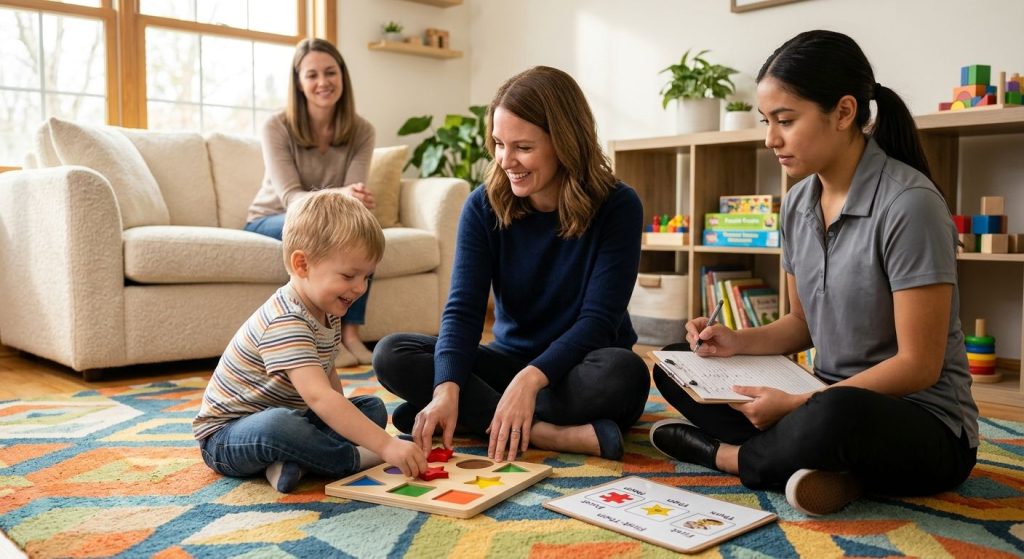
We deliver behavior therapy for kids right in-home in Kansas City, Missouri. Board Certified Behavior Analysts (BCBAs) develop personalized therapy plans after assessments. Registered Behavior Technicians (RBTs) lead 1:1 sessions using techniques like communication ABA therapy, as detailed in our Heart Core ABA FAQ. This targets verbal and social skills with positive reinforcement. Parent coaching and weekly updates with progress graphs ensure consistency and family involvement, personalized for your child’s success.
Discover how we build communication, confidence, and independence. Real progress, real connection awaits Kansas City families—reach out today.
Fundamentals of Pediatric Behavior Therapy
At HeartCore ABA in Kansas City, Missouri, we specialize in pediatric behavior therapy to support children who learn differently, fostering communication, confidence, and independence through evidence-based strategies.
What Is Pediatric Behavior Therapy?
Pediatric behavior therapy uses proven interventions rooted in Applied Behavior Analysis (ABA) foundations to encourage positive behaviors in children. We focus on data-driven adjustments and positive reinforcement to build essential skills. According to the National Center for Biotechnology Information (NCBI), core principles include observable changes tailored to young learners.
For Kansas City families, this means in-home sessions in natural settings, making therapy practical and effective. Our approach emphasizes personalized for your child’s success, helping toddlers and young children thrive without overwhelming routines. HeartCore ABA integrates parent coaching to extend gains at home.
These strategies create real progress, real connection, supporting families every step.
Pediatric ABA Therapy Explained
Pediatric ABA therapy applies ABA principles specifically for children, differing from general behavior therapy by targeting observable behaviors and skill-building, especially for autism support. Unlike broader therapies, ABA measures progress through data and adjusts plans accordingly.
Adhering to established ABA therapy standards ensures effective, ethical practice, as outlined by NCBI government health research. HeartCore ABA, drawing from our internal clinic expertise, develops BCBA-led plans with RBT-delivered sessions. This hands-on method prioritizes your child’s heart matters in natural environments like home.
The following table compares core principles, informed by NCBI standards and HeartCore ABA practical guidance:
| Aspect | ABA Therapy | Cognitive Behavioral Therapy | Play Therapy |
|---|---|---|---|
| Focus | Observable behaviors and skills building | Techniques | Natural settings like home |
This comparison highlights ABA’s unique emphasis on measurable, everyday application. Hands-on ABA therapy stands out for its flexibility in Kansas City homes, bridging to family involvement seamlessly.
Building on these distinctions, ABA’s structured yet compassionate framework empowers lasting skills. At HeartCore ABA, we customize plans to fit each child’s needs, ensuring smooth transitions to daily life.
Key Principles in Early Intervention
Early intervention relies on ABA basics like positive reinforcement through praise or rewards to motivate toddlers. Prompting guides learning gently, fading as skills grow, per NCBI standards.
Natural environment teaching (NET) embeds lessons in play and routines at home, making therapy feel natural. HeartCore ABA uses these for build communication, confidence, and independence.
- Praise for small successes boosts motivation.
- Visual aids and functional communication training replace challenges with words or gestures.
- Parent coaching extends principles daily.
We at HeartCore ABA apply these through personalized for your child’s success plans, creating real progress, real connection in Kansas City.
Deep Dive into Pediatric ABA Therapy
Building on ABA fundamentals, this deep dive explores pediatric behavior therapy tailored for children with autism. At Heart Core ABA, our hands-on ABA therapy delivers real progress through evidence-based approaches. We focus on benefits like enhanced communication and social skills, key techniques such as discrete trial training, and the vital role of family-centered care. Discover how we personalize for your child’s success.
Benefits for Children with Autism
We see transformative gains in pediatric behavior therapy for kids on the spectrum. Communication ABA therapy stands out, boosting verbal responses in non-verbal children and expanding sentences for others, as practical insights from our Heart Core ABA clinical FAQ highlight. Social interactions flourish too, with increased peer play and turn-taking.
Key benefits include:
- Improved communication: Early intervention yields up to 30% better social outcomes, per our therapy posts’ real-world examples from Heart Core ABA.
- Stronger social skills: Children engage more in group play, fostering genuine connections.
- Greater independence: Daily routines like dressing build confidence and self-reliance.
These advancements, driven by consistent RBT-delivered 1:1 sessions, set the foundation for lifelong skills without promising cures.
Techniques and Methods Used
Our personalized for your child’s success plans employ proven ABA methods in natural settings like home. Discrete trial training (DTT) uses structured repetition for foundational skills, while naturalistic teaching follows the child’s lead during play. Pivotal response treatment (PRT) targets motivation to enhance flexibility, drawing from Heart Core ABA FAQ insights on techniques like functional communication training and PECS.
Common approaches:
- Discrete Trial Training: Breaks skills into steps with clear prompts and rewards.
- Naturalistic Teaching: Embeds learning in everyday activities for natural generalization.
- Pivotal Response Treatment: Builds motivation through child-initiated interactions.
Heart Core ABA’s real-world examples from therapy posts show these methods improve communication and independence effectively.
The following ABA Techniques Comparison outlines key differences:
| Technique | Description | Best For |
|---|---|---|
| Discrete Trial Training | Structured repetition for skill acquisition | Communication skills |
This comparison helps families choose methods matching their child’s needs. DTT excels for repetition-heavy basics, while naturalistic approaches shine in dynamic play. PRT fosters broader gains in language. Integrating these ensures real progress, real connection.
Beyond these techniques, family involvement amplifies results, leading seamlessly into collaborative care.
Role of Family-Centered Care
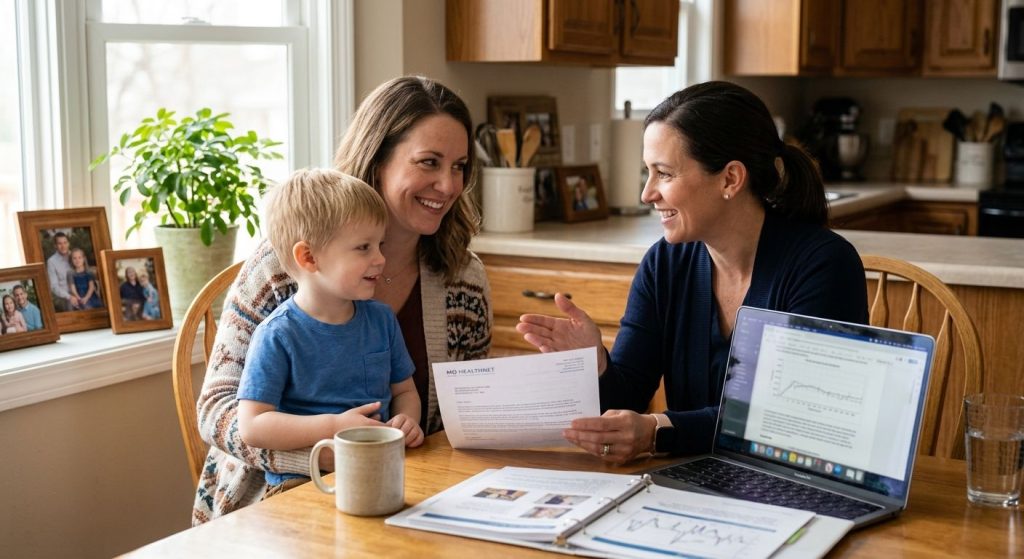
At Heart Core ABA, your child’s heart matters—that’s why we prioritize parent coaching in every plan. Weekly parent updates track progress, empowering you to reinforce skills at home. Our BCBA-developed strategies include home implementation tips, ensuring generalization beyond sessions.
Essential elements:
- Parent training sessions: Learn prompting and reinforcement techniques.
- Home strategies: Apply naturalistic teaching during routines for consistency.
- Progress reporting: Data-driven insights via weekly updates from our 42 BCBAs and 54 RBTs.
Heart Core ABA FAQ practical insights emphasize this integration for sustained outcomes. Families report stronger bonds and lasting independence. Ready for in-home ABA therapy? Contact us in Kansas City to start your journey.
Practical Applications of Pediatric Behavior Therapy
Beyond theory, here’s how we apply pediatric behavior therapy daily in real-world settings like homes, schools, and group sessions in Kansas City. Our hands-on ABA therapy brings principles to life, delivering personalized for your child’s success plans that build communication, confidence, and independence. We focus on family-centered care to support your child’s growth through practical, everyday applications.
In-Home and School-Based Services
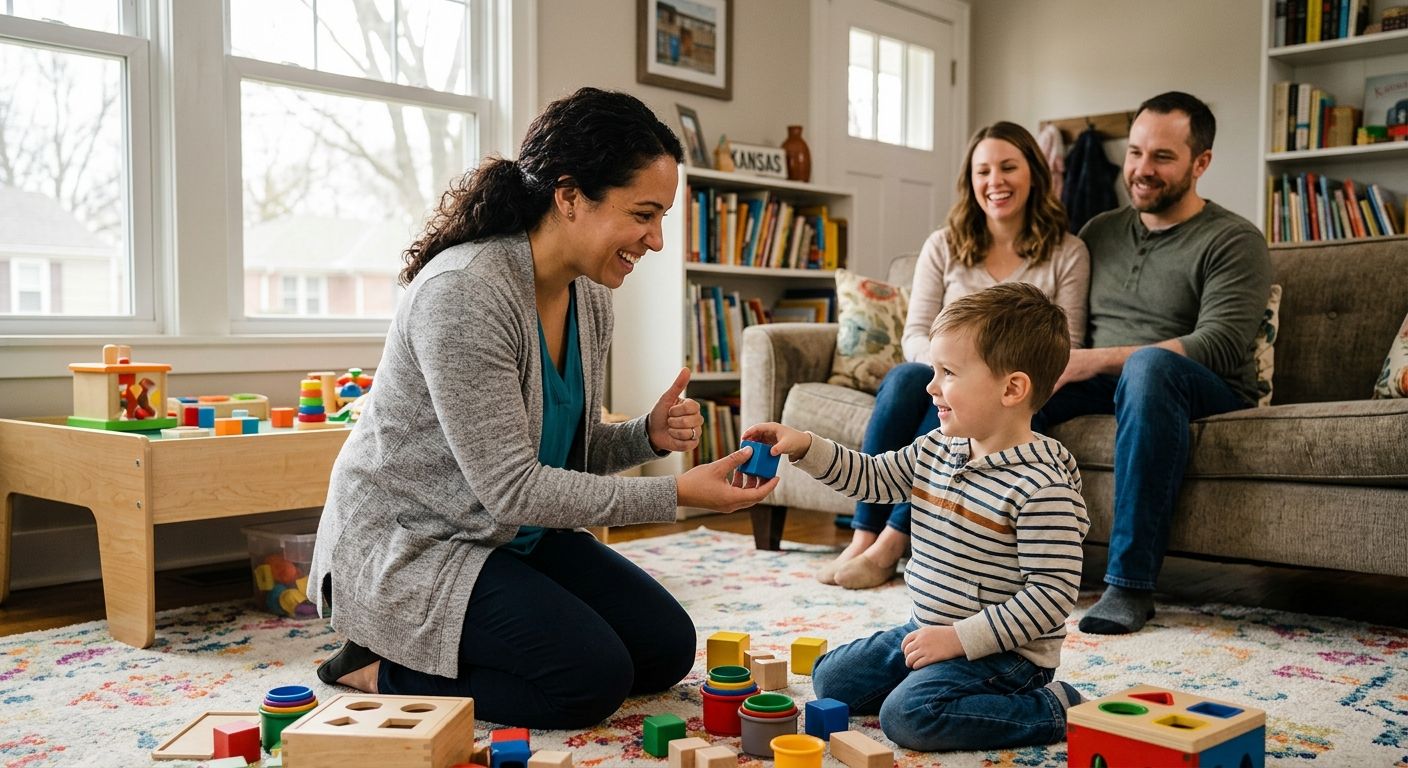
We deliver in-home ABA therapy through 1:1 sessions led by trained Registered Behavior Technicians (RBTs) right in your child’s natural home environment in Kansas City. This approach allows for seamless integration into daily life, with schedules customized to your family’s routine for maximum flexibility and effectiveness. According to Heart Core ABA‘s internal service delivery FAQ, this model emphasizes a natural home setting that promotes generalization of skills to everyday home activities, ensuring therapy feels natural rather than disruptive.
Our school-based services complement this with consultations and programming tailored for classroom success. Board Certified Behavior Analysts (BCBAs) collaborate with educators to embed behavior supports into school routines, helping children apply learned skills among peers and teachers. This dual approach—in-home for foundational practice and school-based for real-world application—creates consistent progress across environments. Families appreciate the continuity, as our team coordinates efforts to reinforce gains wherever your child spends their day.
Whether starting with an in-home assessment or transitioning to school supports, we prioritize RBT-delivered 1:1 ABA sessions overseen by BCBAs. These services align with insurance benefits verification to make access straightforward. Real progress, real connection begins here, fostering skills that last.
The following table compares our service delivery models, as outlined in Heart Core ABA FAQs providing practical examples of in-home versus school-based approaches:
| Model | In-Home | School-Based |
|---|---|---|
| In-Home | Natural home setting | Customized to family schedule |
This comparison highlights how in-home therapy offers personalized depth while school-based services ensure academic carryover. Transitioning between these models strengthens overall outcomes, with our BCBAs customizing plans for smooth integration. Families in Kansas City benefit from this flexible framework, supported by weekly parent updates to track advancements.
Parent Coaching and Social Skills Groups
Beyond individual sessions, we extend support through parent coaching and social skills groups, key pillars of pediatric behavioral interventions. Our BCBAs lead weekly training sessions, empowering you with evidence-based strategies to reinforce therapy at home. These hands-on workshops cover communication techniques, routine management, and behavior prompts, ensuring you’re equipped for daily success.
Early intervention for toddlers targets foundational skills early, combining parent coaching with play-based activities to accelerate development. Meanwhile, our small social skills groups provide safe spaces for peer practice, building turn-taking, sharing, and conversation through structured games. We incorporate communication ABA therapy to enhance interactions, helping children navigate social dynamics confidently.
- Weekly parent updates via reports and meetings keep you informed on progress.
- Coaching focuses on practical tools like visual schedules for routines.
- Groups limit to 4-6 children for individualized attention.
- Early sessions emphasize joint attention and intersection skills.
- All aligned with personalized therapy plans for holistic growth.
These offerings create family involvement, turning therapy into a shared journey. Your child’s heart matters, and our approach builds lasting bonds through real progress, real connection.
Building Daily Routines and Independence
Pediatric behavior therapy shines in embedding skills into daily routines, transforming playtime, mealtimes, and bedtimes into opportunities for growth. Our BCBA-developed plans target self-reliance, using natural reinforcers to motivate participation and boost confidence in Kansas City homes.
For example, during mealtimes, we teach utensil use and request-making through prompted practice, fading support as mastery grows. Playtime becomes a canvas for imaginative skills, with RBTs guiding cooperative games that spark creativity and social engagement. Bedtime routines incorporate sequencing visuals to promote calm transitions and independent wind-downs.
- Mealtimes: Practice hygiene and choices to foster autonomy.
- Playtime: Develop turn-taking and problem-solving via toys.
- Bedtime: Build sleep hygiene with reward charts.
- Mornings: Morning checklists for dressing and grooming.
- Errands: Community outings to generalize shopping skills.
These personalized for your child’s success strategies ensure skills transfer beyond sessions. Through consistent RBT-delivered practice and BCBA oversight, children gain independence, reducing reliance on prompts over time. Families report stronger routines and proud milestones.
Ready to see these applications in action for your child? Contact us in Kansas City for a personalized therapy plan today.
Advanced Strategies in Pediatric Behavior Therapy
Building on core ABA techniques, at Heart Core ABA, we elevate pediatric behavior therapy through structured oversight and personalization. Our family-centered approach ensures real progress and real connection for every child.
Progress Tracking and BCBA Oversight
We prioritize transparent progress in hands-on ABA therapy with weekly parent updates and progress reporting. Our Registered Behavior Technicians (RBTs) collect data during sessions, while Board Certified Behavior Analysts (BCBAs) provide oversight. Heart Core ABA’s internal practices emphasize family-centered tracking, including detailed reports and assessments.
The following table outlines our Progress Monitoring Tools:
| Tool | Frequency | Metrics |
|---|---|---|
| Weekly Reports | Parent updates | Quarterly BCBA review |
These tools allow us to adjust goals dynamically, fostering measurable gains in communication, confidence, and independence. Parents receive clear insights, building trust in our process.
Customization for Individual Needs
Personalized for your child’s success, our BCBAs craft therapy plans tailored to autism spectrum variations. Drawing from authoritative clinical guidelines by the National Center for Biotechnology Information, we focus on evidence-based pediatric ABA interventions. RBT-delivered 1:1 sessions target unique strengths and challenges, such as social skills or daily routines.
- Communication goals: Build expressive and receptive abilities through play-based activities.
- Confidence building: Encourage independence with gradual skill mastery.
- Family input: Incorporate parent feedback for seamless home integration.
This customization ensures behavior therapy for children aligns with individual needs, promoting lasting development.
Transition to Center-Based Services
As children advance, we facilitate smooth shifts to our upcoming Center-Based ABA Therapy options. BCBA matching and care team coordination maintain continuity from in-home services. Your child’s heart matters, so we preserve momentum with familiar strategies and progress data.
Our team in Kansas City supports long-term care, blending in-home and center-based elements. Weekly parent updates continue, easing transitions while upholding our commitment to personalized pediatric behavior therapy. Contact us to explore how these strategies fit your family.
Frequently Asked Questions on Pediatric Therapy
Parents often ask about pediatric behavior therapy options for their kids. We at HeartCore ABA provide hands-on ABA therapy tailored to build communication, confidence, and independence.
What is pediatric behavior therapy and how does HeartCore ABA deliver it?
We deliver it via 1:1 RBT sessions with BCBA-developed plans. These focus on communication skills using techniques like PECS and positive reinforcement in natural settings, per HeartCore ABA guidance.
What ages do you serve for early intervention?
We serve toddlers and school-age children with In-Home ABA Therapy and Parent Coaching. Early intervention helps young learners thrive at home.
How does insurance work?
Our team handles transparent benefits verification and checks upfront. We guide families through coverage without surprises, ensuring smooth starts.
What results can we expect?
Expect real progress, real connection through weekly parent updates. Your child’s heart matters as we track measurable gains in skills and independence.
How to get started?
Contact us for an in-home assessment and BCBA matching. Begin personalized pediatric ABA therapy today—your child’s success awaits.
Empowering Your Child’s Journey with ABA Therapy
At HeartCore ABA, we’re dedicated to empowering your child’s journey with pediatric behavior therapy. Our hands-on ABA therapy builds communication, confidence, and independence through family-centered care.
Personalized for your child’s success, BCBAs craft tailored plans, with RBTs delivering 1:1 in-home sessions and weekly parent updates tracking progress. HeartCore ABA’s overview emphasizes this behavior therapy for kids fosters real progress, real connection.
Your child’s heart matters. Contact us now for a BCBA-led in-home assessment to begin today.
This article was researched and written with the assistance of AI tools.
Resources
- Get Personalized ABA Therapy for Child Communication Skills
- Develop Verbal Nonverbal Communication with In-Home ABA Therapy
- Enhance Toddler Language Skills Using Early ABA Intervention
- Replace Challenging Behaviors with Functional ABA Communication Training
- Learn St. Louis ABA Therapy Costs and Insurance Coverage
- Find BCBA-Led In-Home ABA Therapy with Expert Team
- Verify Missouri ABA Insurance and Session Pricing Details
- Explore BACB Standards for Professional ABA Therapy Practices