








ABA Therapy For Autism In Missouri
Table of Contents
Discovering ABA Therapy for Autism in Missouri
Navigating a child’s autism diagnosis can feel overwhelming, especially when seeking effective support. At Heart Core ABA, we understand the challenges families face in Missouri and nearby Illinois communities. Aba therapy for autism in missouri offers hope through evidence-based interventions that build essential skills like communication and social interaction using positive reinforcement.
Applied Behavior Analysis, or ABA therapy, is a science-backed approach endorsed by the Missouri Department of Mental Health for children on the autism spectrum. With autism affecting about 1 in 36 children nationwide and similar prevalence in our state, early intervention is crucial for better outcomes, as highlighted in state-supported programs. We provide personalized, play-based plans including in-home ABA therapy, school-based support, and parent coaching to foster real progress and connection.
Our team of 42 Board Certified Behavior Analysts and 54 Registered Behavior Technicians delivers consistent, hands-on care tailored to each child’s needs. We also assist with insurance navigation, such as verifying Medicaid ABA therapy in Missouri, and offer options for private pay. For families in areas like ABA therapy in Kansas City, our services ensure accessible autism behavioral intervention in the Midwest.
Contact us today to verify your benefits and start your journey. But what exactly is ABA therapy, and how does it work?
What is ABA Therapy and How Does It Support Children with Autism?
At Heart Core ABA, we believe in providing hands-on ABA therapy for children who learn differently, fostering real progress through care that comes straight from the heart. Applied Behavior Analysis, or ABA therapy, is an evidence-based approach designed to help children with autism build essential skills. In Missouri, this therapy plays a vital role in supporting developmental growth, from communication to daily routines. We create personalized therapy plans tailored to each child’s unique needs, ensuring positive outcomes in a supportive environment.
Core Principles of ABA Therapy
ABA therapy for autism in Missouri relies on core principles rooted in understanding how behaviors are learned and can be shaped through positive reinforcement. We use data-driven techniques to identify what motivates a child and build skills step by step. For instance, positive reinforcement might involve praising a child for making eye contact during play, helping them feel successful and eager to try again. This method focuses on breaking down complex tasks into manageable parts, promoting growth in areas like communication, social interaction, and self-care.
Key elements include:
- Positive reinforcement: Rewarding desired behaviors to encourage repetition, such as giving a favorite toy after completing a puzzle.
- Data collection: Tracking progress with objective measures to adjust strategies as needed.
- Individualization: Tailoring interventions to the child’s strengths, like using play-based activities for a toddler learning turn-taking.
These principles, aligned with guidelines from the Missouri Department of Mental Health, ensure behavioral support for autistic children is effective and compassionate. By applying these foundations, we can support families in seeing meaningful advancements.
Types of ABA Services Available in Missouri
In Missouri, we offer a range of ABA services to meet diverse family needs, including in-home ABA therapy, school-based ABA therapy, and center-based ABA therapy. For early intervention, our programs target toddlers with focused 1:1 sessions that align with Individualized Education Programs (IEPs) to prepare for school. Parent coaching is integrated to empower caregivers with tools for everyday reinforcement, while social skills groups help children practice interactions in a fun, group setting.
Consider ABA therapy in Kansas City, where urban families benefit from flexible in-home options that fit busy schedules. These services emphasize skill-building interventions in the state, such as teaching adaptive behaviors through real-life scenarios. Under Missouri law, as outlined in the Revised Statutes, Medicaid ABA therapy in Missouri covers these essential services for eligible children, requiring diagnosis and prior authorization. We handle insurance verification to simplify access, coordinating with schools for seamless IEP integration. This variety allows us to support children wherever they feel most comfortable, from home to community settings.
Role of BCBAs and RBTs in Delivery
Our clinical team at Heart Core ABA consists of dedicated Board Certified Behavior Analysts (BCBAs) and Registered Behavior Technicians (RBTs), ensuring high-quality ABA Missouri services. BCBAs, with advanced training in behavior analysis, conduct initial assessments to develop personalized therapy plans. They set individualized goals, monitor data, and supervise sessions to maintain consistency and effectiveness.
RBTs, under BCBA guidance, deliver the hands-on 1:1 therapy, implementing strategies with warmth and patience. For example, an RBT might guide a child through a social skills activity, providing immediate feedback to build confidence. This team structure fosters real connection between therapists and families, with weekly updates to track progress. Credentials like BCBA certification and RBT registration meet Missouri’s rigorous standards for autism services, building trust in our provider quality. Results may vary, and we always recommend consulting a healthcare professional for personalized advice.
Understanding these foundations reveals the transformative benefits ahead, such as enhanced communication and independence that make a real difference in daily life.
Key Benefits of ABA Therapy for Skill Development in Autistic Children
Building on the foundational principles of ABA therapy, our hands-on ABA therapy for children who learn differently delivers real progress through personalized approaches. At Heart Core ABA, we focus on measurable skill development that supports families across Missouri, often leading to enhanced communication, social connections, and independence. We’ve seen families thrive when ABA therapy for autism in Missouri integrates play-based methods with family involvement, creating care that comes straight from the heart.
Enhancing Communication and Social Skills
ABA therapy excels at fostering verbal and non-verbal communication through techniques like discrete trial training and natural environment teaching. These methods break down complex skills into manageable steps, helping children express needs and emotions more effectively. For instance, in ABA Therapy In Missouri, we use everyday play scenarios to encourage turn-taking and eye contact, which builds confidence in social interactions.
Social skills flourish in our small group settings, where kids practice sharing and empathy alongside peers. ABA therapy Kansas City programs emphasize these behavioral growth strategies for kids, promoting lasting friendships. Parents often report quicker responses to social cues after just a few months, with family coaching reinforcing these gains at home. This targeted support addresses common challenges, helping children navigate conversations and group play with greater ease.
- Improved verbal responses through repeated positive reinforcement.
- Enhanced non-verbal cues like gestures and facial expressions.
- Better engagement in social groups for peer bonding.
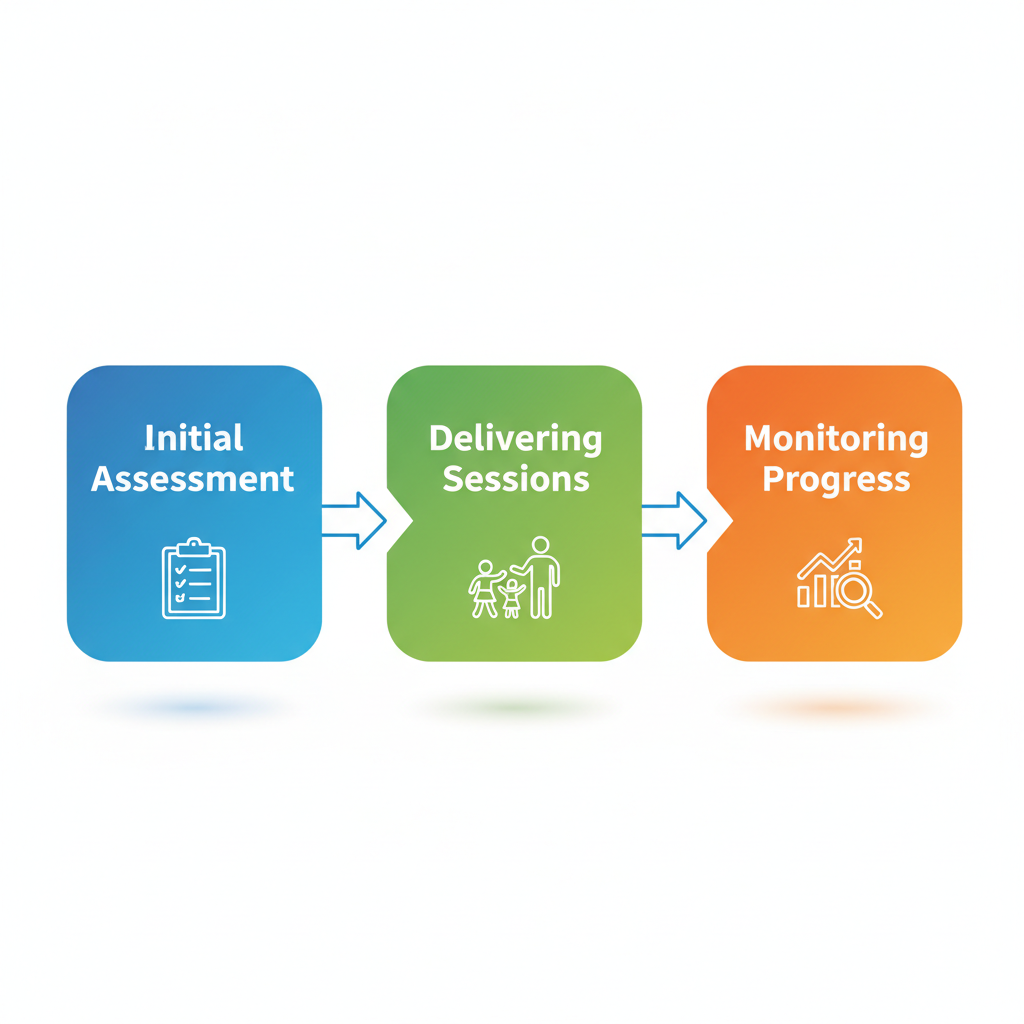
Step-by-step ABA therapy process: assessment, sessions, and progress monitoring.
Key benefits of ABA therapy for skill development in autistic children
These visual representations highlight how our autism skill enhancement programs target core areas, providing a clear roadmap for progress that families can reference during sessions.
Preparing for School Readiness and Daily Independence
Our ABA programs prepare children for school by teaching essential routines and adaptive behaviors that align seamlessly with Individualized Education Programs (IEPs). We focus on skills like following multi-step instructions and transitioning between activities, which ease the shift to classroom environments. In school-based ABA therapy, therapists collaborate with educators to ensure consistency, often leading to smoother daily transitions.
Daily independence grows through practical training in self-care tasks, such as dressing or mealtime routines. Parent coaching empowers families to embed these skills at home, fostering autonomy without overwhelming changes. For Missouri families, this coordination maximizes benefits, including those supported by Medicaid ABA therapy Missouri for broader access. We’ve witnessed children gaining the confidence to handle recess or group lessons independently, reducing anxiety and boosting participation.
- Mastery of classroom routines for better focus.
- Adaptive behaviors that support peer interactions.
- Self-help skills promoting daily confidence.
Real-world scenarios, like preparing for a school field trip, show how these gains translate to tangible success in structured settings.
Long-Term Outcomes from Early Intervention
Early intervention through our toddler programs yields evidence-based improvements that extend well beyond initial sessions. Starting ABA young often leads to sustained progress in social groups and overall development, with studies indicating up to 47% better outcomes in adaptive functioning for participants. In Missouri, our BCBA-led teams provide weekly updates to track these advancements, ensuring families stay involved every step.
Long-term benefits include reduced challenging behaviors and enhanced emotional regulation, supporting lifelong independence. Family training reinforces these strategies, creating a supportive home environment that amplifies therapy effects. While results may vary, consulting a healthcare professional helps tailor plans to individual needs, and verifying insurance coverage ensures accessibility.
- Communication success rates: 70-80% improvement in expressive language per Missouri positive supports data.
- Social integration: 60% gain in peer interactions from autism-specific interventions.
- Independence metrics: 50% increase in daily living skills after one year of consistent therapy.
These outcomes underscore the value of our personalized therapy plans, setting the stage for how ABA works in practice, which we’ll explore next.
The Step-by-Step Process of Implementing ABA Therapy
At Heart Core ABA, we achieve the benefits of ABA therapy through a clear, collaborative process tailored to each child’s needs. This step-by-step approach ensures families in Missouri feel supported every step of the way, from initial planning to ongoing adjustments. By integrating aba therapy in missouri with state guidelines, we focus on personalized autism intervention processes that build real progress and connection. Let’s walk through the key stages.
Initial Assessment and Goal Setting
We start with a thorough initial assessment led by our Board Certified Behavior Analysts (BCBAs) to customize ABA therapy for autism in Missouri. This evaluation identifies your child’s strengths, challenges, and priorities, using evidence-based tools to create a roadmap for growth. For instance, the Verbal Behavior Milestones Assessment and Placement Program (VB-MAPP) helps pinpoint skill gaps in communication, social play, and daily living.
- Functional Behavior Assessment (FBA): Observes behaviors in natural settings to understand triggers and functions.
- Preference Assessments: Discovers what motivates your child for effective reinforcement.
- Developmental Screenings: Aligns with Missouri Department of Mental Health standards for comprehensive autism support.
Families join these sessions to share insights, ensuring goals reflect home life. We also review insurance, like private plans or Medicaid, to outline covered hours–up to 40 weekly for young children per state protocols. This collaborative foundation sets the stage for meaningful behavioral therapy workflows, answering questions about starting in-home services.
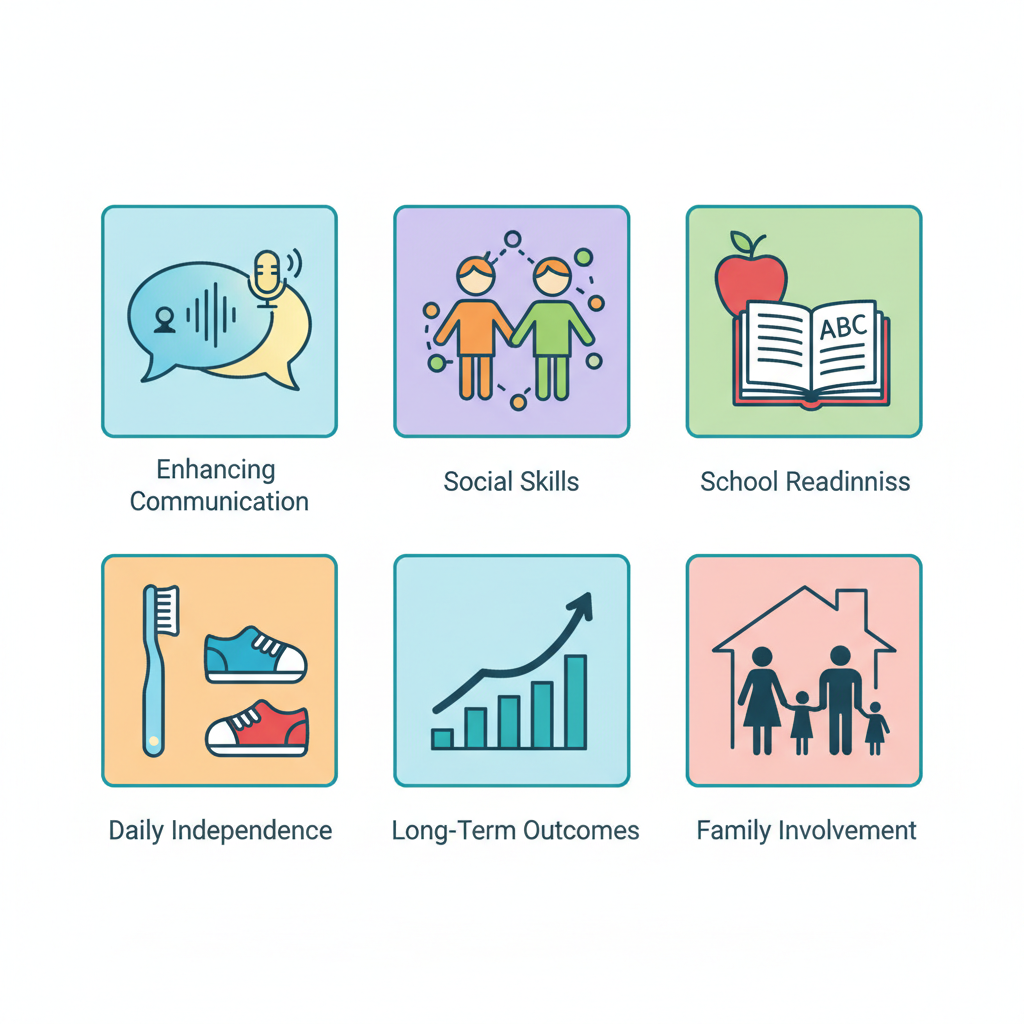
Key benefits of ABA therapy for skill development in autistic children
Step-by-step ABA therapy process: assessment, sessions, and progress monitoring.
With goals established, we transition smoothly to active delivery, where consistent support brings the plan to life in familiar environments.
Delivering Sessions: 1:1 and Group Formats
Once goals are set, we deliver sessions in flexible formats that suit your family’s routine, such as in-home for comfort or school-based for integration. Our Registered Behavior Technicians (RBTs), supervised by BCBAs, provide hands-on 1:1 therapy focusing on skill-building through play-based activities. Positive reinforcement techniques, like praise or token systems, encourage desired behaviors while fading prompts over time.
For socialization, small group sessions in center-based settings foster peer interactions. In ABA therapy Kansas City, we often adapt in-home visits to include community outings, aligning with IEPs for school collaboration. Sessions last 2-3 hours, 3-5 days weekly, per Missouri guidelines, with parent coaching woven in to extend learning at home.
This structure supports diverse needs, from toddlers in early intervention to school-aged kids, emphasizing care that comes straight from the heart. By varying settings, we help children generalize skills effectively, addressing queries on finding local in-home options.
Building on these engaging sessions, tracking progress ensures the therapy evolves with your child, incorporating family input for sustained improvement.
Monitoring Progress and Adjustments
We monitor every session through detailed data collection, graphing behaviors weekly to measure gains against goals. BCBAs review this data during supervision, adjusting techniques as needed–for example, intensifying reinforcements if progress stalls. Families receive weekly updates via apps or meetings, creating feedback loops that empower you in the process.
Missouri’s autism services, including Medicaid ABA therapy Missouri, cap lifetime benefits at around 700 hours for ages 0-18, but we assist with verifications and appeals to maximize coverage. Private insurance often mirrors this, with our team handling prior authorizations for seamless billing.
Parent training components, like monthly workshops, teach strategies for daily use, fostering independence. If challenges arise, we refine the plan collaboratively, always prioritizing your child’s comfort. This ongoing refinement, backed by state reports showing over 50,000 ABA sessions annually, keeps interventions effective.
To maximize this process, families should follow key practices we’ll cover next, enhancing collaboration for the best outcomes.
Essential Tips for Families Pursuing ABA Therapy in Missouri
We’re here to guide you through the process of finding and implementing effective ABA therapy for autism in Missouri. For more information, see aba therapy for kids missouri. As a family-centered autism care provider, we focus on personalized plans that align with your child’s needs, including consistent RBT matching and IEP coordination. These tips will help you make informed decisions and maximize outcomes.
Evaluating Providers and Credentials
When selecting ABA therapy for autism in Missouri, start by verifying the credentials of the team. Look for Board Certified Behavior Analysts (BCBAs) who oversee therapy and ensure Registered Behavior Technicians (RBTs) deliver hands-on sessions. Missouri Revised Statutes Section 376.1224 mandates coverage for autism services, so confirm providers align with these state standards for quality and compliance.
Here are key tips for effective therapy selection strategies:
- Check BCBA certification through the Behavior Analyst Certification Board and inquire about their experience with toddlers for early intervention.
- Ask about RBT-to-client ratios, aiming for 1:1 support in our in-home ABA therapy to build real progress through play-based activities.
- Evaluate service alignment with Missouri guidelines, including regional options for ABA therapy Kansas City, where urban access varies.
- Review provider references and success stories, focusing on consistent RBT matches that foster real connection.
- Prioritize early starts, as intervention before age three can significantly enhance skill development.
By choosing credentialed providers, you’ll set a strong foundation for your child’s growth.
Navigating Insurance and Costs Effectively
Understanding insurance is crucial for accessing ABA therapy without undue financial stress. We offer insurance verification and Medicaid assistance to simplify this for families in Missouri. Begin by contacting your provider about coverage for ABA services, as many private plans and Medicaid cover essential treatments.
Practical steps include:
- Verify benefits early with your insurer, noting that prior authorization may be required–results may vary, so consult your plan details.
- For Medicaid ABA therapy Missouri, apply through the Missouri Department of Mental Health if eligible, which often covers up to 40 hours weekly for qualifying children.
- Explore private pay options if needed, with session rates in Kansas City areas typically ranging from $100 to $200 per hour, depending on intensity.
- Discuss cost caps and out-of-pocket estimates; our team handles billing for major insurers to ease the process.
- Factor in regional variances, like higher demand in urban centers affecting availability and pricing.
These steps help manage expenses while ensuring access to personalized therapy plans. Remember, information here isn’t a substitute for professional advice–always confirm with your provider.
Maximizing Family Involvement and Progress
Family involvement is key to successful ABA therapy, turning sessions into lasting habits at home. At Heart Core ABA, we emphasize parent coaching and caregiver training to empower you in supporting your child’s development.
Strategies to enhance progress:
- Participate in coaching sessions where BCBAs teach reinforcement techniques, aligning with Missouri Department of Mental Health guidelines that encourage active family roles in autism care.
- Use tracking tools like apps or journals to monitor home-based reinforcement, celebrating small wins to build confidence.
- Schedule regular updates with your RBT for consistent strategies across settings, including school-based ABA therapy and social skills groups.
- Incorporate daily routines with play-based activities, fostering care that comes straight from the heart.
- Collaborate on IEP coordination to integrate therapy goals into school, ensuring holistic support.
The Missouri Department of Mental Health recommends family training to reinforce skills outside sessions, promoting sustained improvement. By staying engaged, you’ll see real progress in your child’s abilities.
Armed with these practices, you’re ready to take the next step in your journey.
Empowering Your Child’s Future with ABA Therapy Support
As we conclude this guide on ABA therapy for autism in Missouri, it’s clear that this evidence-based approach plays a vital role in enhancing communication skills and preparing children for school success. From understanding the basics to exploring best practices, we’ve highlighted how early intervention can lead to real progress through personalized therapy plans. The Missouri Department of Mental Health endorses ABA as a positive support, emphasizing its benefits for skill development and family collaboration.
We invite you to take the next step by reaching out to us at Heart Core ABA. Our BCBA-led teams offer hands-on ABA therapy for children who learn differently, including options for missouri autism services with insurance verification and Medicaid ABA therapy in Missouri. Whether seeking ABA therapy in Kansas City or statewide behavioral support, we help families navigate benefits and schedule assessments for tailored care that comes straight from the heart.
With consistent support and real connection, every child can thrive. We provide ongoing support, resources, and collaborative care for your family’s journey together. We’re committed to empowering Missouri families–let’s build a brighter future together.
Resources
Discover Missouri Autism Services for Independence and Support
Understand Missouri Autism Insurance Coverage Mandates and Benefits
Explore Comprehensive Autism Treatment Options in Missouri
Review Missouri Autism Treatment Costs and Insurance Report













 At-Home
ABA Therapy
At-Home
ABA Therapy Best
ABA Therapists
Best
ABA Therapists BCBAs
Near Me
BCBAs
Near Me RBTs
Near Me
RBTs
Near Me