








ABA Therapy At School
Table of Contents
Exploring ABA Therapy in School Settings
We understand the challenges families face when supporting children with autism spectrum disorder (ASD) in school environments, especially in Missouri and nearby Illinois communities. Aba therapy at school plays a vital role by integrating evidence-based interventions into daily routines, helping children build essential skills like communication and social interaction. According to the CDC, about 1 in 36 children has ASD, underscoring the growing need for such supports in educational settings to promote early intervention and long-term success.
At Heart Core ABA, we deliver personalized, BCBA-led school-based ABA therapy that aligns seamlessly with classroom activities. Our hands-on, play-based approach includes 1:1 instruction tailored to each child’s needs, coordinating closely with Individualized Education Programs (IEPs) to support ABA IEP goals. We navigate insurance verification, including Medicaid, to make these education-focused ABA services accessible without added stress for families.
This guide explores the fundamentals of school-based ABA therapy, its benefits for children with ASD, practical implementation strategies, and best practices for collaboration between schools, therapists, and parents. Join us as we dive deeper into how these interventions can transform school experiences and foster real progress today.
Understanding School-Based ABA Therapy
School-based ABA therapy plays a vital role in supporting children with autism spectrum disorder (ASD) right in their educational environments. We at Heart Core ABA design our programs to fit seamlessly into school days, using hands-on approaches that foster real progress and real connection. This therapy helps build essential skills while aligning with classroom routines, especially in Missouri schools and nearby Illinois communities. By incorporating positive reinforcement and personalized strategies, we ensure care that comes straight from the heart.
What School-Based ABA Therapy Entails
School-based ABA therapy applies the core principles of Applied Behavior Analysis (ABA) directly within classroom settings to help children with autism thrive. According to the CDC, about 1 in 36 children in the U.S. has ASD, and many face challenges in school environments that impact learning and social interactions. ABA focuses on positive reinforcement to encourage desired behaviors, paired with data-driven tracking to measure progress in skills like communication and self-regulation.
In Missouri schools, we adapt these principles through classroom ABA interventions, such as discrete trial training where a child practices a specific task in short, structured sessions during class time. Positive reinforcement might involve praising a student for completing a math problem independently, using stickers or extra playtime as rewards. We emphasize play-based elements to keep sessions engaging, turning learning into natural, fun activities. This school-integrated behavioral support minimizes disruptions and promotes independence, addressing everyday challenges like transitioning between activities or following instructions. For instance, during group lessons, our therapists might guide a child using visual schedules to reduce anxiety. School Based ABA Therapy ensures these adaptations meet each child’s unique needs, creating a supportive bridge between therapy and education.
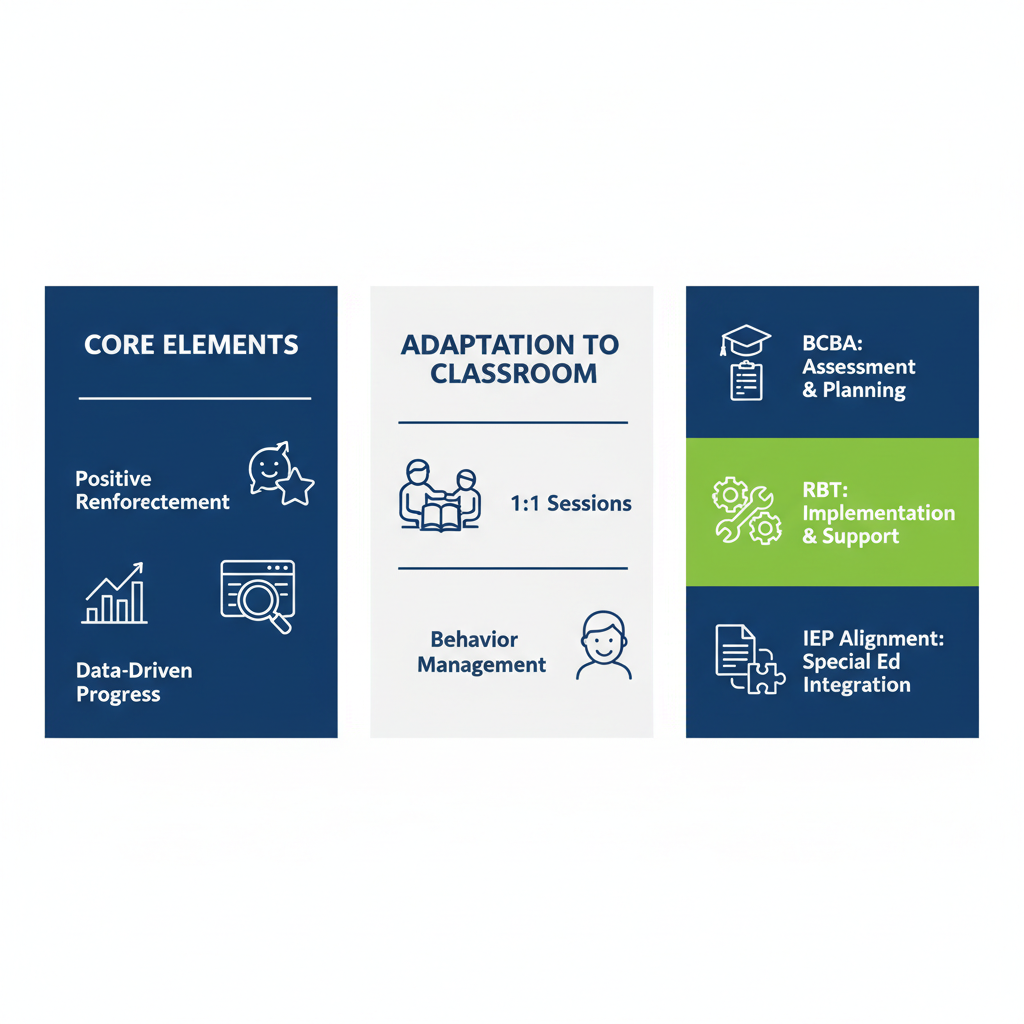
Overview of school-based ABA therapy principles and provider roles
These foundational elements set the stage for meaningful growth. As we integrate therapy into daily school life, children experience consistent support that builds confidence and prepares them for broader academic success.
Who Provides These Services
Our dedicated team delivers school-based ABA therapy with expertise and consistency. Board Certified Behavior Analysts (BCBAs) lead the process, conducting assessments to develop personalized therapy plans tailored to each child’s strengths and goals. With our network of over 40 BCBAs, we ensure thorough supervision and ongoing adjustments based on real-time data.
Registered Behavior Technicians (RBTs), numbering more than 50 in our team, handle the hands-on implementation of these plans. They provide 1:1 support during school hours, applying techniques like modeling positive behaviors in group settings. We prioritize consistent RBT matches so children build trust and rapport, enhancing the effectiveness of every session. This collaborative approach guarantees reliable, heart-centered care in educational spaces.
Integration with Special Education
School-based ABA therapy aligns closely with special education systems, enhancing Individualized Education Programs (IEPs) in public schools across Missouri and the Illinois border areas. We coordinate with school districts to embed ABA IEP goals into daily curricula, ensuring therapy supports broader educational objectives like improving social skills or academic participation. The CDC highlights ABA as an evidence-based treatment that targets core ASD challenges, making it a natural fit for IEPs focused on functional outcomes.
For example, if a child’s IEP includes goals for better peer interactions, our classroom ABA interventions might involve structured playgroups during recess, using reinforcement to encourage turn-taking. We handle the logistics, from insurance verification to prior authorizations through Medicaid or private plans, so families face fewer barriers. In Springfield-area schools, this integration has helped students transition smoothly between general and special education classes.
Our regional expertise shines in these partnerships, offering weekly parent updates and caregiver coaching to reinforce school progress at home. Strategies like visual aids for behavior management or social stories for routine changes create cohesive support systems. While results may vary and we always recommend consulting healthcare professionals for personalized advice, this alignment promotes real progress without overwhelming school schedules. By weaving ABA into the fabric of special education, we empower children to reach their potential in familiar settings, hinting at the transformative benefits explored further in our programs.
Benefits of ABA Therapy at School
At Heart Core ABA, we witness firsthand how integrating school based aba therapy into a child’s daily routine transforms their educational experience. For families in Missouri and Illinois communities, this approach supports autistic students in thriving within school environments. By focusing on hands-on, play-based methods, we help children build skills that foster real progress and stronger connections in the classroom. These benefits extend beyond academics, promoting overall well-being and smoother transitions for everyone involved.
Skill Development for Academic Success
School-based ABA therapy plays a vital role in equipping children with the foundational skills needed for classroom engagement. We emphasize building attention span, communication abilities, and task completion through personalized, evidence-based techniques tailored to each child’s learning style. This not only boosts confidence but also sets the stage for meaningful participation in lessons and group activities.
In practice, consider a young student who struggles with sustaining focus during reading time. Our therapists use visual prompts and reinforcement strategies to gradually increase attention, leading to noticeable improvements in following instructions and completing assignments independently. These gains align with Medicaid-covered autism services, making such interventions accessible for many families without added financial strain.
- Improved Focus and Attention: Helps children stay on task longer, reducing frustration during lessons.
- Enhanced Communication Skills: Encourages expressing needs clearly, aiding interactions with teachers and peers.
- Task Mastery: Breaks down complex activities into manageable steps for greater independence.
By weaving these school skill-building benefits into daily routines, children in Illinois schools experience greater academic readiness and a sense of achievement.
Enhanced Social and Behavioral Growth
One of the standout educational ABA advantages of school-based ABA therapy lies in nurturing social interactions and self-regulation. We guide children in navigating peer dynamics, understanding social cues, and managing emotions in real-time school scenarios. This fosters a positive classroom atmosphere where everyone can learn and grow together.
For instance, we often work with a child who finds group play challenging by introducing turn-taking games during recess. Over time, this leads to more cooperative play and fewer conflicts, supported by consistent reinforcement from our Board Certified Behavior Analysts and Registered Behavior Technicians. Such progress mirrors the collaborative spirit of Medicaid autism services, ensuring behavioral supports are integrated seamlessly into school life.
- Better Peer Interactions: Teaches sharing and empathy, strengthening friendships.
- Emotional Regulation: Provides tools to handle feelings like frustration without outbursts.
- Reduced Disruptions: Promotes calm behaviors that minimize interruptions for the whole class.
These enhancements create supportive environments in Missouri districts, where children feel included and valued.
Support for Family and School Collaboration
School-based ABA therapy excels in bridging the gap between home, school, and therapy, promoting holistic development through coordinated efforts. We prioritize aligning interventions with Individualized Education Programs (IEPs), tracking ABA IEP goals to ensure measurable advancements that benefit the entire support network. This teamwork amplifies outcomes, making school a hub for comprehensive growth.
Take a family we supported where a child’s impulsivity affected class participation. By collaborating with educators on shared strategies, like positive reinforcement charts, we saw steady improvements in self-control and engagement. Leveraging resources from Medicaid autism services, this approach keeps services affordable and focused on long-term success in our regions.
- IEP Alignment: Ensures therapy goals sync with educational objectives for unified progress.
- Family Involvement: Empowers parents with tools to reinforce skills at home, extending benefits beyond school hours.
- School Partnership: Facilitates teacher training for consistent application, enhancing overall support.
In Missouri settings, this collaboration leads to thriving families and students who navigate school with greater ease and joy. Real progress comes from these connections, reminding us that care straight from the heart makes all the difference. Results may vary, so we encourage consulting your healthcare professional for personalized advice.
How School-Based ABA Therapy Works
At Heart Core ABA, we bring In School ABA Therapy directly into classrooms across Missouri and Illinois communities to support children with autism spectrum disorder. This approach integrates hands-on ABA therapy for children who learn differently right into the school day, fostering real progress through everyday activities. Our BCBA-supervised programs, delivered by dedicated RBTs, align with each child’s needs while respecting school routines.
Daily Implementation in Classrooms
We start each school-based ABA therapy session by embedding naturalistic teaching strategies into daily lessons, making therapy feel like a natural part of the school environment. For instance, during math time, our RBTs might use prompting hierarchies–backed by CDC research on effective interventions–to guide a child through problem-solving while reinforcing social skills. Sessions typically last 30 to 60 minutes, focusing on targeted behaviors like turn-taking or following instructions, with discrete trial training for skill-building when needed.
In Missouri elementary schools, we’ve seen success with adaptive strategies for transitions, such as visual schedules to reduce anxiety during class changes. These classroom ABA processes help children stay engaged without disrupting the group. A quick tip: Pair therapy with peer interactions to build confidence organically. This hands-on method ensures therapy supports academic goals, promoting real connection in the learning space.
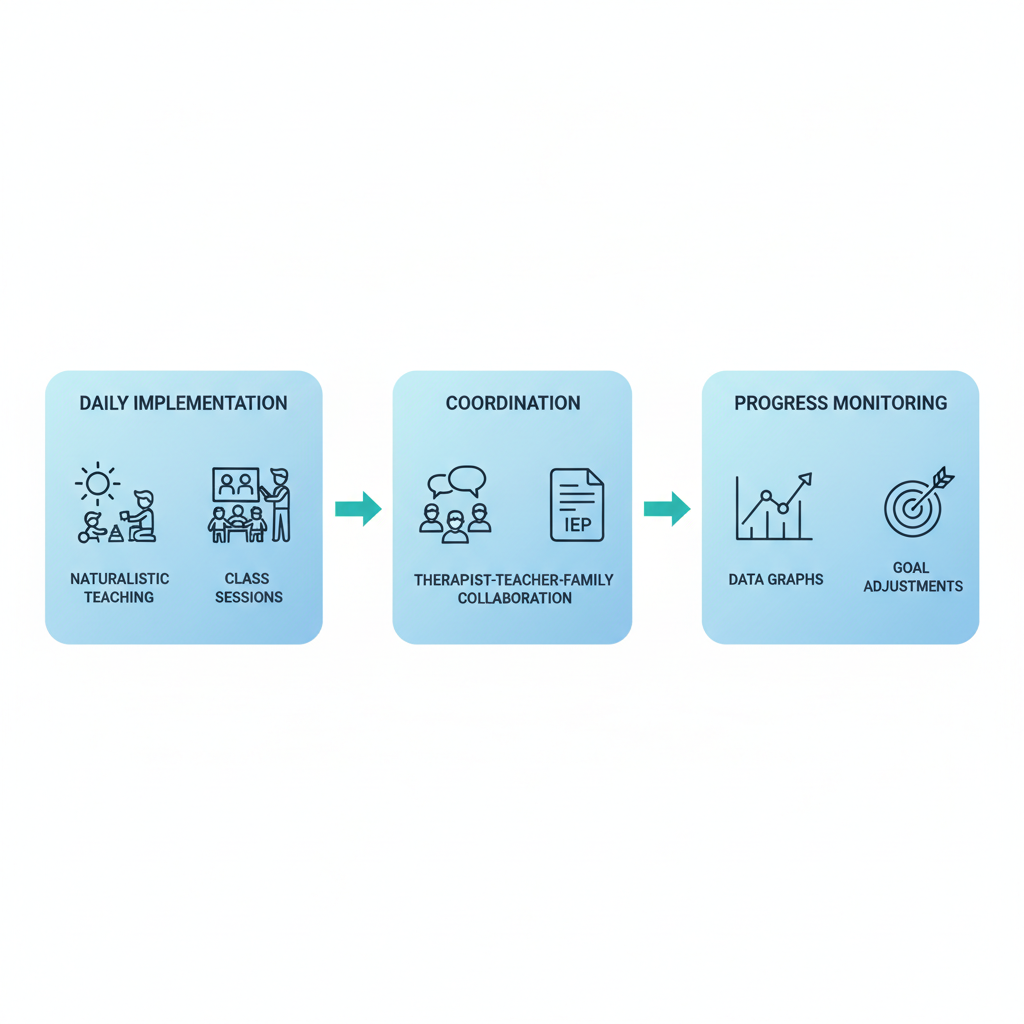
School-based ABA therapy workflow: implementation, coordination, progress monitoring
The diagram above illustrates how these elements connect seamlessly, providing a clear overview for educators and families to follow the therapy’s progression throughout the school year.
Coordination with Teachers and Families
Collaboration lies at the heart of our school therapy workflows, where we partner closely with teachers and families to create cohesive support plans. In Illinois communities, our BCBAs meet weekly with school staff to review ABA IEP goals, ensuring therapy complements the child’s Individualized Education Program. We share progress notes via secure apps, outlining strategies like positive reinforcement that teachers can reinforce during lessons.
Family involvement is key; we provide bi-weekly updates through phone calls or emails, explaining how school-based ABA therapy aligns with home routines. For public services coordination, as noted in general Medicaid guidelines, we assist with eligibility discussions to sustain access without promising specifics–always verify coverage as prior authorization may be required. Here’s a simple process:
- Initial IEP meeting to align goals.
- Ongoing teacher consultations for real-time adjustments.
- Family training sessions on reinforcing skills at home.
This teamwork builds care that comes straight from the heart, empowering everyone involved.
Progress Monitoring and Adjustments
Tracking progress in school-based ABA therapy involves consistent data collection to measure growth and make timely changes. Our RBTs use tools like ABC charts–antecedent, behavior, consequence–to log behaviors during sessions, reviewing data weekly with BCBAs for insights on what’s working. In Missouri districts, this might mean adjusting goals if a child masters communication skills ahead of schedule, shifting focus to independence in group activities.
We adapt strategies for school challenges, such as noise sensitivity, by incorporating sensory breaks informed by CDC-backed techniques. Quarterly reports shared with families and IEPs highlight milestones, like improved participation in circle time, while noting areas for refinement. Results may vary, so we emphasize personalized adjustments. A practical example: If data shows regression during testing seasons, we introduce calming visuals to maintain focus. This ongoing evaluation keeps therapy dynamic and effective, supporting long-term success in educational settings.
Best Practices for Implementing ABA in Schools
At Heart Core ABA, we believe that integrating ABA therapy into school settings can make a tremendous difference for children with autism spectrum disorder. Drawing from our experience serving families in Missouri and Illinois, we focus on evidence-based strategies that promote real progress through personalized therapy plans. By emphasizing goal-setting, teamwork, and problem-solving, schools can create supportive environments where kids thrive.
Setting Effective IEP Goals with ABA
We recommend starting with SMART goals–Specific, Measurable, Achievable, Relevant, and Time-bound–when incorporating ABA principles into IEPs. This approach ensures ABA IEP goals align with each child’s unique needs, fostering skill development in areas like communication and social interaction. For instance, instead of a vague goal like “improve behavior,” aim for something concrete such as “Student will initiate a conversation with a peer during recess three times per week for four weeks, using a scripted prompt provided by the therapist.”
To craft these, begin by assessing the child’s current abilities through observation and data collection. Then, collaborate with the IEP team to break goals into small, observable steps. We often use visual supports and reinforcement systems in our hands-on ABA therapy for children who learn differently to track progress.
Monitoring comes next with tools like ABC charts (Antecedent-Behavior-Consequence) or frequency data sheets, which help measure improvements objectively. In Missouri educational systems, we’ve seen these methods lead to quicker adjustments, ensuring goals remain realistic for Illinois students too. Regular reviews every four to six weeks keep everyone accountable and celebrate small wins along the way.
Collaboration Strategies for Success
Effective teamwork is key to successful school-based ABA therapy, and we at Heart Core ABA prioritize open lines of communication between educators, therapists, and families. Start by inviting ABA providers to IEP meetings–they can offer insights on behavioral strategies tailored to the classroom. For example, our BCBAs frequently join sessions to suggest modifications that blend seamlessly with school routines.
Build a shared communication plan using tools like shared digital logs or weekly email updates to keep all parties informed on progress toward in school aba therapy goals. In our Illinois programs, we host joint training sessions where teachers learn basic ABA techniques, such as positive reinforcement, to reinforce consistency across home and school.
Families play a vital role too; we encourage parent input during planning to incorporate cultural preferences and daily routines. This integrated school behavioral practices not only boosts outcomes but also builds trust, creating a unified support network that benefits the child every day.
Common Challenges and Solutions
Implementing ABA in schools often faces hurdles like scheduling conflicts between therapy sessions and class times. To address this, we suggest creating flexible timetables that prioritize high-need periods, such as morning academics when focus is strongest. In Missouri schools we’ve partnered with, shifting sessions to after-school slots has minimized disruptions while maintaining momentum.
Another issue is navigating insurance for ABA services; reference Medicaid guidelines for coordination tips, as they emphasize timely prior authorizations. Our team handles verification to ease this burden, ensuring coverage for eligible families without delays.
Staff training gaps can also arise, but short workshops on goal-oriented ABA planning overcome this by equipping educators with practical skills. For progress monitoring, adopt simple apps or checklists to standardize data collection across teams. By tackling these proactively, schools achieve sustainable implementation, leading to lasting real progress and stronger connections for every child we serve.
Remember, results may vary, and it’s always best to consult a healthcare professional for personalized advice.
Key Takeaways on School-Based ABA
As we wrap up our guide on ABA therapy at school, it’s clear that this approach plays a vital role in supporting children with autism in educational environments. School-based ABA therapy fosters essential skills like communication, social interaction, and self-regulation, all while aligning seamlessly with daily classroom routines in Missouri and Illinois schools. We’ve explored how it integrates with Individualized Education Programs (IEPs), ensuring targeted progress without disrupting learning.
Key emphases from our discussion include the evidence-based practices that drive real progress through structured interventions and data-driven adjustments. ABA IEP goals help tailor support to each child’s unique needs, promoting independence and academic success. At Heart Core ABA, we highlight our hands-on ABA therapy for children who learn differently, offering school-based services alongside parent coaching and insurance verification to ease access for families. Our BCBA-led teams provide consistent 1:1 therapy and IEP coordination, with weekly updates to keep everyone connected.
We hope this guide empowers your journey toward better outcomes. According to the CDC, early behavioral treatments like ABA can improve social and communication skills in up to 47% of young children with autism. Consult our professionals for personalized plans, or explore options like in home aba therapy springfield for added flexibility. Together, we’re building brighter school experiences with care that comes straight from the heart.
Resources













 At-Home
ABA Therapy
At-Home
ABA Therapy Best
ABA Therapists
Best
ABA Therapists BCBAs
Near Me
BCBAs
Near Me RBTs
Near Me
RBTs
Near Me