Table of Contents
- Understanding Property Destruction and the Power of ABA
- Assessing the Reasons Behind Property Destruction
- Step 1: Pinpoint Triggers through a Functional Behavior Assessment
- Step 2: Teach Replacement Behaviors That Meet the Same Need
- Step 3: Use Positive Reinforcement to Manage Frustration
- Step 4: Create a Safety Plan for Home and School
Understanding Property Destruction and the Power of ABA
Understanding how to reduce property destruction with ABA starts with recognizing that property destruction often serves a sensory or stereotypic function. Property destruction—breaking, tearing, or damaging objects—can be more than a passing tantrum. Peer-reviewed research from the Journal of Applied Behavior Analysis identified a functional relationship between destructive manipulation and stereotypic behaviors, where the act of destroying an object provides automatic sensory reinforcement.
ABA addresses these behaviors through evidence-based strategies like response blocking. When we prevent the destructive act and redirect the individual toward appropriate play, we reduce property destruction while building adaptive skills. The same study found that response blocking decreased destructive behaviors and led to increases in appropriate toy play, showing a meaningful shift toward healthier behavior patterns. Recognizing how ABA can reduce property destruction naturally leads us to ask why these behaviors occur in the first place—a question that guides deeper assessment and personalized intervention.
Key Takeaways
- Property destruction rarely happens without purpose, it often provides sensory feedback that the child finds rewarding.
- A functional behavior assessment (FBA) is a collaborative process that uncovers why property destruction happens by revealing the specific triggers and what the child gains from the behavior.
- A structured safety framework translates the positive reinforcement techniques we use to manage frustration into a proactive strategy that prevents property destruction before it escalates.
- A safety plan sets the foundation, but true progress happens when parents have the tools to encourage positive behaviors at home.
- Once parents are empowered to implement strategies at home, it’s essential to track whether those strategies are working.
Assessing the Reasons Behind Property Destruction
Property destruction rarely happens without purpose, it often provides sensory feedback that the child finds rewarding. In particular, destructive acts like tearing or breaking can be maintained by repetitive, stereotypic manipulation that brings automatic reinforcement. A classic 1998 study in the Journal of Applied Behavior Analysis demonstrated that for some individuals, such behavior is functionally related to stereotypic object manipulation; the study showed that when response blocking interrupted these repetitive actions, destructive behavior decreased and appropriate play increased. This research underscores how sensory reinforcement can drive these challenging behaviors.
At Heart Core ABA, our Board Certified Behavior Analysts conduct a functional behavior assessment to answer why these incidents occur. We systematically observe the child in their natural environment, noting what triggers the behavior and what reinforces it, to determine whether automatic sensory reinforcement is the primary maintaining variable. This careful analysis reveals whether stereotypic manipulation sustains the destruction.
With the ‘why’ assessed, the next logical step is to uncover the specific triggers that set off the behavior, a process we explore now. Understanding these roots allows us to design a truly individualized plan aimed at real progress.
Step 1: Pinpoint Triggers through a Functional Behavior Assessment
A functional behavior assessment (FBA) is a collaborative process that uncovers why property destruction happens by revealing the specific triggers and what the child gains from the behavior. We approach each FBA as a partnership, building a real connection with the child and family so that observation feels natural and supportive.
We gather information through direct observation, ABC (antecedent-behavior-consequence) recording, and structured caregiver interviews. This data lets us see patterns: what comes right before the destructive act.
According to a peer-reviewed study from the Journal of Applied Behavior Analysis, property destruction is frequently linked to stereotypic object manipulation, where repetitive actions provide their own sensory reinforcement. The research showed that response blocking effectively interrupted these patterns, paving the way for more appropriate interactions.
Once we isolate the exact need, for example, the tactile feedback from ripping paper, we can move directly toward teaching a replacement behavior that fulfills the same sensory need in a safe, appropriate way.
Step 2: Teach Replacement Behaviors That Meet the Same Need
Once we pinpoint the triggers through a functional behavior assessment, our BCBA-led teams at Heart Core ABA design personalized strategies to teach these new skills.
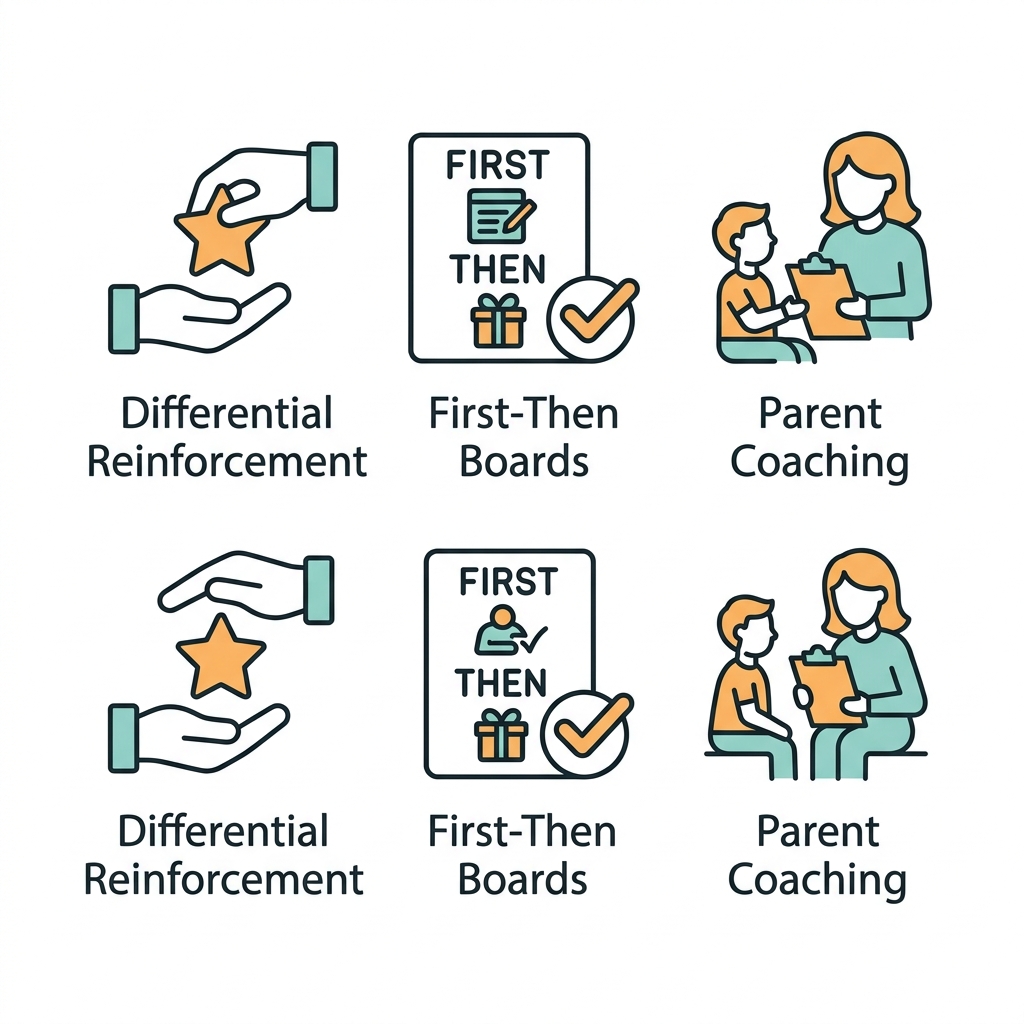
- Differential Reinforcement of Alternative Behavior (DRA): We reinforce the child’s use of a new skill—such as requesting a break verbally—instead of reinforcing property destruction.
- first-then boards: These visual cues show the child what task must be completed before they earn a reward, reducing anxiety and promoting cooperation.
- Parent coaching: Families learn to apply these strategies at home with guidance from a team that provides care that comes straight from the heart, keeping the child’s progress consistent.
With the replacement behavior in place, the next step is to use positive reinforcement to manage frustration when the child uses the new skill.
Step 3: Use Positive Reinforcement to Manage Frustration
Now that you have taught replacement behaviors that meet the same need, it’s time to make those behaviors stick through immediate positive reinforcement. Positive reinforcement means adding a rewarding stimulus right after the desired behavior to increase its frequency. We put this principle into practice by offering a high-value reward every time your child uses the replacement skill.
Start by identifying a few things your child enjoys. When the replacement behavior occurs, deliver that reward instantly so the link becomes strong. In the beginning, reinforce every single instance to build the habit. As your child masters the skill, you can gradually shift from constant tangible treats to more natural reinforcement, like a high-five, a smile, or verbal praise.
As you see fewer destructive outbursts, you’ll be ready to create a safety plan for home and school that maintains progress. Consistent positive reinforcement reduces destructive property behavior and helps your child communicate needs without frustration.
Step 4: Create a Safety Plan for Home and School
A structured safety framework translates the positive reinforcement techniques we use to manage frustration into a proactive strategy that prevents property destruction before it escalates. By embedding visual supports and differential reinforcement into daily routines, we create predictable environments where safe behaviors are consistently encouraged.
At home, this plan includes:
- Removing hazards from easy reach
- Designating a calm-down space with comforting sensory tools
- Displaying clear visual rules, such as First-Then boards
In school, our BCBA-led teams help establish:
- Open communication channels with teachers
- A designated check-in person the child trusts
- A crisis response protocol centered on de-escalation and alternative behaviors
We review and refine this plan regularly with the BCBA, incorporating data from therapist observations and parent coaching sessions to ensure it keeps pace with the child’s progress.
This consistent, collaborative foundation empowers parents to take an active role in sustaining behavior change at home.
Step 5: Empower Parents to Support Behavior Change at Home
A safety plan sets the foundation, but true progress happens when parents have the tools to encourage positive behaviors at home. One powerful tool we use is Differential Reinforcement of Alternative Behavior (DRA). This involves identifying a replacement behavior and reinforcing it consistently.
We also rely on first-then boards to create a predictable routine. These simple visual aids show a child that first they complete a task, then they receive a reward. The clear structure lowers anxiety and helps prevent destructive outbursts.
Our BCBA-led parent coaching ensures families can apply these strategies confidently. We help parents distinguish healthy reinforcement from bribery, provide real-time feedback, and tailor plans to daily routines. Regular coaching turns everyday moments into learning opportunities and builds lasting cooperation.
With these strategies in place, parents can track how their child responds and adjust approaches based on data.
Step 6: Track Progress and Adjust Strategies Based on Data
Once parents are empowered to implement strategies at home, it’s essential to track whether those strategies are working. Start a data log with columns for date, skill practiced, number of correct responses, and reinforcement schedule (e.g., 1:1 or 1:5). Record instances of the desired behavior and the reinforcer. For a new skill, we recommend high-frequency reinforcement—praise or a small reward after every correct response—to build momentum.
As your child’s correct responses become consistent (for example, 80% or higher across three sessions), adjust. Gradually stretch the reinforcement interval to 1:3 or 1:5, and replace tangible rewards with natural reinforcers like a high-five, extra story time, or access to a favorite toy. The data reveals when a challenging behavior is decreasing and signals readiness for intermittent reinforcement. Review the data weekly with your Heart Core ABA team to determine the optimal time to reduce reinforcement. Adjusting based on data lays the foundation for lasting positive behaviors.
Step 7: Sustain Positive Behavior Over Time
The data we tracked in Step 6 shows when and how often our child uses the new behavior, so we can adjust reinforcement to keep it going. We start by celebrating every single instance right after it happens, a hug, a favorite toy, or a sensory break. This high-frequency positive reinforcement locks in the habit and is very different from bribery: we plan the reward ahead of time and deliver it after the behavior, building lasting skills, not a quick fix.
As the behavior becomes reliable, we thin the schedule using our data. Our evidence-based approach recommends moving from a 1:1 ratio to rewarding every third or fifth success only when logs show readiness. Gradually, we also shift toward natural reinforcers like praise and extra playtime so the behavior stays strong without constant rewards. With patience, these positive changes become a natural part of daily life. A few troubleshooting ideas can help us stay on track.
Troubleshooting Common Hurdles in Reducing Property Destruction
Families working to reduce property destruction encounter setbacks that can feel discouraging, but these challenges are a normal part of the learning process. Inconsistent follow-through, a child’s sudden frustration, or an unexpected change in routine can cause old behaviors to reappear.
Differential reinforcement of alternative behavior (DRA) is a powerful tool for replacing property destruction with a safe, communicative alternative. Instead of focusing solely on stopping the destruction, our BCBA-led team identifies a socially appropriate replacement behavior the child can use to get the same need met—such as tapping a picture card or using a word—and systematically reinforces it. Over time, this shifts the child’s first response from destruction to communication.
Visual supports like first-then boards give children a clear, predictable plan that reduces the anxiety and frustration that often precede destructive outbursts. By showing what must be completed first and what reward follows, these boards transform ambiguous demands into a manageable sequence. Our therapists frequently weave first-then boards into therapy sessions, helping children understand exactly what is expected and what they will earn, which defuses tension before it escalates.
Consistency across home, school, and community settings is critical—without it, even the best strategies can falter. Through parent coaching, families learn to apply reinforcement and visual tools exactly as we do in session, turning everyday routines into opportunities for practice. This collaborative approach ensures that the child receives a unified message, which significantly reduces the confusion that can trigger destruction.
Proactively addressing these hurdles not only keeps behavioral gains on track but also strengthens the family’s confidence to handle future challenges, setting the stage for continued growth.
Frequently Asked Questions
How does a Functional Behavior Assessment (FBA) help identify the cause of property destruction?
A Functional Behavior Assessment identifies the cause of property destruction by revealing specific triggers and the sensory reinforcement the child gains. Heart Core ABA’s BCBAs conduct direct observations, ABC recording, and caregiver interviews to detect patterns. Research indicates such behavior is often linked to stereotypic object manipulation that provides automatic reinforcement.
What ABA strategies are most effective for teaching replacement behaviors when a child throws or breaks items?
The most effective ABA strategies for teaching replacement behaviors are differential reinforcement of alternative behavior (DRA), first-then boards, and parent coaching. DRA rewards a new skill like requesting a break, first-then boards offer visual structure, and parent coaching ensures families apply these methods consistently at home.
How can parents support ABA techniques at home to minimize property destruction?
Parents support ABA techniques at home by applying differential reinforcement of alternative behavior and using first-then boards to create predictable routines. They also remove hazards, set up a calm-down space, and participate in BCBA-led parent coaching to ensure strategies are used consistently across daily activities.
Does ABA therapy use positive reinforcement to help children manage the frustration that leads to property destruction?
Yes, ABA therapy uses positive reinforcement to manage the frustration that leads to property destruction. Heart Core ABA adds a rewarding stimulus immediately after the child uses a replacement behavior, strengthening the new skill. The approach starts with high-frequency reinforcement and gradually shifts to natural reinforcers like praise.
How do BCBAs and RBTs work together to create a safety plan for property destruction in a school or home setting?
BCBAs design the safety plan and lead the team, selecting visual supports and differential reinforcement strategies. RBTs deliver direct 1-on-1 therapy, implement the plan, and collect observational data. The BCBA regularly reviews this data and adjusts the plan to maintain a safe environment in home or school settings.
Continuing Your Journey Toward Positive Behavior Change
As you move forward in learning how to reduce property destruction with ABA, the dedication you’ve shown to consistency and tracking sets the stage for lasting improvements. Our team recommends starting with a high-frequency reinforcement schedule, such as a 1:1 ratio for new behaviors, which builds momentum and strengthens the link between positive actions and rewards. As consistency grows, shift gradually to natural reinforcers like praise or activities to maintain long-term behavior changes. Tracking data with simple logs lets you adjust the reinforcement schedule and celebrate small victories, reinforcing your progress—these steps help you move from troubleshooting hurdles toward a sustained, positive journey. If you’d like additional support, we offer a free assessment to tailor strategies to your situation. Please note that results may vary; this information is not a substitute for professional medical advice. Consult a healthcare professional for diagnosis and treatment, and verify insurance coverage as prior authorization may be required.
Get Your Free ABA Assessment
You have now learned how to pinpoint triggers through a functional behavior assessment and teach replacement behaviors that meet the same need. Consistent use of positive reinforcement and data-driven adjustments is key to sustaining these gains over time. Our BCBA-led team within our practice can provide the personalized guidance and support your family needs to put these strategies into action. We start with a free, no-obligation assessment and verify your insurance so you understand your coverage clearly. Our therapists work closely with you to troubleshoot hurdles and celebrate every milestone. Take the first step toward reducing property destruction and fostering positive behavior change today.