Table of Contents
Applied Behavior Analysis for Autism: A Foundation for Growth
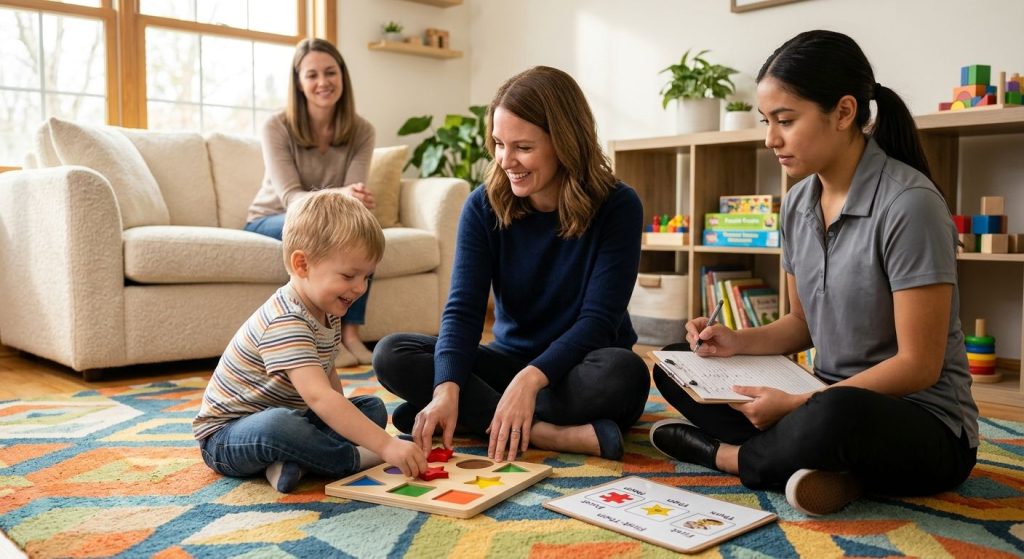
Applied behavior analysis for autism is a therapy grounded in the science of learning and behavior. According to the Centers for Disease Control and Prevention (CDC), ABA is an evidence-based intervention that helps children build essential skills through positive reinforcement. At Heart Core ABA, our Board Certified Behavior Analysts (BCBAs) design personalized plans tailored to your child’s unique strengths and needs.
ABA for autism focuses on fostering communication, social skills, and independence in everyday settings like your home. We believe family involvement is key; through parent coaching and weekly updates, we help you reinforce progress between sessions, building confidence that extends beyond therapy.
As an ABA therapy provider serving families in Kansas City, Heart Core ABA delivers hands-on autism ABA therapy that builds communication, confidence, and independence. In the next section, we’ll explore how these strategies get woven into everyday life.
1. Gold-Standard Recognition
In applied behavior analysis for autism, the difference between good care and exceptional care often comes down to one thing: certification. The Behavior Analyst Certification Board (BACB) is the leading international body that sets the bar for professional competence in ABA. BCBA® candidates must complete graduate-level coursework, extensive supervised experience, and a national exam. Registered Behavior Technicians (RBTs) must also meet training requirements and pass a competency assessment. These rigorous standards mean that a BACB-certified team has demonstrated the knowledge and skills to deliver effective therapy.
At Heart Core ABA, every child’s program is led by a Board Certified Behavior Analyst (BCBA) and delivered by RBTs with active BACB certifications. Our therapists use positive reinforcement strategies in every session to build communication and independence, while embedding natural opportunities for social skills development. With a BCBA guiding each step and RBTs providing consistent, compassionate support, you can trust that your child’s autism ABA therapy follows the highest professional standards. That commitment to gold-standard certification is what makes real progress and real connection possible.
2. Right Hours, Right Plan
Every child receives a uniquely tailored plan because applied behavior analysis for autism is not a one-size-fits-all approach. Our BCBA conducts a comprehensive assessment, considering your child’s developmental stage, communication skills, and behavior challenges to recommend an optimal weekly hour range—often between 10 and 40 hours. For a thorough explanation of how ABA therapy works, explore our detailed overview.
Sessions blend structured teaching with naturalistic learning. We integrate positive reinforcement strategies to encourage language, play, and independence. Goals for social skills development are woven into everyday play and routines. Because every child learns at their own pace, we track progress through data and adjust the plan as needed.
An example plan could be 15 hours split across weekday mornings, creating a predictable rhythm. Parent coaching ensures you can reinforce new skills at home. With the right schedule, your child works with a caring RBT guided by a BCBA—every session is intentional.
3. Positive Reinforcement Power
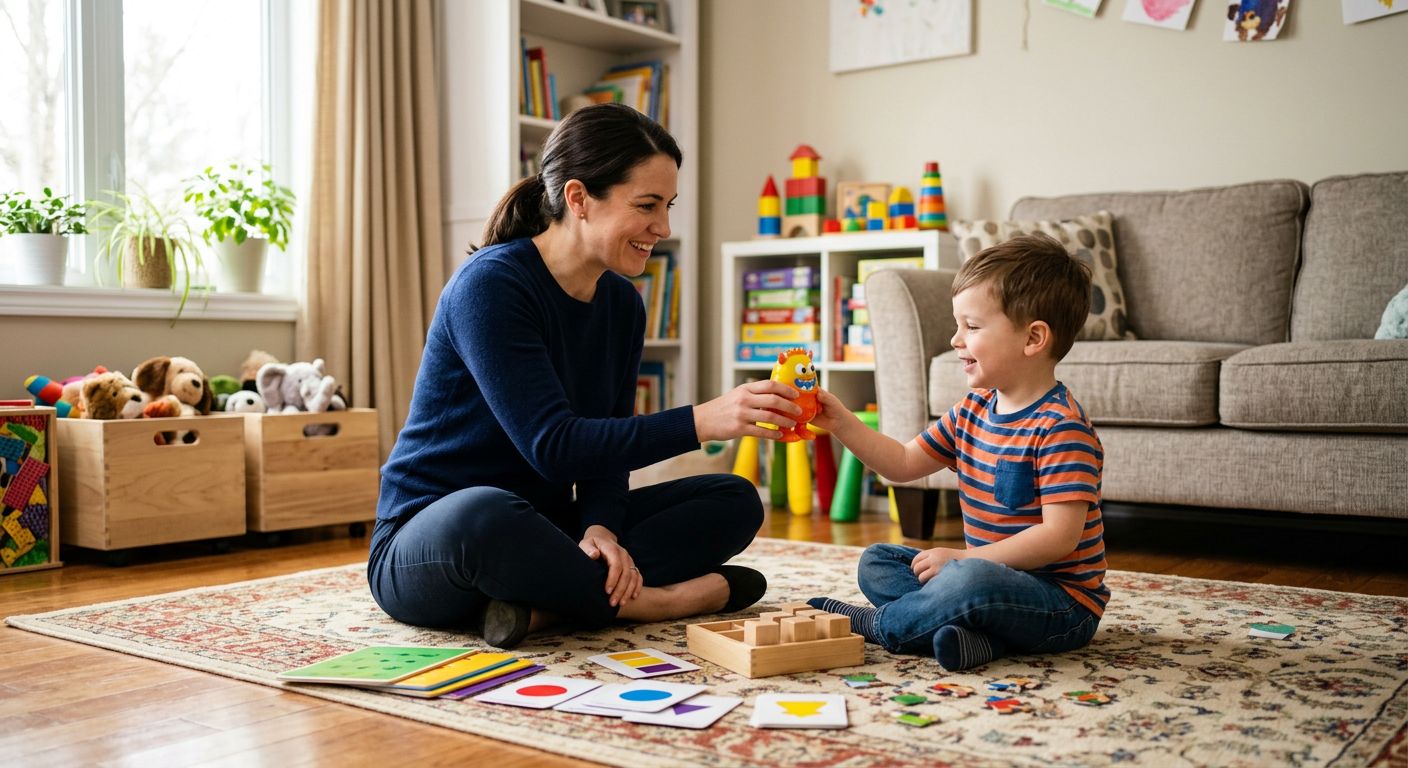
One of the most powerful tools in applied behavior analysis for autism is positive reinforcement, a strategy we use to encourage meaningful growth by adding a rewarding stimulus right after a desired behavior occurs. This is a carefully planned, consistent approach based on each child’s unique preferences—not a bribe or a punishment—and our BCBAs design personalized positive reinforcement strategies that turn everyday moments into teaching opportunities. During in-home sessions in Kansas City, for example, a therapist might offer immediate praise when a child uses words to request a snack or grant access to a favorite toy after independent cleanup.
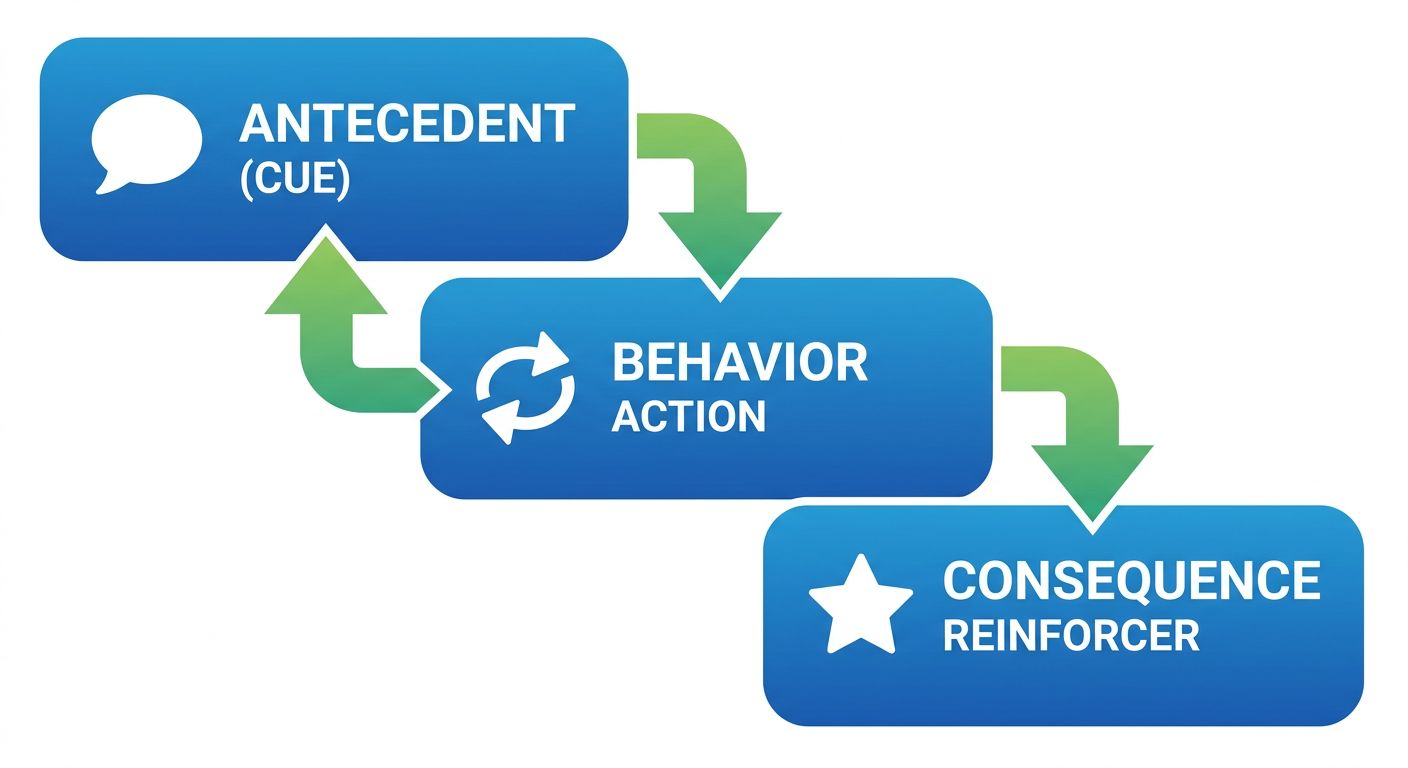
ABC model of positive reinforcement for ABA therapy.
Over time, these experiences build intrinsic motivation, supporting communication, turn-taking, and self-help routines that lead to measurable social skills development. By using positive reinforcement consistently, our therapists help children build the skills we will explore next—creating real progress, real connection with every session. Contact us for a personalized ABA therapy services overview to see how we tailor positive reinforcement to your child’s needs.
4. Communication Without Words
Beyond spoken language, much of our daily interaction happens without words. At Heart Core ABA, our approach to applied behavior analysis for autism recognizes that non-verbal communication—gestures, eye contact, facial expressions, and body language—is a critical piece of social connection.
We use positive reinforcement strategies to teach and strengthen these skills. A therapist might guide your child to point to a desired item and then immediately provide it as a reward, reinforcing the gesture. This simple reinforcement helps your child build both communication and confidence.
As your child learns to interpret and use non-verbal cues, they experience growth in social skills development. Better eye contact, shared smiles, and understanding of personal space all contribute to smoother peer interactions. These skills are developed step by step, at your child’s own pace.
Through these non-verbal skills, your child can build communication, confidence, and independence. In the next section, we’ll explore how ABA supports functional language growth.
5. Social Skills Connection
Building on intervention strategies, applied behavior analysis for autism directly nurtures the social connections children need. At Heart Core ABA we weave social skills development into daily routines through natural environment teaching.
Our programs target these core competencies:
- Initiating and sustaining conversations
- Turn-taking during games and group activities
- Understanding others’ perspectives
- Engaging in cooperative play
We use positive reinforcement strategies to celebrate small victories. When a child shares a toy or greets a peer our therapists offer immediate praise and a favorite activity, making positive social interactions rewarding.
Our social skills groups provide a structured environment where children practice these skills with peers. We serve families in Kansas City, MO and across Missouri and Illinois, offering behavioral social skills training tailored to each child.
Parent coaching equips you with strategies to reinforce learning at home, which is essential for sustained progress. As children gain confidence these social abilities become the foundation for success in school and community settings.
Real progress, real connection emerges when therapy becomes a natural part of everyday life.
6. Parent-Led Reinforcement
In applied behavior analysis for autism, parents are active partners, not just bystanders. This is where parent-led reinforcement becomes essential—empowering you to use positive reinforcement strategies in everyday moments. The CDC’s CDC public health information emphasizes family involvement in early intervention.
Our BCBAs model reward strategies—praise, token systems, and preferred activities—then coach you as you practice until you feel confident. Common reinforcement techniques include:
- Verbal praise and high-fives for desired behaviors
- Token charts that lead to a bigger reward
- Extra playtime or a favorite activity after finishing a task
This hands-on practice improves skill generalization beyond therapy sessions, deepens your connection with your child—Real progress, real connection—and sustains gains in everyday life. At Heart Core ABA, we provide structured parent coaching to teach these reinforcement methods, serving families in Kansas City, Missouri, and Illinois.
By embedding reinforcement at home, you directly support essential social skills development like turn-taking and communication, setting the stage for the small-group social skills opportunities we’ll explore next.
7. Early Social Foundations
Building on the personalized strategies we use, early social foundations are built through applied behavior analysis for autism. This therapy helps young children, even toddlers, learn to engage with others in playful and meaningful ways from the very first session.
Our therapists use reinforcement techniques to encourage social behaviors. For example, when a child makes eye contact during a song or shares a toy, immediate praise or access to a favorite item reinforces that action. Through this practice, children develop joint attention, turn-taking, and the ability to initiate interactions like waving hello or requesting a turn during play. Because every child learns differently, we tailor reinforcement to their unique interests and motivators, making learning natural and enjoyable. This focus on social skills development helps children communicate, connect with others, build lasting relationships, and thrive in everyday social settings.
By incorporating positive reinforcement strategies, we help children build communication, confidence, and independence—skills that pave the way for more complex social interactions and lasting success.
8. Tracking Real Progress
Once your child’s personalized therapy plan is in place, the next step is tracking real progress in applied behavior analysis for autism. Our BCBAs and RBTs make this happen through consistent, data-driven monitoring that keeps growth on track.
We focus on three key tracking methods:
- Ongoing data collection by your child’s RBT during every 1:1 session.
- Weekly parent updates with written reports and verbal check-ins.
- Periodic BCBA reviews that refine therapy goals and methods.
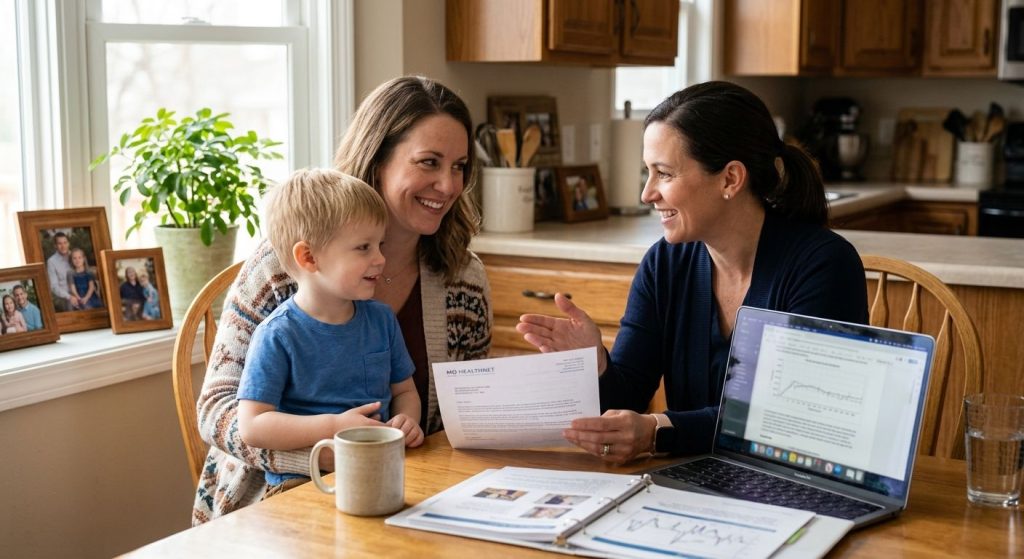
By capturing real-time data on communication, independence, and social behaviors, we build a clear picture of your child’s progress. Our weekly updates, a standard practice confirmed through our family support model, keep you informed and involved. The BCBA-led reviews ensure the plan stays personalized for your child’s success.
This framework supports our philosophy of real progress, real connection. By reviewing this data, our BCBAs can refine positive reinforcement strategies to better motivate your child toward milestones. For instance, we track social skills development such as initiating play, sharing, and carrying out back-and-forth conversation.
With clear tracking in place, you and your BCBA gain insights to adjust care and celebrate milestones together — that’s what hands-on ABA therapy for autism looks like at Heart Core ABA.
Partnering for Your Child’s Growth
Your child’s heart matters to us. In applied behavior analysis for autism, we see every family as a collaborative partner, not just a client. Through personalized hands-on ABA therapy, our BCBAs design each session around your child’s unique strengths and goals, and our RBTs deliver compassionate, one-on-one support. We stay connected with weekly progress updates, parent coaching, and ongoing goal-setting that involve you at every step, ensuring you feel empowered to support learning at home. Whether focusing on communication or social skills development, we use positive reinforcement strategies to foster confidence and real progress, real connection. Together, we celebrate every milestone and create a nurturing environment where your child can grow. From your child’s first session, we’re by your side with guidance, encouragement, and a commitment to their happiness and independence.
Resources
- Discover Evidence-Based ABA Therapy for Children
- Explore Personalized ABA Therapy Services Overview
- Learn How ABA Therapy Improves Communication Skills
- Get ABA Therapy Assessment and Insurance Information
- Find ABA Therapy in Home, School, Center Settings
- Access ABA Therapy Resources for Family Support
- Explore ABA Therapy Options in Missouri Cities
- Learn About BACB Certification and Ethics Standards
- Get CDC Health Alerts and Research Publications