Table of Contents
Setting ABA Therapy Goals for Autistic Children
After a comprehensive in-home assessment, we begin setting aba therapy goals for autistic children that reflect your child’s unique personality, interests, and developmental needs. No two plans look alike because we tailor each objective to what will most improve your family’s daily life. Goals often focus on essential skill areas like functional communication—teaching your child to request a favorite toy or express a need—and adaptive living skills such as getting dressed or completing a morning routine. Through our aba therapy assessment process for parents, we gather detailed information about your child’s current abilities, which lets our BCBAs write objectives that meet the ethical and measurable standards set by the Behavior Analyst Certification Board. You are a partner from the start: we explain every goal, listen to your hopes, and ensure the plan feels achievable. As therapy progresses, we review data weekly and adjust targets so your child is always building on success. This collaborative, data-driven approach is how we create real progress, real connection, and meaningful change personalized for your child’s success.
Before You Begin: Gather the Right Information
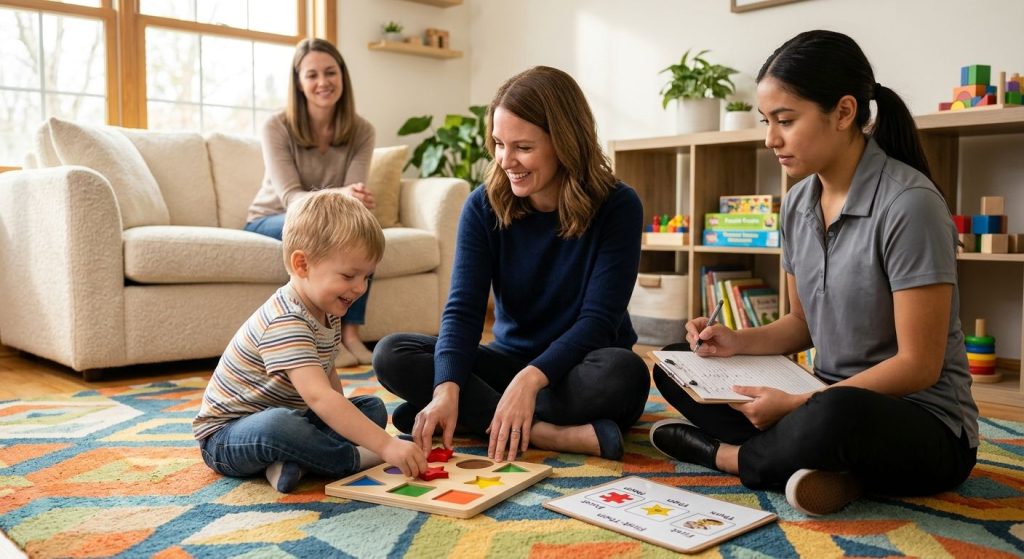
Before the ABA therapy assessment process for parents begins, having the right information ready helps our BCBA create truly personalized aba therapy goals for autistic children. The assessment takes place right in your home — where your child feels most comfortable — in the Kansas City area so we can observe authentic behaviors and routines.
Here’s what to prepare, following Heart Core ABA’s trusted checklist:
- Documents to bring: previous therapy reports, school IEP or 504 plans, medical history, your insurance card, and a typical daily schedule for your child.
- Observations to note: your child’s current communication attempts, any recurring challenging behaviors, preferred reinforcers (toys, activities, snacks), and typical daily routines.
- Questions to ask: how goals are selected, how progress is measured, and how parent training is integrated into the plan.
Your observations directly shape the aba therapy goals for autistic children we set together. The BCBA will also assess your child’s functional communication and adaptive living skills to inform those objectives.
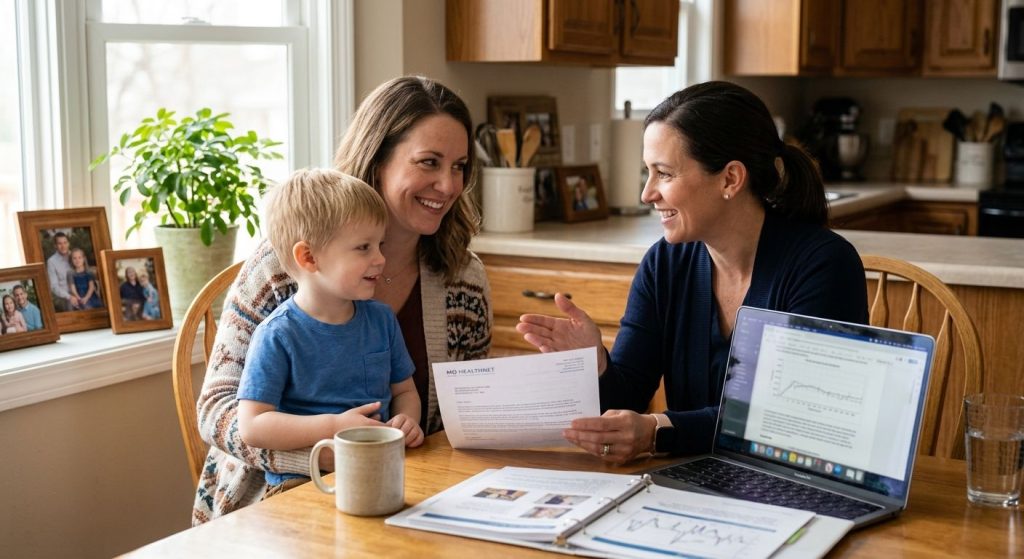
According to the Association for Behavior Analysis International, effective assessments are individualized and informed by multiple data sources. With this information, we’ll work step-by-step to build communication, confidence, and independence — all starting from a collaborative, data-driven foundation.
Identifying Communication Goals for Your Child
Beyond general ABA therapy goals, one of the most impactful areas is communication. We believe identifying aba therapy goals for autistic children in Kansas City should start with understanding where your child is today—and building from there with a focus on what matters most to your family.
Effective communication goals are personalized to your child’s unique developmental stage and communication milestones—whether they are preverbal, using gestures, or using emerging words. Goals can range from requesting basic needs to maintaining back-and-forth social exchanges. According to Heart Core ABA, ABA therapy breaks these objectives into small, teachable steps, allowing your child to build skills and confidence over time. Collaborating with your BCBA ensures the goals also support functional communication and broader adaptive living skills. These goals are designed to foster real progress and build long-term independence.
Once you’ve identified these goals, the next step is putting them into action—building communication, confidence, and independence.
Setting Functional Communication Milestones
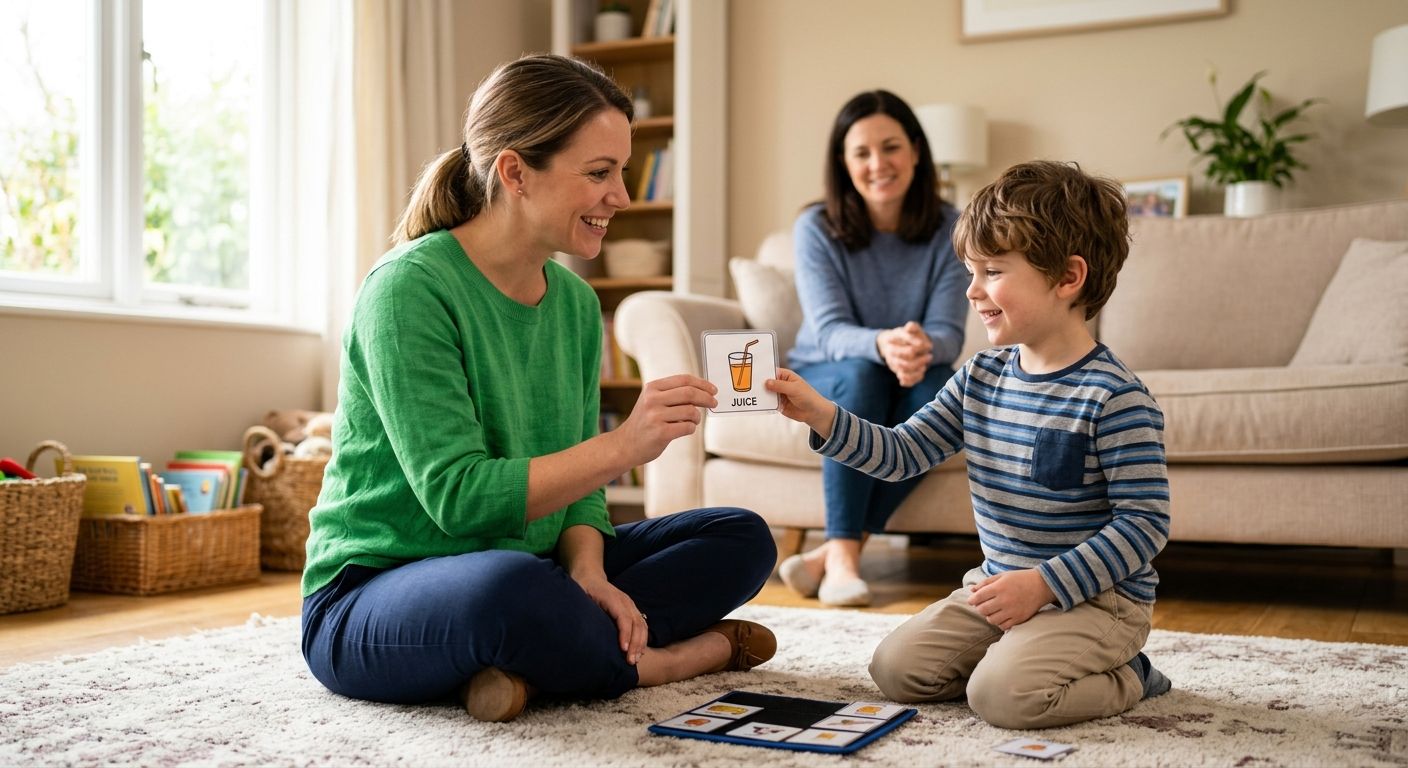
When we set aba therapy goals for autistic children, one of the first priorities is functional communication—small, measurable steps toward independent expression. These milestones might include requesting a favorite toy with a word or picture, labeling objects, or initiating a social greeting. Each milestone is personalized to your child’s current communication modality, whether verbal, sign language, PECS, or an AAC device.
- Requesting a preferred item with a word or gesture
- Using a picture card to indicate a need
- Initiating a greeting with a peer or adult
These are just a few examples of how we break down communication into achievable steps. These functional communication milestones often tie directly into adaptive living skills, helping your child express needs and navigate daily routines with greater independence. Our BCBAs design every milestone collaboratively with your family, tracking progress through daily data and adjusting the plan as your child grows.
Building Adaptive Living Skills Goals
Adaptive living skills are practical daily tasks that promote independence, including grooming, dressing, eating, and simple household chores. When developing aba therapy goals for autistic children, these self-care routines are often a central focus, because they build confidence and autonomy in everyday life. Our team also integrates functional communication—many adaptive skills require following instructions, labeling items, or making requests—so children can participate more fully in daily activities.
At Heart Core ABA, we personalize every goal to fit your child’s age, current abilities, and your family’s priorities. Our BCBAs use task analysis and data collection to break down complex skills like toothbrushing or getting dressed into small, teachable steps. This hands-on, data-driven approach helps children master adaptive living skills gradually, building the foundation for greater independence. We are committed to helping your child build communication, confidence, and independence—one step at a time.
Customizing Goals by Age and Development
Because every child develops differently, we tailor goals to their developmental stage. As part of our initial assessment process, we evaluate your child’s strengths and needs to design developmentally appropriate targets. When creating aba therapy goals for autistic children, we customize each plan to match their unique developmental journey. For early learners, we focus on functional communication like requesting and labeling, basic imitation, attending to tasks, and self-help routines such as toileting and dressing. These skills are taught through natural routines and play to build confidence. As children enter school, our aba therapy goals for autistic children emphasize peer interaction, emotional regulation, following multi-step instructions, and academic readiness behaviors. We embed these targets into school routines and social settings. For teenagers, we prioritize adaptive living skills—cooking, budgeting, community independence, vocational skills, and self-advocacy. Our team coaches families to practice these skills in real-world settings. Throughout every stage, each goal is broken into measurable steps, and our BCBAs and RBTs adjust targets as your child progresses. To see how your child’s goals are built from their unique needs, learn about our aba therapy assessment process for parents.
Differentiating Short-Term and Long-Term Goals
Now that we understand why goals matter, let’s look at the two main types: short-term and long-term. For parents exploring aba therapy goals for autistic children, it’s helpful to see how these goals work together. At Heart Core ABA, we define short-term goals as concrete, measurable steps a child can reach in weeks or a few months — like requesting a break with a picture card or making eye contact during a greeting. These immediate targets build functional communication and adaptive living skills such as toileting and dressing, all while letting us celebrate small wins and build confidence. Each goal is Personalized for your child’s success.
Long-term goals are the broader outcomes we work toward over many months or even a year. They might include independently completing a morning routine or initiating conversations with peers in a structured setting. Short-term goals serve as the stepping stones that gradually connect everyday progress to these bigger milestones. For example, raising a hand to ask for a toy is a short-term step that lays the foundation for the long-term ability to use words to request preferred items in a social group.
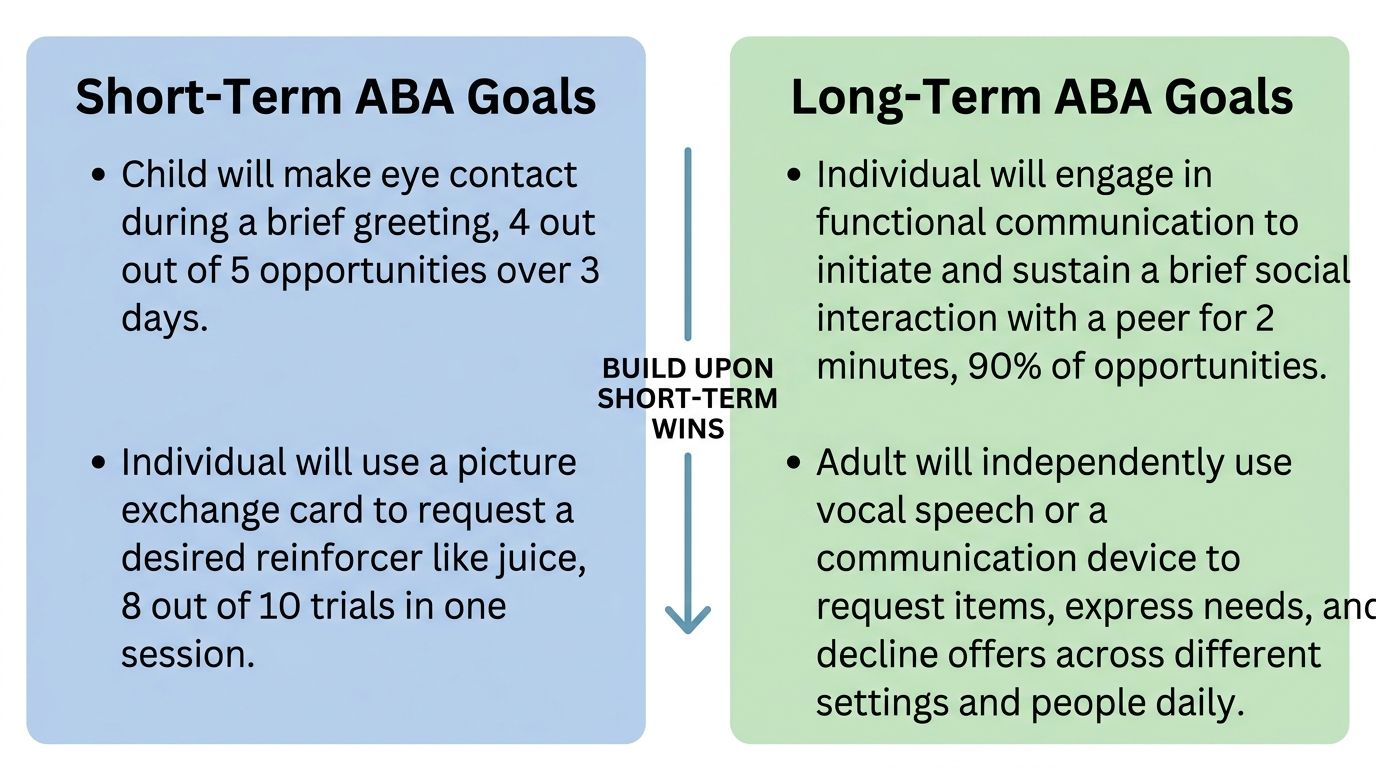
Short-term vs long-term ABA goal comparison
By building on short-term achievements, we help your child progress toward greater independence — always moving forward, never overpromising. This steady, encouraging journey is the heart of Real progress, real connection.
Tracking Progress and Re-Evaluating Goals
Once your child’s personalized goals are set, we shift focus to monitoring progress and making adjustments. This ensures that aba therapy goals for autistic children stay aligned with their growth. Our team uses ongoing data collection during each one-on-one session to track skill development.
During each session, our RBTs record data on skills like functional communication and adaptive living skills. Weekly, BCBAs analyze this data and provide written updates to families. About every three to six months, we hold a review meeting to re-evaluate aba therapy goals for autistic children—checking for mastery, maintenance, or the need for modification. This process allows us to introduce new goals as skills improve.
Parent feedback is a vital part of our process; your insights help us keep goals aligned with your family’s priorities. Through transparent communication, we build a partnership that supports your child’s development. Regular re-evaluation ensures that your child’s plan evolves with their growing skills—keeping therapy personal and effective. Real progress, real connection.
Incorporating Parent Coaching to Reinforce Goals
Once goals are established, we help you reinforce them through parent coaching. This hands-on partnership brings aba therapy goals for autistic children to life in everyday routines. We provide guided practice using ABA techniques between therapy sessions, targeting functional communication like requesting and labeling. Our BCBA therapists offer real-time feedback and modeling so you feel confident supporting skills at home. Parent coaching also strengthens adaptive living skills, from dressing to feeding, turning daily moments into learning opportunities. We work closely with you to turn therapy goals into everyday wins. This reinforces learning and builds the foundation for lasting independence. Consistent reinforcement across home and therapy leads to faster, more durable progress. We believe your child’s heart matters, so we make coaching personalized for your child’s success, helping build communication, confidence, and independence. This consistent reinforcement sets the stage for tracking real progress.
Troubleshooting Common Goal-Setting Challenges
Even with careful planning, you may encounter challenges when setting aba therapy goals for autistic children. Many families face similar hurdles, but small tweaks can make a big difference. Let’s look at common roadblocks and practical fixes.
When goals feel too vague or overly specific, it’s easy for progress to stall. We recommend breaking them into smaller, measurable steps, like using task analysis for functional communication goals. For example, instead of “improve communication,” a step might be “point to a picture of a desired item.” Our team can help you create a step-by-step plan tailored to your child’s unique needs. This way, your child experiences success and builds confidence.
Another common issue is lack of caregiver engagement. The Behavior Analyst Certification Board (BACB) emphasizes involving stakeholders in goal selection to ensure social significance. We collaborate with your family to choose goals that matter most at home, such as adaptive living skills like dressing independently or following mealtime routines. That partnership often boosts consistency outside of therapy sessions.
If a child isn’t progressing on a goal, baseline data can help you adjust the difficulty. We look at where your child started and see if the target is too hard or too easy. Sometimes, simply increasing reinforcement or practicing the skill in a quieter environment can reignite progress. Remember, goals should be challenging but not frustrating.
For more resources on ethical goal-setting, consider reaching out to the behavior analysis professional association. Once you’ve addressed these challenges, tracking progress becomes the next key step.
Supporting Your Child’s Journey with Effective ABA Goals
Effective ABA therapy goals for autistic children are the foundation of meaningful progress—they target communication, social, and adaptive skills. When we tailor ABA therapy goals for autistic children, we consider each child’s unique strengths and needs.
Our Board Certified Behavior Analysts (BCBAs), who hold BACB certification credentials, partner with your family during the intake assessment to design a plan personalized for your child’s success. Functional communication goals like requesting and labeling often reduce challenging behaviors by giving your child a clear voice. Adaptive living skills, such as self-care and daily routines, build independence and confidence at home and in the community.
Data collection guides every decision: we track progress and adjust objectives so each session builds skills that matter. Weekly parent updates keep you informed of these gains, nurturing the partnership at the heart of real progress, real connection. We focus on building confidence, not “curing” autism. These goals serve as a roadmap for continuous support, shaping parent coaching and future milestones along your child’s journey.
Resources
- Get Expert Guidance on ABA Therapy Assessment
- Discover Heart-Centered ABA Therapy for Children
- Find Flexible ABA Therapy Options Across Missouri
- Explore ABA Therapy Resources and Insurance Guidance
- Learn About AI-Assisted ABA Therapy Trends
- Get Help Integrating ABA Therapy Into Your IEP
- Explore Data-Driven ABA Strategies for Special Education
- Discover Resources from the Behavior Analysis Association
- Learn About BACB Certification Credentials and Updates