Table of Contents
What Is Natural Environment Teaching in ABA Therapy?
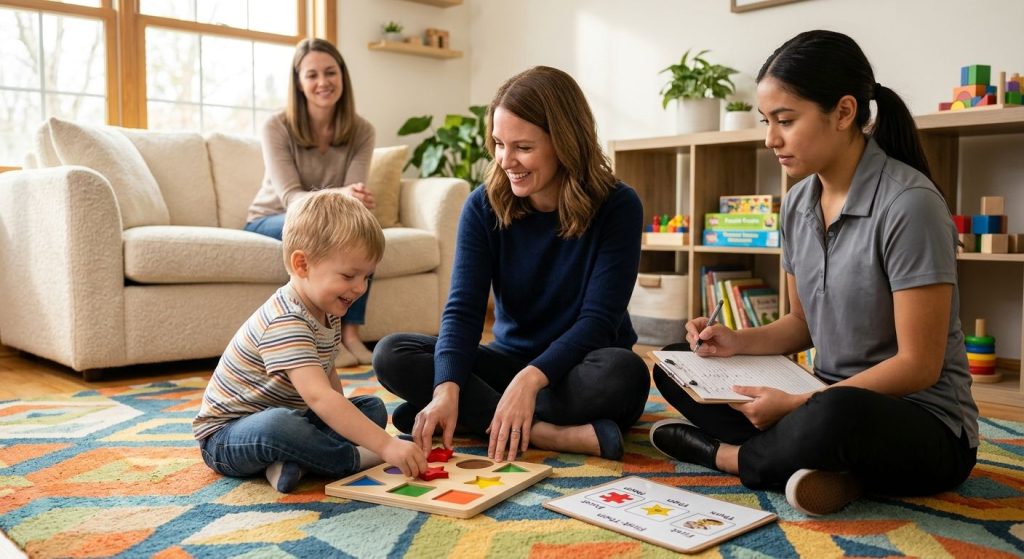
As part of our natural environment teaching approach at Heart Core ABA, we bring learning into the settings where your child already feels comfortable. Natural environment teaching (NET) is a core strategy in ABA therapy that uses your child’s daily routines, favorite toys, and play activities to build communication, social, and daily living skills. Your child’s heart matters, and through NET in ABA therapy, we follow their lead to create meaningful learning moments.
Unlike more structured methods like discrete trial training, natural teaching strategies feel less like work and more like play. This helps skills stick because they are practiced where they will actually be used—whether during snack time, at the playground, or during a family game. Special education ABA programs often incorporate NET to encourage generalization and real progress, real connection.
In the next section, we’ll explore practical ways we apply natural environment teaching during our hands-on in-home therapy sessions at Heart Core ABA.
Getting Ready for Natural Environment Teaching at Home
In the previous section, we explored how Natural Environment Teaching (NET) uses your child’s everyday moments to build meaningful skills. Now, let’s walk through how we can prepare your home for natural environment teaching aba sessions so everyone feels confident and ready for success.
We recommend starting with a few simple steps. Choose a distraction-free corner or room where your child feels comfortable and safe. Gather a basket of their favorite toys, books, and sensory items that match their current therapy goals. Our Heart Core ABA team will help you identify which materials work best. Building a consistent daily schedule is equally important; when NET is woven into mealtime, play, and bath time, learning becomes a natural part of your routine. We’ll also coordinate closely with your child’s BCBA and RBT to align target skills and data collection, so progress is tracked clearly and consistently.
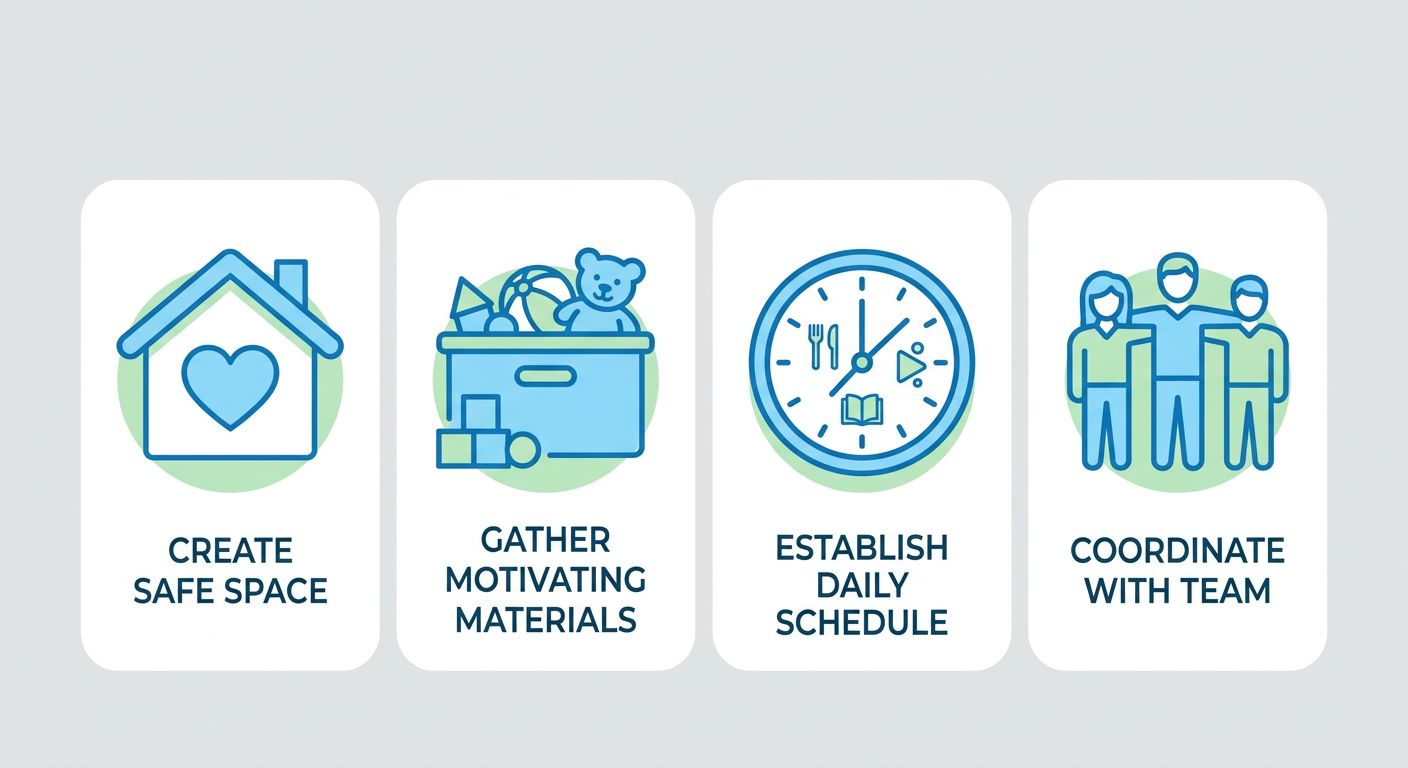
Getting ready for natural environment teaching at home checklist.
Preparing siblings and family members to support this positive atmosphere makes a wonderful difference, and our parent coaching sessions are here to model each approach for you. With a little planning, your home becomes a nurturing learning space. Remember, this journey is personalized for your child’s success, and we’re with you every step of the way. In the next section, we’ll dive into how to seamlessly embed natural environment teaching aba techniques into these everyday routines.
Identify Natural Teaching Opportunities at Home
Natural environment teaching ABA provides countless opportunities for children to learn during everyday routines at home. As parents and caregivers, we can identify these moments by observing how daily activities naturally create chances to practice communication, play, and independence skills. When we follow your child’s lead during activities they already enjoy, teaching becomes seamless and engaging rather than structured or forced.
Common home routines offer rich learning moments:
- Snack time: Requesting items, making choices, and practicing turn-taking
- Bath time: Labeling body parts, following instructions, and water play interaction
- Getting dressed: Sequencing steps, identifying clothing items, and building independence
- Cleaning up toys: Categorizing objects, following directions, and completing tasks
Following the child’s lead during play creates meaningful opportunities for skill building. When your child reaches for a toy, we can model language by naming it. When they stack blocks, we can count together. These natural interactions promote generalization — the ability to use skills across different settings, people, and materials. This approach aligns with special education ABA goals, where learning extends beyond therapy sessions into real-world contexts.
At Heart Core ABA, our play-based teaching resources explain how everyday moments become powerful learning tools. As parents, you serve as the primary facilitators by using praise and natural reinforcers to encourage desired behaviors. When your child communicates during a preferred activity, the activity itself becomes the reward. Real progress, real connection emerges when we work together to recognize and respond to these everyday teaching opportunities.
Set Up the Environment for Play-Based Learning
At Heart Core ABA, we believe in the power of natural environment teaching (NET) to spark meaningful growth. Creating a home space that supports play-based learning is simpler than you might think, and it starts with understanding how to weave learning into the moments your child already loves.
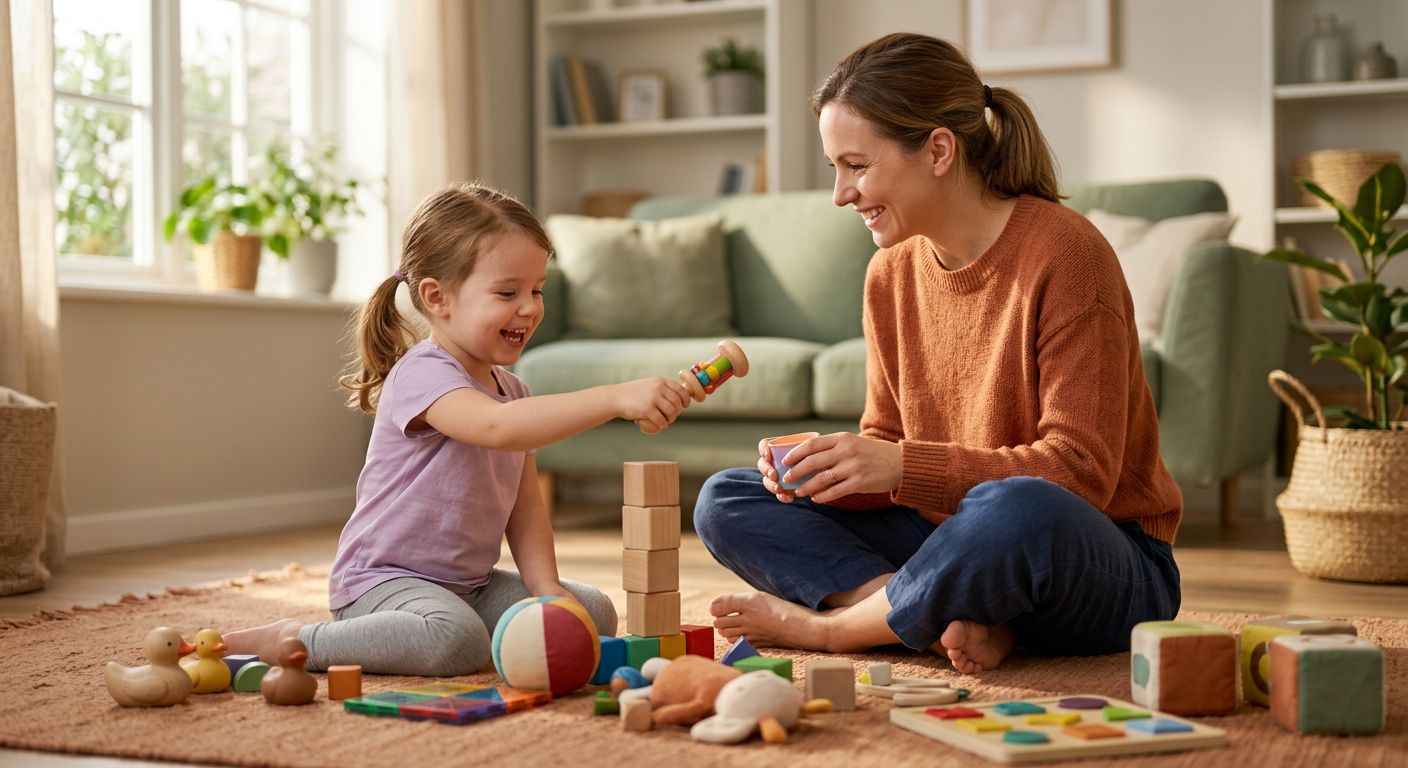
We recommend stocking the area with open-ended toys like blocks, pretend-play sets, and cause-and-effect toys that naturally invite exploration and interaction. By embedding learning opportunities into everyday routines—like practicing turn-taking during a favorite snack—you transform familiar activities into powerful teaching moments. Following your child’s lead is at the heart of naturalistic teaching; when you use their current interests as the motivation for learning targets, play becomes a bridge to new skills, reflecting our philosophy of Real progress, real connection.
Here are a few guiding principles for your setup:
- Keep the play area safe and free from excessive distractions to help your child focus.
- Follow your child’s motivation by using their favorite characters or sounds.
- Align ABA goals naturally into the play flow, such as requesting a toy during a game to build communication.
The key is to ensure the therapy feels like play, not work. Our approach is Personalized for your child’s success, gently integrating goals into the fun. By preparing a thoughtful environment, you set the stage for the specific play-based activities we will explore next, helping to build communication, confidence, and independence right at home.
Heart Core ABA’s clinical best practice is to integrate learning directly into natural play, using your child’s own motivation to drive skill development in a warm and reassuring way.
Follow Your Child’s Lead and Build Engagement
ABA therapy is flexible by design, and one of the most powerful ways we bring learning to life is through natural environment teaching. Also known as NET, this child-led, play-based approach embeds skill-building into the everyday routines and activities your child already enjoys. When we follow your child’s lead, we tap into their natural motivation, which research and our own clinical experience show leads to deeper participation and better generalization of new skills.
For example, a child who loves building with blocks isn’t just playing—they’re learning. In natural environment teaching, our therapists might use that block tower to practice requesting a color, labeling a shape, or taking turns with a peer. As we share in our FAQ on social skills groups, mirroring and expanding on your child’s chosen activity is one of the most effective ways to build social engagement and communication.
This approach is at the heart of our hands-on ABA therapy. By weaving goals into moments that matter, we help your child grow in confidence and independence. Your child’s heart matters, and when therapy feels like play, every interaction becomes an opportunity for real progress, real connection.
Use Natural Reinforcement to Motivate Learning
natural environment teaching ABA relies on natural reinforcement to motivate learning. Unlike artificial rewards like tokens or edibles, a natural reinforcer is directly tied to the activity — for example, a child asks for a favorite toy and receives it, making communication immediately meaningful. In natural environment teaching (NET), our therapists embed learning into everyday moments at home, turning play, meals, and routines into opportunities for growth. This real-world context helps your child build skills that transfer beyond therapy sessions, fostering confidence and independence.
At Heart Core ABA, our BCBAs design personalized plans that weave natural reinforcement into every session. We focus on your child’s interests to drive engagement and celebrate communication as it happens — because motivation comes from within, not from a sticker chart. Our team’s advanced training, anchored by BACB certification, ensures these strategies are applied with skill and compassion. This principle shapes how our therapists run every session, turning daily moments into real progress, real connection.
Model and Prompt Communication in Daily Routines
Model and prompt communication is a foundational strategy in natural environment teaching ABA because it transforms everyday moments into powerful learning opportunities. We demonstrate target communication behaviors and provide cues that help your child respond, all within the comfort of familiar routines.
Modeling means we show the desired communication first. During snack time, we might hold up a cracker and say “cracker” while making eye contact, giving your child a clear example to imitate. Prompting follows when needed—we might point to the cracker as a visual cue or gently guide your child’s hand toward the picture card. Over time, we fade these prompts so your child communicates more independently.
These techniques are central to NET because they follow your child’s lead and use activities that already motivate them. When your child reaches for a favorite toy during play, we model “car” and pause expectantly. If they need support, we add a gestural prompt like tapping the toy. This natural approach makes communication meaningful and functional, not a drill.
Routines where modeling and prompting fit naturally include:
- Mealtime: modeling “more” or “all done” with signs and words
- Dressing: prompting “shoes on” while holding up shoes
- Bath time: modeling “splash” or “bubbles” during play
Real progress, real connection happens in these small daily interactions, helping build communication, confidence, and independence one routine at a time.
Practice Skill Generalization Across Settings
Through natural environment teaching we help your child build skills that last because they’re practiced where life actually happens. Generalization is the ability to use a learned behavior with new people, in new places, or with different materials — and it’s what turns a therapy session win into real-world progress.
At Heart Core ABA we see generalization every day. A child who learns to request a snack at the kitchen table can use that same skill with a friend on the playground. This kind of transfer isn’t accidental — it’s built into how we design therapy, guided by what the leading behavior analysis organization describes as an essential best practice. By weaving teaching into your child’s everyday routines we create more opportunities for confident, independent communication.
Our in-home and school-based services give your child the natural practice settings that make generalization stick — and that’s the kind of meaningful progress that lasts long after the session ends.
Track Progress and Adjust the Approach
Once our BCBA creates your child’s personalized plan, we begin the essential work of tracking how they respond. This ongoing, data-driven process ensures therapy remains effective. Our BCBA collects session data and analyzes it regularly to measure skill acquisition and identify areas needing refinement.
We use CDC health resources, like the developmental milestones checklist, as a framework to monitor your child’s overall growth. Tracking progress in natural environment teaching aba allows us to see how your child applies new skills during real-world routines, such as playtime and mealtime. We then adjust the therapy plan every 30 to 90 days based on this combined data.
This adjustment process is collaborative. You receive weekly updates, and your insights are vital for tailoring goals. Each plan is dynamic, with adjustments focused on:
- Boosting functional communication and confidence.
- Building greater independence in daily living skills.
- Promoting meaningful social connections.
By continuously refining our approach, we ensure therapy evolves alongside your child’s unique journey toward growth. Real progress, real connection.
Troubleshooting Common Challenges in Natural Environment Teaching
Every family using natural environment teaching (NET) encounters bumps along the way — it’s a normal part of the learning process. We often see challenges like noncompliance, prompt dependency, and difficulty generalizing skills across settings. The good news is that with patience and the right strategies, these moments become powerful teaching opportunities.
- Noncompliance: Rotate reinforcers, embed instruction in your child’s favorite play, and let them lead the activity. We’ve found that when motivation is high, resistance drops.
- Prompt dependency: Gradually fade your level of help — move from full physical guidance to a light touch, then to a gesture, and finally to independence.
- Generalization difficulties: Practice new skills in different rooms, with different people, and during different routines to help your child apply what they’ve learned everywhere it matters.
Your role is key — as you collect simple data on what works and adjust the environment (declutter the space, use natural reinforcers), patterns emerge. You can track small changes and share each success with your therapist. Celebrate incremental gains, and note what increases engagement each day. This collaborative troubleshooting mirrors the hands-on, family-centered approach we bring to every session. Real progress, real connection happens when we work together to turn challenges into stepping stones. NET isn’t just a teaching method — it’s the foundation of our special education ABA programs, where each small win builds lasting confidence.
Building Communication and Independence Through Natural Environment Teaching
Natural Environment Teaching (NET) is a child-led ABA approach that turns everyday moments into powerful learning opportunities. In natural environment teaching in ABA, we follow your child’s interests during play, meals, and daily routines to teach communication and independence skills in the settings where they naturally occur.
NET targets functional skills that matter most to your family—like requesting a favorite snack, labeling objects during a walk, or following a morning routine. By embedding learning into real-life contexts, children gain skills that stick and generalize more easily than those learned in structured table-top sessions. At HeartCore ABA, natural environment teaching is a core component of special education ABA, delivered by trained RBTs under BCBA supervision in your home and community.
This approach builds confidence through motivation and connection. When your child learns to communicate during a game they love or practice independence while getting dressed, progress feels natural and joyful. Real progress, real connection—NET lays the foundation for the skill-building strategies we’ll explore next.
Resources
- Request ABA Services in Your Child’s IEP
- Explore ABA Classroom Strategies for Special Education
- Enhance Student Outcomes through ABA School Collaboration
- Discover ABA Trends for Special Education 2025-2026
- Reduce Behavioral Challenges with ABA Strategies
- Get a Comprehensive Guide to ABA in Special Education
- Discover the Multidisciplinary Team for Autism Diagnosis
- Join the Association for Behavior Analysis International
- Explore the BACB Certification Levels and Requirements
- Explore CDC Health Topics and Scientific Journals