








ABA Therapy Across Missouri
Table of Contents
Getting Started with ABA Therapy Across Missouri
We believe every child deserves real progress, real connection. Getting started with ABA therapy across Missouri connects families with an evidence-based approach the Centers for Disease Control and Prevention (CDC) recognizes. Our compassionate team of BCBAs–certified by the Behavior Analyst Certification Board (BACB)–provides ABA therapy in Missouri in Springfield, St. Louis, Kansas City, and Columbia.
Our Missouri ABA therapy programs start with a comprehensive BCBA assessment and insurance verification, so you can begin services without delay. For families in Springfield, ABA therapy Springfield MO offers personalized, play-based sessions delivered in-home or at our center. We also provide ABA Missouri support in St. Louis, Kansas City, and Columbia.
Our team is ready to help your child thrive with ABA therapy for autism in Missouri. Heart Core ABA’s personalized therapy may help develop communication, social, and daily living skills, and we are here to support your family every step of the way — reach out today. Results may vary.
Understanding the Cost of ABA Therapy in Missouri
When exploring ABA Missouri options, families often ask about the cost of ABA therapy across Missouri and how to secure high-quality ABA therapy services in Missouri. We can help you navigate aba therapy services missouri. Understanding the financial landscape can help you plan effectively.
How Much Does ABA Therapy Cost in Missouri?
Hourly rates for ABA therapy in Missouri generally range from $60 to $150, depending on the provider’s experience, location, and the intensity of the child’s program. Board Certified Behavior Analysts (BCBAs) typically charge higher rates for assessments and supervision, while direct therapy delivered by registered behavior technicians may fall at the lower end. At Heart Core ABA, we offer transparent pricing and a free, no-obligation cost estimate so you know what to expect before starting services.
Does Insurance Cover ABA Therapy in Missouri?
Missouri law requires private health insurers to cover ABA therapy for autism in Missouri when it is medically necessary, though deductibles, copays, and annual visit limits vary widely. For families exploring ABA therapy across Missouri, verifying benefits early can prevent surprises. According to the Centers for Medicare & Medicaid Services, MO HealthNet’s EPSDT benefit mandates ABA for children under 21 when prescribed. Our team helps review your policy and secures prior authorizations–so you can focus on your child. Always confirm specific coverage with your insurer; prior authorization may be required. Results and coverage may vary, so verify your plan’s requirements.
Are There State-Funded Programs for ABA Therapy in Missouri?
Beyond insurance, families can access state-funded Missouri ABA therapy through the Missouri autism waiver. Administered under federal Medicaid guidelines, this program provides additional funding for autism services when a child meets clinical and financial eligibility criteria. Other financial assistance may be available through local disability agencies or school-based supports. If you’re unsure about eligibility, we can help you explore these options and connect you with appropriate resources.
These funding paths–private insurance, Medicaid, and the autism waiver–each have unique requirements. The infographic below offers a quick comparison.
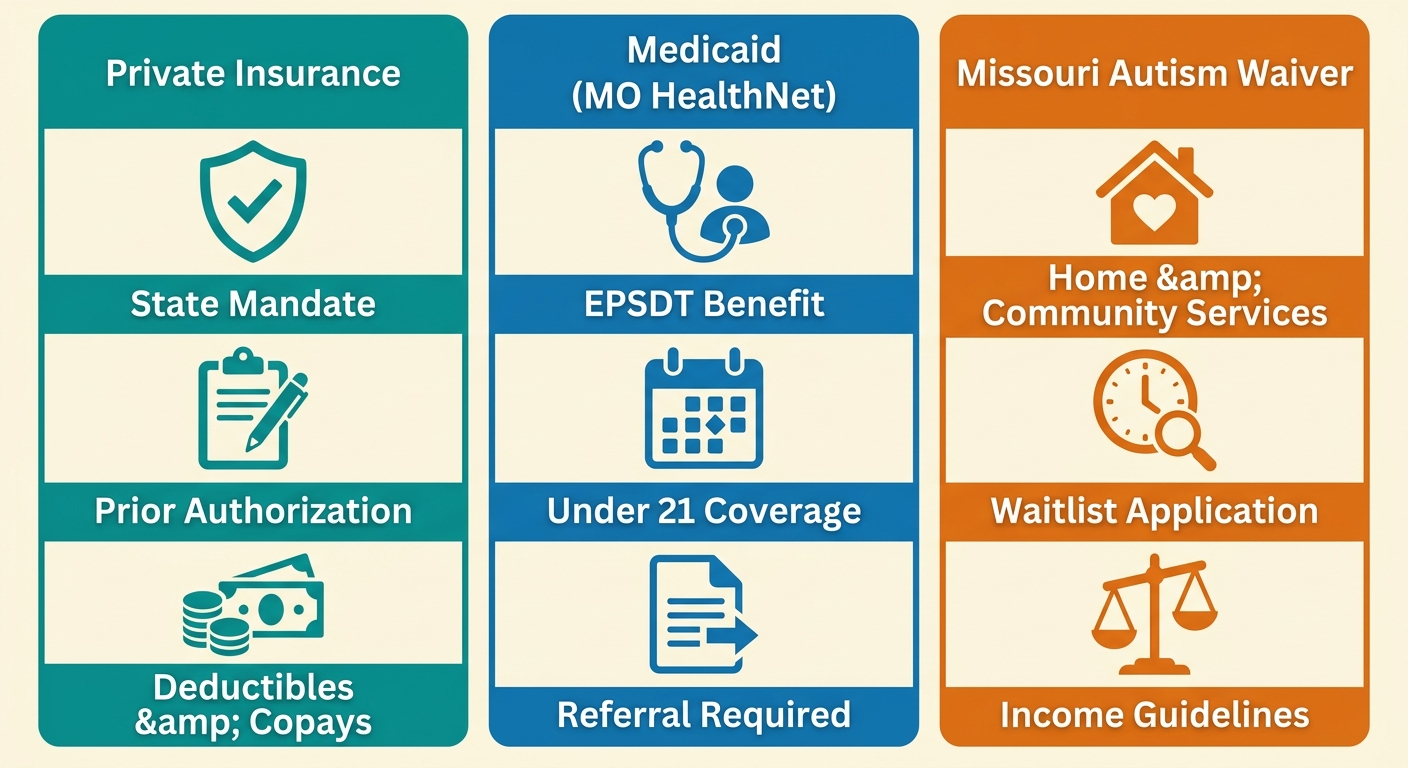
Compare private insurance, Medicaid, and the state autism waiver for ABA funding.
Once you understand the costs and coverage options, contact Heart Core ABA for a free, no-obligation cost estimate and benefits check. Real progress, real connection–we’re here to help your child thrive.
How to Begin ABA Therapy in Missouri
Now that you understand what ABA therapy is, let’s walk you through how to get started with us in Missouri. Whether you need aba therapy Springfield or quality aba therapy across missouri, we are here to help.
What Are the Requirements to Start ABA Therapy in Missouri?
For families seeking aba missouri services, our process is straightforward. To begin aba therapy in missouri with Heart Core ABA, you’ll need a formal diagnosis of Autism Spectrum Disorder or a related condition from a qualified professional. Missouri Medicaid and most private insurers require a prescription or referral for aba therapy for autism in missouri. When you reach out, we’ll ask for the diagnostic report, insurance card, and basic contact information to start verification. Our team will handle the insurance verification and prior authorization for you. All therapy is overseen by a Board Certified Behavior Analyst (BCBA), with RBTs meeting the credentialing standards of the Behavior Analyst Certification Board (BACB).
How Do I Begin the Intake Process for ABA Therapy in Missouri?
As an experienced missouri aba therapy team, we’ve made the intake process simple. First, schedule a free consultation so we can learn about your child. Next, a BCBA conducts an initial assessment to understand your child’s strengths. Using that assessment, we create a personalized therapy plan. While we do that, our team handles insurance verification and obtains prior authorizations. The entire process from assessment to starting therapy usually takes one to two weeks. Throughout, you’ll have a dedicated point of contact for questions. We’ll review the plan with you and answer any questions so you feel fully informed.
After approval, we’ll support you every step of the way.
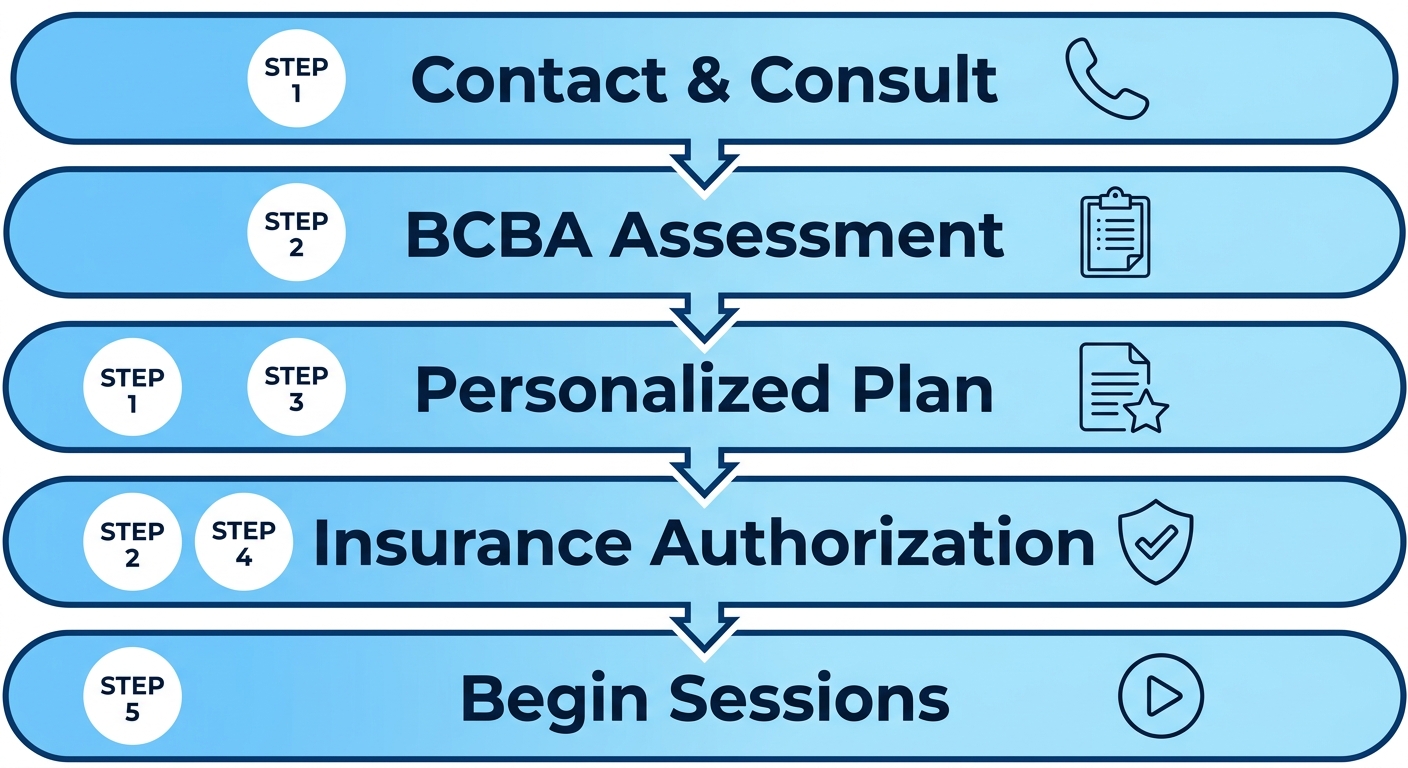
Five steps to begin ABA therapy in Missouri.
What Types of ABA Therapy Services Are Available in Missouri?
Heart Core ABA offers a range of aba therapy services missouri families can rely on. Choose in-home therapy for learning in familiar surroundings, or center-based sessions for structured activities. We collaborate with schools to align with IEPs. For toddlers, play-based early intervention builds foundational skills. Social skills groups teach peer interaction. Parent coaching is always included. Each plan is personalized to your child’s unique strengths.
Next, explore our pricing and insurance options.
Results may vary. Consult a healthcare professional. Verify insurance coverage and prior authorization may be required. This is not medical advice.
Credentials and Certification for ABA Therapy Providers in Missouri
Understanding credentials is just as important as the therapy itself, especially when seeking aba therapy across Missouri.
How to Find a Qualified BCBA in Missouri
When you explore aba therapy in missouri, verifying a BCBA’s certification is the crucial first step. For families seeking ABA in Missouri, the best resource is the Behavior Analyst Certification Board (BACB) online registry. A BCBA must hold a master’s degree, complete supervised fieldwork, and pass a rigorous exam. Missouri also requires state licensure for practicing BCBAs, so always ask about a provider’s license. Whether you’re looking for aba therapy services missouri or in-home programming, start by checking that the BCBA’s certification is active and in good standing. For families in the Springfield area, providers like Heart Core ABA offer ABA Springfield MO with fully credentialed teams, including BCBA-supervised Registered Behavior Technicians (RBTs).
What Credentials Should an ABA Provider Have in Missouri?
When evaluating missouri aba therapy options, ask providers to share proof of BCBA supervision, documented RBT training, and liability insurance. RBTs should have completed a 40-hour training and receive ongoing supervision from a BCBA. A quality provider will also involve families through parent coaching, regular progress updates, and IEP collaboration. For families seeking aba therapy for autism in missouri, Heart Core ABA’s team meets all state licensing and BACB requirements, and we bring care that comes straight from the heart to every session. Don’t hesitate to ask for credentials–we’re proud to share them.
In the next section, we’ll show how our hands-on ABA therapy for children who learn differently turns those credentials into real, measurable progress (results may vary).
Timeline and Age Guidelines for ABA Therapy in Missouri
How Long Is the Waitlist for ABA Therapy in Missouri?
When considering aba therapy across Missouri, one of the first questions families ask is, “How long is the waitlist?” Wait times for ABA therapy in Missouri vary by provider, location, and whether you choose in-home or center-based services. For families in the Springfield area, exploring our in-home and center-based options can provide more specific timeline estimates–see our aba services springfield mo page. At Heart Core ABA, we know waiting can feel uncertain. That’s why we manage our waitlist with regular updates and flexible scheduling. Many families begin services within a few weeks to a couple of months, and when center-based spots are full, we often start with in-home therapy so your child doesn’t have to wait.
When Can My Child Start ABA Therapy After Diagnosis?
Once you have a diagnosis, starting ABA therapy for autism in Missouri follows key steps: insurance verification, an initial BCBA assessment, and a personalized therapy plan. We’ll verify your insurance benefits and handle prior authorization so you know exactly what’s covered. The process can take a few weeks to a couple of months, but we’ll guide you at every step. For toddlers under three, Missouri’s First Steps early intervention is an option, and our ABA services in Missouri can begin right after diagnosis. The Centers for Disease Control and Prevention recommends autism screening by 18-24 months, so early diagnosis opens the door to starting therapy sooner. With real progress and real connection, we’re here to deliver care that comes straight from the heart.
Quality and Consistency of ABA Therapy Services Across Missouri
According to the CDC, early and consistent support is vital for children on the autism spectrum. We deliver high-quality aba therapy across Missouri with care that comes straight from the heart, ensuring every child benefits from a personalized therapy plan.
Are ABA Therapy Services Consistent Across Missouri?
Yes, we ensure consistent aba therapy in Missouri through standardized, BCBA-designed protocols across all our centers in Springfield, St. Louis, Kansas City, Columbia, and Chesterfield. Each family works with a dedicated BCBA and a consistent RBT, fostering trust. Our BCBA-designed protocols ensure that families seeking autism services Springfield MO receive the same high-quality therapy as our other locations. Standardized onboarding and ongoing supervision maintain fidelity to evidence-based practices.
How Is Progress Measured in ABA Therapy in Missouri?
To track real progress, we use daily behavior data, skill acquisition charts, and ABC logs. Our BCBAs review goals weekly and adjust plans based on data trends. Monthly family progress meetings provide opportunities to celebrate milestones, share insights, and refine the personalized therapy plan. This commitment to data-driven care and family partnership reflects our belief that aba therapy for autism in Missouri should be transparent, collaborative, and rooted in real progress, real connection. For families across the state, our aba therapy services Missouri deliver that consistency.
Still Have Questions About ABA Therapy in Missouri?
We know you may still have questions about starting ABA therapy in Missouri. Heart Core ABA provides hands-on ABA therapy across Missouri, serving families in Springfield, St. Louis, Kansas City, and Columbia. Our Missouri ABA therapy is built on real progress, real connection and personalized care.
Reach out to us at (417) 555-1234 or use our contact form. We can help you verify your insurance and answer questions about our ABA therapy services Missouri families trust. Contact us today to get started on your child’s journey.
Resources













 At-Home
ABA Therapy
At-Home
ABA Therapy Best
ABA Therapists
Best
ABA Therapists BCBAs
Near Me
BCBAs
Near Me RBTs
Near Me
RBTs
Near Me