
Table of Contents
Discovering ABA Therapy in St. Louis
At Heart Core ABA, we understand the unique challenges families face when supporting children with autism spectrum disorder. ABA therapy in St. Louis offers a scientifically proven approach using positive reinforcement to teach essential skills and reduce challenging behaviors. Endorsed by the CDC as a top treatment, it addresses the rising prevalence of autism, affecting 1 in 36 children nationwide, helping them thrive in everyday settings.
We provide hands-on ABA therapy for children who learn differently through personalized plans that emphasize real progress and real connection. Our services include in-home ABA therapy in St. Louis, school-based options, and center-based programs tailored for ABA therapy for autism in St. Louis. We navigate Missouri insurance complexities, verifying benefits and coordinating with Medicaid to make care accessible. Imagine a young child struggling with transitions at school; our family-centered interventions build confidence through play-based learning and caregiver coaching. ABA Therapy St Louis MO
These behavioral intervention services in St. Louis foster school readiness and early intervention, aligning with local autism support programs. Discover how our care comes straight from the heart as we explore the fundamentals next.
The Fundamentals of ABA Therapy
At Heart Core ABA, we believe understanding the basics of Applied Behavior Analysis (ABA) therapy empowers families to make informed choices for their children’s growth. This section explores the core principles, local applications in St. Louis, and proven effectiveness of ABA, highlighting how our hands-on ABA therapy for children who learn differently fosters real progress through personalized therapy plans.
Core Principles of ABA
ABA therapy stands on scientific foundations that emphasize observable behaviors and measurable outcomes to support skill development. We see ABA helping children daily by breaking down complex skills into manageable steps using evidence-based techniques.
At its heart, ABA focuses on understanding how behaviors are influenced by their consequences, prioritizing positive reinforcement to encourage desired actions. Key components include functional assessments to identify why behaviors occur and individualized plans tailored to each child’s needs. Common techniques involve Natural Environment Teaching (NET), where learning happens during everyday play, and Pivotal Response Training (PRT), a play-based method that targets motivation and responsiveness. For clarity, here are some core techniques:
- Positive Reinforcement: Rewarding good behaviors to increase their frequency, much like praising a child for sharing toys.
- Discrete Trial Training: Structured sessions with clear instructions, responses, and immediate feedback.
- Natural Environment Teaching (NET): Incorporating lessons into natural play to make learning fun and relevant.
These principles align with behavior analysis interventions locally, ensuring therapies build essential skills like communication and social interaction. For instance, in a session, a child might learn to request a toy through NET, turning playtime into a powerful learning opportunity. ABA therapy in St. Louis integrates these methods seamlessly for families seeking aba therapy st louis.
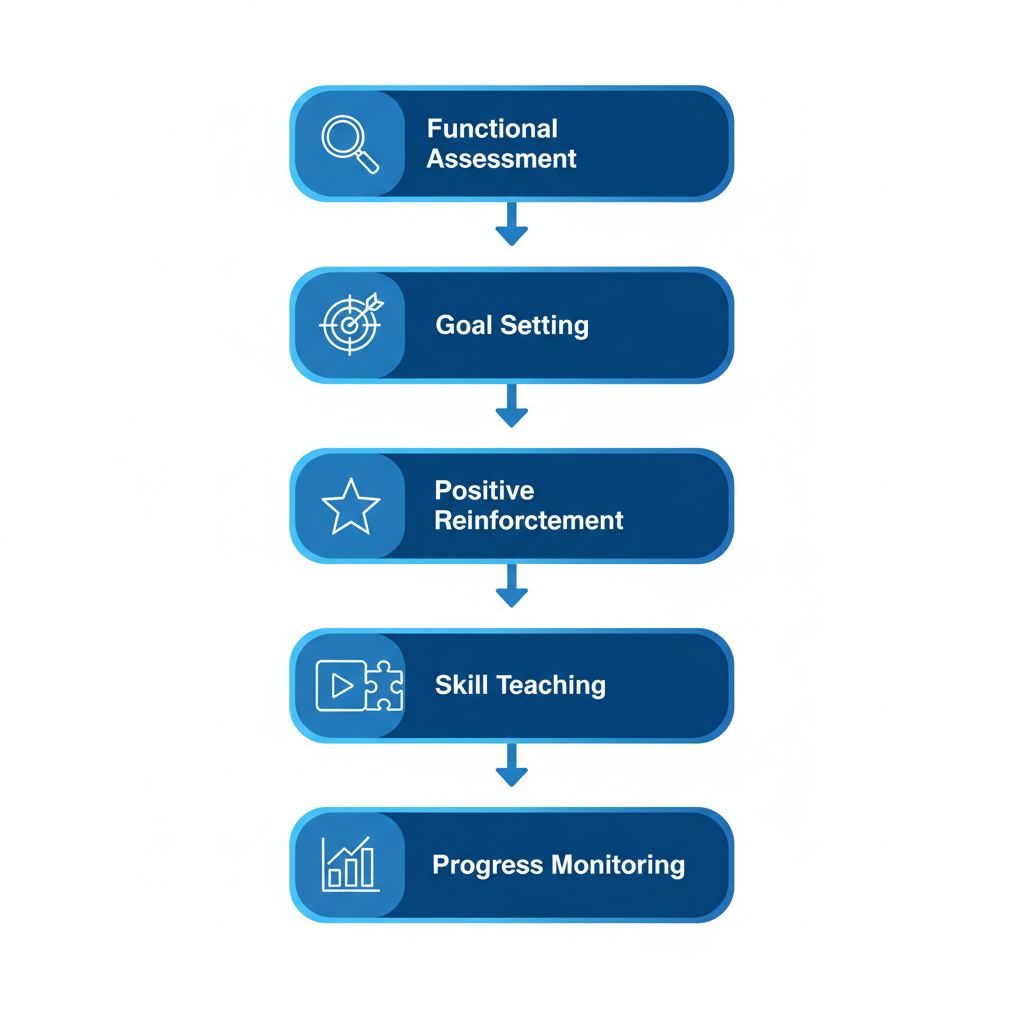
Core principles of ABA therapy visualized in a five-stage process flow
This visual representation underscores how ABA progresses from assessment to ongoing reinforcement, helping parents grasp the structured yet flexible nature of our care that comes straight from the heart.
ABA for Autism in St. Louis
In St. Louis, ABA therapy adapts to meet the unique needs of Missouri families, emphasizing early intervention to maximize developmental gains for children with autism. Our BCBA-led programs ensure tailored support right from the start.
Local adaptations include in-home ABA therapy in St. Louis, allowing sessions in familiar environments to reduce anxiety and promote natural skill application. Early intervention for toddlers focuses on foundational skills like imitation and joint attention, often starting as young as 18 months. Family involvement is key; we collaborate on goal-setting to align with daily routines. According to Missouri Department of Mental Health guidelines, eligible children can access services through developmental disability resources, with ABA recommended for its structured approach to autism support.
For example, a St. Louis family might use ABA therapy for autism in St. Louis during playdates, applying PRT to encourage turn-taking, which strengthens social bonds at home. Skill-building therapies in Missouri like these make intervention approachable and effective for busy parents.
Effectiveness and Evidence
Research consistently shows ABA therapy’s strong impact on skill development for children with autism, with studies demonstrating gains in communication, academics, and independence. We witness these outcomes in our programs, building real connections through consistent care.
Evidence from controlled trials, including those reviewed by the U.S. Surgeon General, highlights ABA’s role in reducing challenging behaviors by up to 50% while increasing adaptive skills. Long-term studies indicate children receiving intensive early ABA often achieve better school readiness and social integration. Play-based methods like NET and PRT address benefits of play-based ABA therapy for children with autism by making sessions engaging, leading to higher motivation and retention. Outcomes vary based on intensity and individual factors, but weekly parent updates from our RBTs track progress transparently.
Consider a child who, after 20 weeks of in-home sessions, independently follows multi-step instructions–a milestone backed by data showing 70-80% improvement rates in similar cases. This evidence reassures families that ABA delivers measurable, heartfelt results tailored to their journey.
Key Benefits of ABA Therapy for Children with Autism
At Heart Core ABA, we’ve seen firsthand how autism therapy services st louis can transform the lives of children with autism spectrum disorder. Our hands-on ABA therapy for children who learn differently focuses on building essential skills through personalized plans that promote real progress and connection. From enhancing communication to fostering independence, these interventions create meaningful advancements tailored to each child’s needs in the St. Louis area.
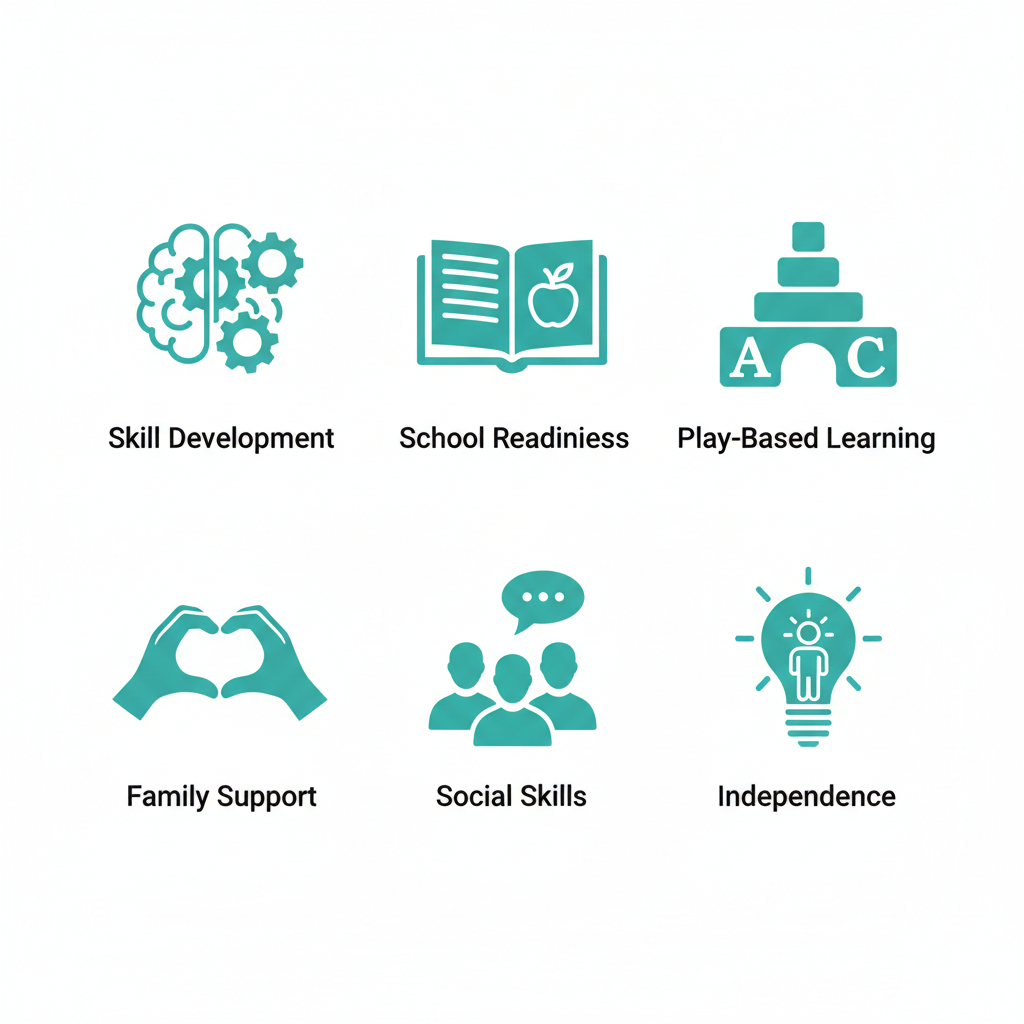
Icon grid of key ABA therapy benefits for children with autism
These visual representations highlight the core areas where ABA makes a difference, helping parents quickly grasp the potential impacts on their child’s growth.
Skill Development and School Readiness
ABA therapy excels in autism skill enhancement in Missouri by targeting communication, adaptive behaviors, and daily routines that prepare children for school. We break down complex tasks into manageable steps, helping kids express needs verbally or through gestures, follow instructions, and manage transitions smoothly.
Missouri’s Department of Mental Health Positive Supports ABA programs endorse these methods, showing positive behavior changes like a 30% increase in task completion rates among participants. In one anonymized case, a young learner went from minimal engagement to independently completing puzzles, mirroring gains seen in state-backed initiatives.
As parents, consider starting with short, daily practice sessions at home. Track small wins, like improved eye contact during conversations, and collaborate with your BCBA for adjustments. This builds confidence and directly supports IEP goals for academic success.
Play-Based Learning Advantages
Play-based learning in ABA therapy in St. Louis turns therapy into joyful exploration, boosting engagement and reducing anxiety for children with autism. Therapeutic play interventions locally use toys and games to teach turn-taking, sharing, and imaginative play, making skill acquisition feel natural rather than structured.
Evidence from Missouri ABA programs highlights how play-integrated sessions lead to 40% higher participation rates, as children absorb social cues through fun activities like building blocks or role-playing. We’ve witnessed a child who once avoided peers now initiating games, fostering emotional regulation without force.
Parents can enhance this at home by incorporating everyday toys into routines. Join in for 10-15 minutes daily, modeling positive interactions, and note what sparks your child’s interest. This approach strengthens bonds while reinforcing therapeutic play interventions locally.
Family and Community Support
In-home ABA therapy in St. Louis provides flexible, consistent support that extends learning beyond sessions, empowering families to reinforce skills at home. ABA therapy for autism in St. Louis coordinates with parents through training, ensuring routines align for better outcomes in daily life and school.
State data from DMH Positive Supports shows family involvement yields sustained skill gains, with 25% improvements in home-based behaviors. For instance, one family reported their child independently dressing after caregiver coaching, aligning with our emphasis on real connection and care that comes straight from the heart.
We recommend weekly check-ins with your RBT to adapt strategies. Share observations from school or playdates to fine-tune the personalized therapy plan. This holistic collaboration, including IEP coordination, helps your child thrive in the community while verifying insurance benefits for accessibility.
How ABA Therapy Works in Practice
At Heart Core ABA, we guide families through the practical side of ABA therapy, showing how our hands-on approach supports children who learn differently in everyday settings. From initial assessments to tailored sessions, our BCBA-supervised teams deliver personalized therapy plans that foster real progress and connections. In St. Louis and surrounding areas, we emphasize flexible delivery, whether through in-home or school-based instruction, ensuring every step aligns with each child’s unique needs.
Session Structure and Techniques
We begin every ABA journey with a thorough assessment led by our Board Certified Behavior Analysts (BCBAs). This initial evaluation identifies a child’s strengths, challenges, and specific goals, drawing from national guidelines like those from the CDC, which recommend 20-40 hours of weekly therapy intensity for optimal skill development. Once complete, sessions are scheduled based on the child’s routine, typically lasting 2-3 hours in a 1:1 format with a Registered Behavior Technician (RBT).
- Preparation: BCBAs design individualized plans focusing on communication, social skills, and daily living.
- Implementation: During sessions, we use techniques like prompting–providing gentle cues to encourage correct responses–and fading, gradually reducing support as the child gains independence.
- Data Collection: RBTs track behaviors in real-time, using charts to measure progress and adjust strategies weekly.
- Review: BCBAs analyze data during supervision meetings to refine the plan.
These methods, applied in practical behavioral sessions locally, promote consistent growth without overwhelming the child. For example, in-home ABA therapy in St. Louis allows us to incorporate familiar environments, making learning feel natural and engaging.
Coordination with Schools and Families
Collaboration is at the heart of our care, especially when integrating ABA therapy in St. Louis with school systems and home life. We work closely with educators to align our interventions with Individualized Education Programs (IEPs), ensuring seamless support across settings. Drawing from CDC recommendations on family involvement, we prioritize parent coaching to empower caregivers in reinforcing skills daily.
- IEP Alignment: Our BCBAs review school plans and suggest modifications, like adding ABA strategies to classroom routines.
- Team Meetings: We join multidisciplinary discussions with teachers and therapists to share progress data and goals.
- Parent Sessions: Weekly check-ins teach families techniques, such as positive reinforcement, to use at home.
- Progress Sharing: Secure updates keep everyone informed, fostering integrated autism care in Missouri.
This teamwork, including ABA St Louis services, helps children thrive academically and socially, answering how ABA therapists coordinate effectively with families and schools.
Early Intervention Approaches
Starting ABA early can make a significant difference, particularly for toddlers aged 18-36 months. At Heart Core ABA, our early intervention programs target foundational skills like imitation and joint attention, adhering to CDC benchmarks for intensive, play-based therapy to support developmental milestones. We tailor ABA therapy for autism in St. Louis to the child’s pace, often beginning with a home visit assessment.
- Intake and Screening: Quick evaluations identify needs within the first week.
- Custom Plans: BCBAs create short, engaging sessions focused on sensory integration and basic communication.
- Natural Environment Teaching: Lessons happen during play or mealtimes to build skills organically.
- Ongoing Monitoring: Monthly reviews adjust intensity, aiming for 15-25 hours weekly as recommended.
By emphasizing early starts, we help families build real connections through personalized therapy plans, preparing children for future successes while verifying insurance to ease access.
Best Practices for Starting ABA Therapy in St. Louis
Starting ABA therapy can feel overwhelming, but we’re here to help families in St. Louis navigate this important journey with confidence. At Heart Core ABA, our personalized therapy plans focus on real progress through hands-on ABA therapy for children who learn differently, ensuring care that comes straight from the heart. We’ll guide you through key steps to make the process smooth and effective.
Navigating Insurance and Costs
Understanding insurance and costs is crucial when beginning aba st louis services. In Missouri, state law mandates that private insurance plans cover ABA therapy for autism, typically for children diagnosed with autism spectrum disorder. Costs can vary based on session hours, which often range from 10 to 40 weekly, and settings like in-home or center-based programs. For ABA therapy for autism in St. Louis, families might face copays, deductibles, or out-of-pocket expenses if limits apply, but many plans offer substantial coverage. Medicaid through the Department of Mental Health (DMH) provides access for eligible families, emphasizing early intervention. Always verify your specific plan, as prior authorization may be required and results may vary.
Missouri’s autism insurance mandates, informed by DMH guidelines, ensure families have access to essential services without undue financial burden. These laws require coverage for evidence-based treatments like ABA, helping bridge gaps in care.
| Coverage Type | Eligibility | Typical Limits | Heart Core ABA Support |
|---|---|---|---|
| Medicaid | Autism diagnosis required | Up to 40 hours/week | Prior auth coordination |
| Private Insurance | Mandated for autism in MO | Varies by plan | Benefits check provided |
At Heart Core ABA, we assist with insurance verification and Medicaid navigation to simplify this for you, though we can’t guarantee coverage–our team coordinates benefits checks and explores private-pay options when needed, making sure you focus on your child’s growth.
Choosing the Right Provider
Selecting the right provider is a key step in local therapy initiation tips for Missouri autism program selection. Look for Board Certified Behavior Analysts (BCBAs) with strong supervision ratios, ideally one BCBA overseeing no more than 10 clients for consistent quality. Prioritize providers offering flexible settings, such as in-home ABA therapy in St. Louis, which allows therapy in your child’s natural environment for better comfort and generalization of skills.
Consider these checklist items:
- Experience with your child’s age and needs, like preschoolers or school-aged kids.
- Consistent Registered Behavior Technicians (RBTs) for building real connection.
- Family involvement through parent coaching sessions.
- Alignment with IEPs and school collaboration.
For ABA therapy in St. Louis, seek providers like us at Heart Core ABA, who deliver play-based, 1:1 instruction tailored to individual goals. We match RBTs for reliability, ensuring your family feels supported every step.
Getting Started and Measuring Progress
Once you’ve chosen a provider, getting started involves an initial assessment by a BCBA to create your child’s personalized therapy plan. Schedule an intake meeting to discuss goals, such as improving communication or social skills, and decide on the setting–many families opt for in-home starts to ease transitions.
Follow these steps:
- Complete insurance verification with our help.
- Attend the first session for baseline data collection.
- Set measurable objectives using tools like the VB-MAPP for tracking development.
- Participate in weekly updates and family training to reinforce skills at home.
Measuring progress happens through regular data collection on behaviors and milestones, with adjustments to the plan as needed. We provide parent coaching to involve you fully, fostering real progress. Remember, every child’s journey is unique–verify details with your provider for the best outcomes.
Taking the Next Steps in ABA Therapy
As we wrap up this guide on ABA therapy in St. Louis, it’s clear that hands-on ABA therapy for children who learn differently offers real progress through personalized therapy plans. From building essential skills like school readiness and play-based learning to fostering family collaboration, these programs make a meaningful difference. At Heart Core ABA, we’ve seen how coordinated efforts, including insurance navigation and measurable milestones, empower families to thrive.
Key Takeaways
- ABA principles emphasize positive reinforcement and individualized goals, leading to tangible improvements in daily living and social interactions.
- Best practices involve selecting credentialed providers, verifying coverage early, and integrating parent coaching for sustained success.
- Family involvement creates real connection, blending care that comes straight from the heart with evidence-based strategies.
Ready to explore in-home ABA therapy in St. Louis or ABA therapy for autism in St. Louis? We look forward to partnering with you–contact us today for a free assessment or insurance verification. For additional local behavioral support paths, check Missouri DMH Positive Supports for ongoing St. Louis autism family resources. Let’s take that first step together toward brighter futures. aba therapy st louis mo
