
Table of Contents
Recognizing Early Signs of Autism in Toddlers
As we discussed autism basics, spotting signs of autism in toddlers early is key. We see many parents in Kansas City worry about their little one’s development. These concerns are common and valid.
Use this early signs of autism checklist based on autism signs and symptoms from the Centers for Disease Control and Prevention (CDC), authoritative U.S. public health guidelines:
- No babbling or gesturing by 12-16 months.
- Limited eye contact or not responding to name by 12 months.
- No single words by 16 months or two-word phrases by 24 months—key signs of autism in 2 year old.
- Repetitive movements like hand-flapping or lining up toys.
- Lack of interest in playing with peers or pretend play by 2 years.
- Unusual reactions to sounds, smells, or textures; HeartCore ABA parent resources note delayed social smiling or echolalia.
Seeing these? Contact us for Early Intervention for toddlers. We help families with personalized support for your child’s success. Consult professionals for evaluation.
Understanding Developmental Milestones
At Heart Core ABA, we understand the importance of spotting signs of autism in toddlers early. See the CDC’s autism spectrum disorder overview for authoritative context. Developmental milestones are key skills children reach by certain ages, like smiling by 6 weeks, babbling by 12 months, and simple pretend play by 24 months, per Centers for Disease Control and Prevention (CDC) guidelines. These markers help parents track progress and identify potential delays.
Key Milestones and Red Flags
Typical toddler milestones include responding to their name, pointing to show interest, and using single words by 16 months. However, the CDC highlights early signs of autism in toddlers, such as limited eye contact, no babbling by 12 months, no gesturing or words by 16 months, no spontaneous two-word phrases by 24 months, and loss of previously gained skills.
Use this simple early signs of autism checklist for signs of autism in 2 year old at 18-24 months:
- Little or no eye contact
- No single words by 16 months
- No pointing or showing objects
- No two-word phrases by 24 months
- Limited response to name
- Repetitive behaviors or intense interests
Variations are normal, but delays warrant a chat with your doctor, as Heartcore ABA FAQs advise.
Early detection opens doors to personalized ABA therapy. We at Heartcore ABA offer Early Intervention for toddlers, personalized for your child’s success to build communication, confidence, and independence.
Observe Eye Contact and Social Smiles
Beyond responding to their name, we at Heart Core ABA encourage parents to watch for signs of autism in toddlers like limited eye contact and social smiles. By 6 months, babies typically lock eyes during interactions and smile back at familiar faces, building vital connections.
Look for toddlers who avoid your gaze, do not turn to faces when spoken to, or fail to share smiles when you smile first. These signs of autism in 2 year old align with Centers for Disease Control and Prevention (CDC) guidelines, noting ‘little or no eye contact’ and no response to a parent’s smile as potential red flags.
During playtime, track if your child follows your gaze or smiles reciprocally. Use an early signs of autism checklist to note behaviors consistently.
If concerned, consult professionals to learn who diagnoses autism. Our Early Intervention for toddlers offers personalized support to build communication, confidence, and independence. These social cues often pair with early language delays.
Check Joint Attention Skills
Another key skill to observe for signs of autism in toddlers is joint attention, the ability to share focus on an object or event with another person, like following a caregiver’s gaze to a toy. This social milestone helps spot early signs of autism in toddlers at home.
Home Checks for Joint Attention in 18-24 Month Olds
Use this early signs of autism checklist with practical guidance from our ABA therapy FAQ at HeartCore ABA:
- Does your toddler point to share interest in a toy, not just request it?
- Follow your point to an object across the room?
- Respond to their name by looking and engaging?
- Show objects to you with eye contact and a smile?
- Coordinate attention between you and a toy during play?
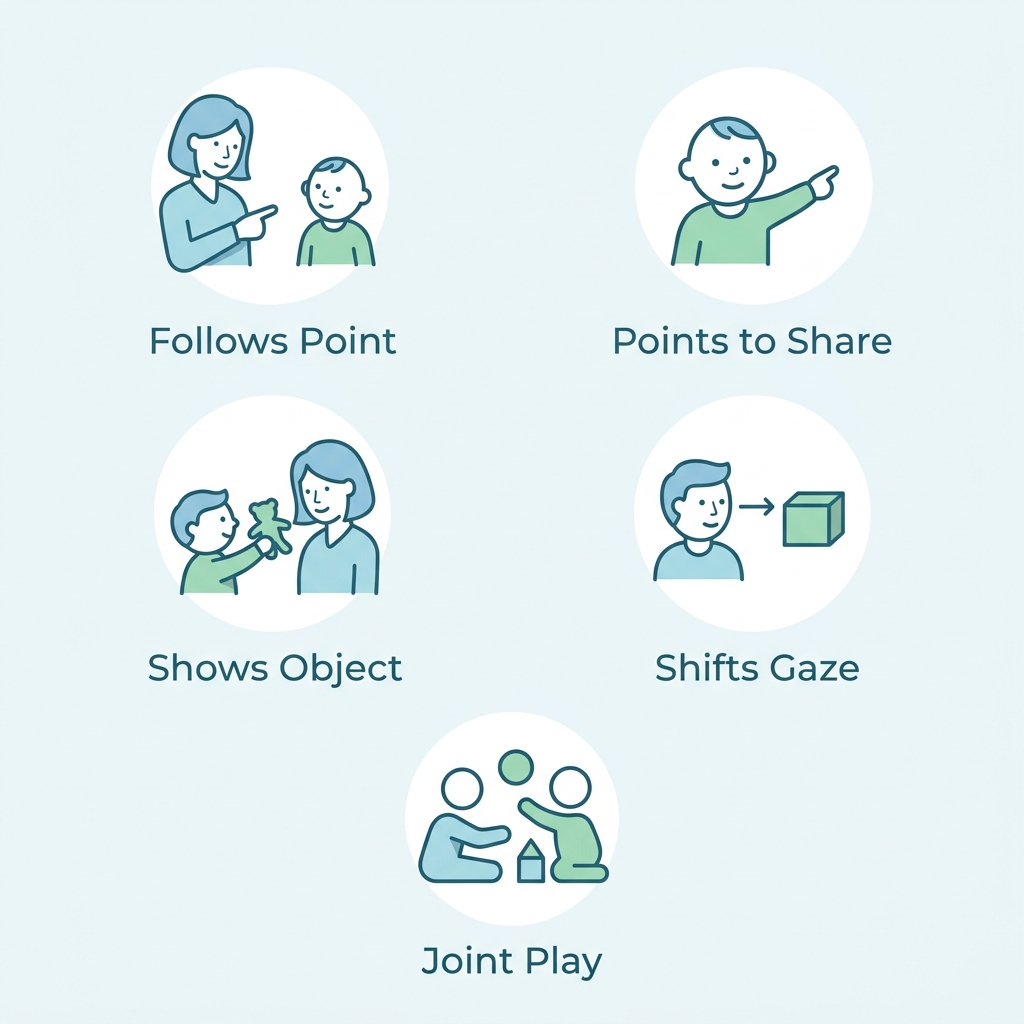
Icons for checking joint attention skills in toddlers
According to authoritative developmental milestone data from the Centers for Disease Control and Prevention (CDC), joint attention emerges by 12 months and strengthens by 24 months—delays in a signs of autism in 2 year old may signal a need for review. At HeartCore ABA, our hands-on ABA therapy offers in-home assessments personalized for your child’s success. For questions on who diagnoses autism, reach out—we’re here for real progress, real connection. If these checks raise concerns, explore professional assessments next.
Monitor Communication Development
Once you’ve noticed potential concerns, ongoing monitoring is key. At Heart Core ABA, we guide parents in watching signs of autism in toddlers through communication milestones to build communication, confidence, and independence.
According to the Centers for Disease Control and Prevention (CDC), authoritative government health data highlights these red flags:
- No response to name by 12 months
- No single words by 16 months
- No spontaneous two-word phrases by 24 months, key signs of autism in 2 year old
- Limited gestures or babbling
Track at home with an early signs of autism checklist: note babbling frequency, eye contact during play, and response to simple requests. We provide weekly parent updates and in-home assessments for collaborative progress monitoring, personalized for your child’s success.
If concerns persist, consult a professional who diagnoses autism. Our Early Intervention for toddlers programs build on your observations to foster communication.
Evaluate Play and Imagination
Observing play reveals signs of autism in toddlers. Typical 2-year-olds engage in pretend scenarios, like using a block as a car. Atypical play often involves repetitive toy use without imagination, signaling potential concerns.
Parents can spot signs of autism in 2 year old through these tips:
- Lack of imaginative role-play, such as not pretending objects have new roles.
- Limited peer engagement, preferring to play alone.
- Echoing phrases without creative expansion, per Heart Core ABA FAQ expert advice.
Use this early signs of autism checklist for play:
- Does not engage in pretend play by 2 years?
- Shows little interest in joining other children?
We at Heart Core ABA help evaluate these via in-home assessments and Personalized therapy plans (BCBA-developed). Our hands-on ABA therapy builds play skills with weekly parent updates. Play ties into communication and independence; we cover more next.
Identify Repetitive Behaviors
Beyond social challenges, repetitive behaviors stand out as key signs of autism in toddlers. These toddler autism indicators often show up during play and daily routines. According to the Centers for Disease Control and Prevention (CDC), authoritative government health data highlights common patterns like these.
Here is an early signs of autism checklist focused on repetitive actions:
- Hand-flapping: A 2-year-old might flap their hands excitedly while fixating on spinning a toy car’s wheels for minutes.
- Rocking body: Your little one rocks back and forth steadily, even when sitting during snack time.
- Spinning objects: They spin plate edges or toy tops endlessly, ignoring other play options.
- Lining up toys: Toys align in perfect rows on the floor, with distress if disrupted.
- Echolalia: Repeating words or phrases like “car go” over and over, rather than using them in new ways.
Signs of autism in 2 year old like these can interfere with learning and play, as HeartCore ABA experts note. Early intervention helps build skills.
If we notice these signs of autism in toddlers, contact us at HeartCore ABA for personalized early intervention plans. Real progress, real connection starts here. Watch also for sensory responses, covered next.
Test Response to Name
One key early test we often discuss for spotting signs of autism in toddlers is the response to name check. We’ve seen this simple observation help many parents notice potential early autism red flags in young children.
How to do it: Say your child’s name in a normal tone from 3-5 feet away, three times across different settings. Look for them turning toward your voice or making eye contact. Typically, by 9-12 months, kids respond by turning their head, smiling, or looking. No consistent response by 12 months, especially signs of autism in 2 year old, may signal concern.
As part of an early signs of autism checklist, lack of response to name is one observable behavior—per practical internal guidance from Heart Core ABA team’s expertise. If worries arise, we recommend professional evaluation through our early intervention for toddlers, personalized for your child’s success.
If response to name raises concerns, explore our early intervention options for real progress and connection.
Assess Sensory and Motor Skills
Beyond communication delays, we closely watch sensory and motor skills as potential signs of autism in toddlers. Our Heart Core ABA team uses play-based observations in your home to spot these early indicators, informing hands-on ABA therapy without diagnosing.
We check for over- or under-sensitivity to sounds, lights, textures, and smells during natural play. For motor skills, we note milestones like crawling, walking, and fine motor grasp, plus atypical patterns such as hand-flapping or toe-walking. According to the Centers for Disease Control and Prevention (CDC), authoritative government health data highlights repetitive movements and coordination challenges as common signs of autism in 2 year old children.
Here’s an early signs of autism checklist for 2-year-olds:
- Extreme reactions to sensory input (e.g., covering ears for noises)
- Delayed walking or poor balance
- Repetitive hand movements or toe-walking
- Difficulty with pincer grasp or stacking blocks
- Unusual body rocking during play
RBTs observe these, BCBAs review, and we integrate findings into personalized therapy plans with weekly parent updates. Early assessment builds communication and independence through hands-on ABA therapy, personalized for your child’s success. These insights feed into our full evaluation for communication and social growth.
Troubleshooting Common Concerns
We at Heart Core ABA understand the worries parents feel when noticing potential developmental delays in their little ones. If you’re spotting signs of autism in toddlers, like those discussed in early intervention, know you’re not alone. Our hands-on ABA therapy supports families with compassionate guidance and observation, helping build communication, confidence, and independence without providing diagnoses.
Key Early Signs from the CDC
According to authoritative public health information from the Centers for Disease Control and Prevention (CDC), common signs of autism in toddlers include:
- Limited eye contact or avoiding it during interactions.
- Delayed speech or not responding to their name by 12 months.
- Repetitive behaviors, such as lining up toys or echoing phrases.
- Lack of gestures like pointing or waving.
- Challenges in social play or joint attention.
For signs of autism in 2 year old children, watch for intense focus on specific objects alongside these traits, as CDC data highlights.
Practical guidance from our experienced ABA providers at Heart Core ABA, as shared in our FAQ #1404, helps differentiate typical delays from autism indicators through in-home assessments. Real-world insights from our in-home RBT sessions in FAQ #1398 emphasize observing play patterns and social interactions during hands-on ABA therapy.
Early Signs of Autism Checklist
- Does your child respond to their name?
- Show shared interest in toys or activities?
- Use simple words or gestures by age 2?
Contact us today for free insurance verification and a BCBA consultation. We’ll create a personalized plan for your child’s success, with weekly updates to track real progress, real connection. Your child’s heart matters!
Next Steps for Early Intervention
If you’ve noticed signs of autism in toddlers, perhaps even signs of autism in 2 year olds, we’re here to help at Heart Core ABA. Early action matters, and reviewing an early signs of autism checklist can help you note observations before reaching out. Our no-obligation consultations provide reassurance, as outlined in practical FAQ steps from Heart Core ABA’s internal resources.
Take these simple steps:
- Schedule free insurance benefits verification and checks with a quick phone call or online form for transparent coverage details.
- Request an in-home assessment by our BCBA team, per actionable FAQ advice from Heart Core ABA’s support materials.
- Discuss personalized Early Intervention for toddlers plans, hands-on ABA therapy tailored for your child’s success.
- Learn how we deliver weekly parent updates focused on building communication, confidence, and independence.
Contact us today in Kansas City to get started.
This article was researched and written with the assistance of AI tools.
Resources
- Learn Who Diagnoses Children’s Autism with Multidisciplinary Teams
- Discover Adult Autism Diagnosis by Neuropsychologists and Specialists
- Understand Children’s Autism Diagnosis Process and Early Screenings
- Explore Adult Autism Diagnosis Challenges Using ADOS-2 Tools
- Find Missouri Autism Diagnosis Teams and Insurance Coverage
- Learn Autism Diagnosis Criteria with ADOS-2 and Observations
- Get Adult Autism Diagnosis Insights from Neuropsychologists
- Recognize Early Autism Signs and Symptoms from CDC
- Explore CDC Autism Spectrum Disorder Overview and Interventions