Table of Contents
- Understanding Social Skills Groups for Autism
- Fundamentals of Social Skills Interventions
- Key Benefits of Social Skills Groups
- How Social Skills Groups Operate in Practice
- Best Practices for Social Skills Group Participation
- Advancing Social Growth Through ABA-Integrated Groups
Understanding Social Skills Groups for Autism
At Heart Core ABA, we understand the challenges families face when supporting children on the autism spectrum in building meaningful connections. Social skills groups autism offer a nurturing space where kids learn to navigate social situations with guidance. These structured sessions help toddlers and older children alike develop essential abilities like turn-taking and sharing, fostering confidence in everyday interactions.
Social skills groups are small, peer-led sessions facilitated by our trained professionals, focusing on preparing child with autism for school through activities that build classroom readiness and peer bonds. Integrated into our hands-on ABA therapy, these group therapy for autistic children complement 1:1 sessions by emphasizing natural environments in Missouri cities like Kansas City, St. Louis, and Springfield. As outlined by the Autism Society, evidence-based social skills interventions autism enhance communication and reduce isolation without promising universal outcomes. For instance, one child in our program blossomed during play-based autism social skills activities children, eagerly joining group games after initial hesitation. With 42 BCBAs and 54 RBTs, we deliver compassionate care tailored to each family’s needs.
Looking ahead, explore how these peer interaction programs for autism drive real progress and independence in upcoming sections on benefits and implementation.
Fundamentals of Social Skills Interventions
At Heart Core ABA, we understand how vital social skills are for children with autism to build connections and thrive in everyday life. In Missouri, our hands-on ABA therapy integrates targeted interventions to foster communication and confidence. These fundamentals lay the groundwork for meaningful progress, helping young ones form friendships and navigate social settings with ease.
Defining Key Interventions for Autism
Social skills interventions for autism focus on targeted strategies that address challenges in social reciprocity, nonverbal cues, and everyday interactions. These social skills interventions autism are essential for children on the spectrum, teaching them how to read emotions, take turns in conversations, and engage with peers. Drawing from the Autism Society’s overview of therapies, no single approach fits all; instead, we tailor options to each child’s unique needs, considering their age and environment. For toddlers in Missouri, this might involve simple sharing games, while adolescents practice more complex scenarios like resolving conflicts.
Key types include:
- Direct instruction: Structured lessons on greeting others and maintaining eye contact.
- Video modeling: Watching scripted videos of successful interactions to imitate behaviors.
- Group-based practice: Social skills groups autism where kids rehearse skills in a safe, supportive setting.
At Heart Core ABA, we offer these in small groups across cities like St. Louis and Kansas City, blending them with parent coaching to reinforce learning at home. For example, our autism counseling for kids in St. Louis programs emphasize autism peer training programs to build real-world confidence. This foundation not only equips children with practical tools but also paves the way for deeper integration with therapies like ABA, enhancing overall social development.
Integrating Interventions with ABA Therapy
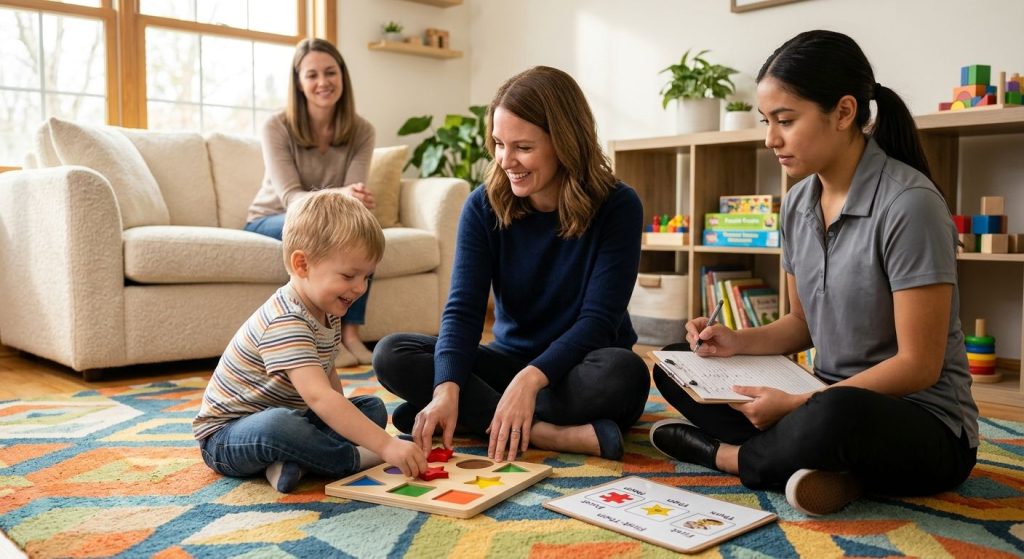
Applied Behavior Analysis (ABA) supercharges social skills interventions by using positive reinforcement to make learning engaging and effective. We design these social development strategies for ASD to complement ABA’s structured framework, breaking down complex social behaviors into manageable steps. For instance, in our 1:1 sessions, a child might earn praise or a favorite toy for practicing turn-taking, directly tying into broader goals of independence and connection.
At Heart Core ABA, we seamlessly weave social skills into our personalized therapy plans, developed by BCBAs after in-home assessments. Our small social skills groups pair with ABA to create joyful experiences, like role-playing at a pretend party to teach sharing. For children in Missouri, this means accessible support in natural settings, such as homes or schools in Springfield or Columbia. Parents receive weekly updates, ensuring they can continue autism social skills activities children like board games that promote teamwork.
This integration highlights ABA’s role in sustaining gains, as seen in our programs where kids show improved interactions over time. By combining interventions with ABA’s evidence-based reinforcement, we help families see real progress, real connection, setting the stage for exploring proven outcomes in practice.
Evidence-Based Approaches in Practice
Research underscores the value of evidence-based social skills interventions, particularly for autistic youth in group settings. A review of studies on high-functioning autism highlights cognitive behavioral therapy-based programs like PEERS, which improve social communication through structured peer interactions, with participants showing notable gains in friendship formation. Naturalistic interventions, such as Pivotal Response Treatment, also prove effective by embedding skills in play, aligning with the Autism Society’s emphasis on individualized, engaging methods.
In our Heart Core ABA programs, we apply these approaches in small groups tailored for Missouri families, from toddlers learning basic greetings to adolescents navigating group dynamics. Our BCBA-led teams use data-driven adjustments to ensure progress, incorporating parent coaching for home carryover. For example, in Kansas City sessions, children engage in evidence-supported activities that reduce isolation and boost reciprocity.
To clarify options, here’s a brief comparison:
- Individual interventions: Offer personalized focus but limit peer practice.
- Group interventions: Build real-time social skills through interaction, ideal for fostering lasting relationships.
These methods, backed by rigorous studies, demonstrate enhanced outcomes like better emotional understanding. At Heart Core ABA, we prioritize your child’s heart matters, personalizing for success to support thriving social lives and hint at the broader benefits ahead.
Key Benefits of Social Skills Groups
At Heart Core ABA, we’ve seen firsthand how social skills groups autism can transform the lives of children on the spectrum. These structured sessions, integrated with our how ABA therapy works, foster essential interactions that build lasting connections. By combining peer practice with ABA principles, we help kids develop communication, empathy, and independence in a supportive environment. Parents often tell us about the joy of watching their child make a new friend during group play. This approach not only addresses immediate social challenges but also paves the way for school readiness and family harmony in Missouri communities.
The following table highlights key differences between individual and group therapy, showing why group settings offer unique group therapy advantages for ASD:
| Feature | Individual Therapy | Social Skills Groups |
|---|---|---|
| Primary Focus | Personalized foundational skill building | Real-time peer interaction and social application |
| Environment | Controlled 1:1 setting | Dynamic, naturalistic group setting |
| Main Benefit | Intensive behavioral interventions | Confidence building and friendship formation |
Individual therapy provides personalized attention, which is vital for foundational skills, but group sessions excel in simulating real-world dynamics. This balance allows children to practice in varied contexts, enhancing transfer to everyday life. We’ve found that combining both maximizes outcomes, with groups adding the social spark that individual work builds upon.
Enhancing Communication and Empathy
Social skills groups at Heart Core ABA build core competencies like turn-taking and emotion recognition, crucial for children with autism. Through guided activities, kids learn to interpret facial expressions and respond appropriately, reducing misunderstandings in conversations. We’ve seen families thrive as their child starts initiating playdates after just a few sessions.
- Improved Verbal and Nonverbal Cues: Groups teach reading body language via role-playing, drawing from social skills interventions autism like Pivotal Response Treatment.
- Empathy Development: Sharing feelings in a circle helps children understand others’ perspectives, fostering deeper bonds.
- Turn-Taking Mastery: Structured games ensure everyone participates, building patience and reciprocity.
Studies from the PMC review on high-functioning autism highlight how cognitive behavioral interventions, such as PEERS programs, significantly boost social communication and empathy. In our St. Louis groups, toddlers gain early play skills, while school-age kids form friendships. This aligns with ABA integration for sustained progress, as evidenced by measurable gains in our 2,500+ annual sessions.
These foundational skills not only enhance daily interactions but also prepare children for broader social settings, transitioning smoothly into peer practice.
Building Confidence Through Peer Practice
Peer interactions in our groups offer real-world application, leading to long-term independence. Children practice autism social skills activities children like conversation cubes and emotion match-ups, turning abstract lessons into tangible experiences. One anecdote from our Springfield group involves a shy boy who, after weeks of board games, confidently shared a toy with a peer— a milestone his parents celebrated.
- Self-Esteem Boost: Positive feedback from peers reduces isolation and builds assurance.
- Friendship Formation: Supervised playdates simulate school scenarios, aiding autism socialization benefits.
- Problem-Solving Skills: Group challenges teach negotiation, promoting resilience.
The My Brother Rocks the Spectrum Foundation outlines 18 activities, from Zones of Regulation Twister for emotional control to social skills challenges for communication, showing consistent practice yields fun, effective learning. Unlike individual therapy, groups provide diverse peer learning, accelerating confidence. For school-age kids, this means better classroom participation; for toddlers, early independence in play.
This peer-driven growth sets the stage for family involvement, extending benefits beyond the session.
Family and Community Impact in Missouri
Our social skills groups extend to families and Missouri communities, emphasizing holistic support through parent coaching and local resources. In St. Louis and Springfield groups in Kansas City, we reinforce skills at home, helping parents model behaviors for sustained progress. We’ve witnessed families in O’Fallon report stronger sibling bonds after implementing group strategies.
- Parent Empowerment: Coaching sessions equip caregivers with tools for daily reinforcement.
- Community Integration: Links to local programs enhance school readiness and social inclusion.
- Reduced Family Stress: Shared experiences in groups normalize challenges, building support networks.
CAP4Kids resources in St. Louis validate this, listing organizations like the Judevine Center for Autism and First Steps for early intervention, supporting over 350 families annually with therapy and respite care. Heart Core ABA’s family-centered approach integrates these, delivering hands-on ABA therapy for real progress. By addressing broader effects, we help children thrive independently while strengthening community ties, previewing how our structured sessions implement these gains in everyday life.
How Social Skills Groups Operate in Practice
At Heart Core ABA, we believe in creating supportive spaces where children with autism can practice essential social skills in a fun, low-pressure way. Our social skills groups in Missouri blend hands-on ABA therapy with interactive activities to foster real progress and connection. These sessions help build communication, confidence, and independence through structured yet engaging formats tailored to each child’s needs.
Session Structure and Activities
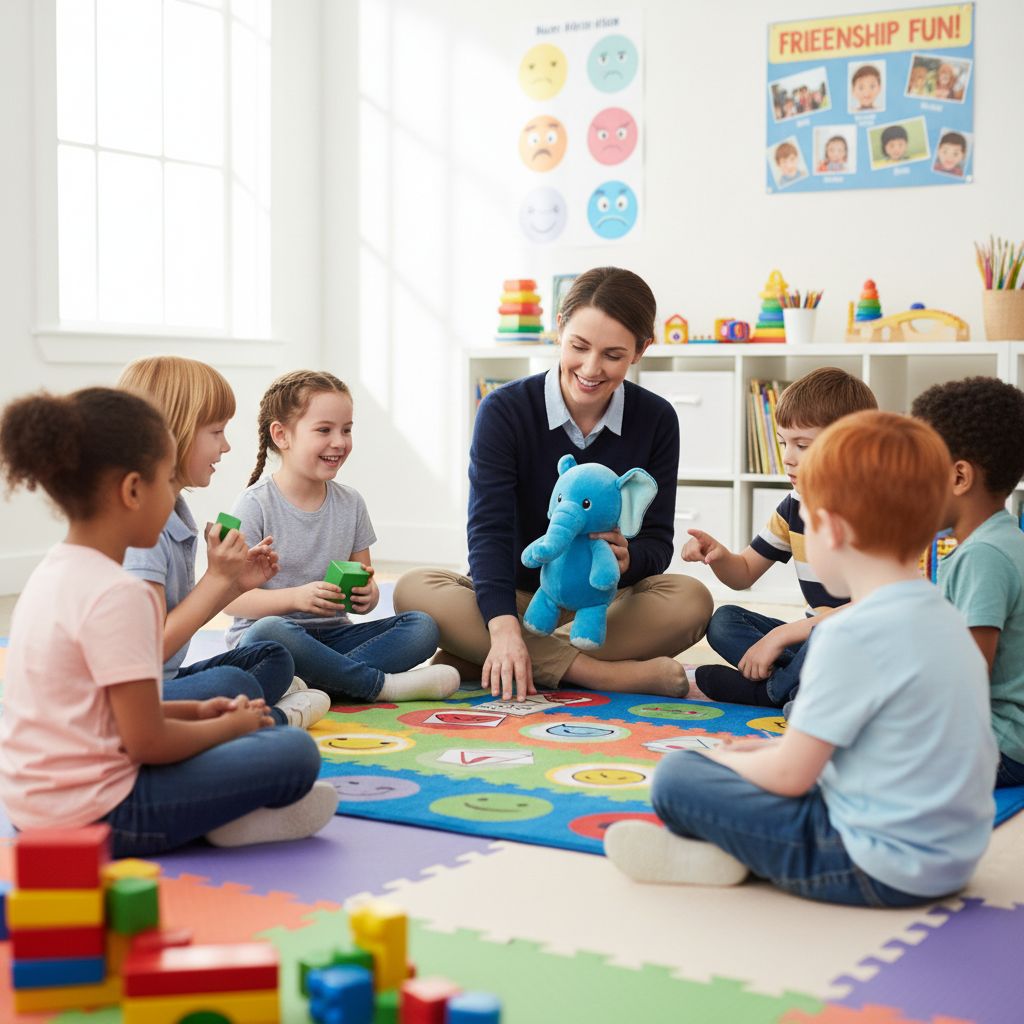
Social skills groups autism typically follow a clear, predictable flow to keep participants comfortable and focused. Sessions last 45 to 60 minutes with groups of 4 to 8 children, starting with a warm-up to build rapport, moving into skill practice, and ending with a cool-down for reflection. According to the Autism Society, these structures promote engagement and reduce anxiety by providing consistent routines in supportive environments.
In our groups, we make sessions fun with sensory-friendly autism social skills activities children love, like cooperative games and role-playing. For example, children might play a turn-taking board game or act out sharing scenarios with props. These interactive autism group sessions encourage peer interaction while incorporating simple prompts from facilitators.
A typical session unfolds like this:
- Warm-up (10 minutes): Greeting circle and icebreaker songs.
- Main activity (30 minutes): Skill-building exercises for ASD, such as emotion charades.
- Cool-down (10-15 minutes): Sharing what they enjoyed and positive reinforcement stickers.
We adapt these at Heart Core ABA to fit local Missouri families, ensuring every child feels included. Parents often share how these activities extend to home playtime, strengthening family bonds.
Role of ABA in Group Therapy
Applied Behavior Analysis plays a key role in our group therapy, using evidence-based techniques to reinforce positive social behaviors. The PMC article on autism social skills highlights how ABA improves communication in group settings by addressing challenges like perspective-taking through structured prompts and reinforcements.
At Heart Core ABA, our Registered Behavior Technicians (RBTs), supervised by Board Certified Behavior Analysts (BCBAs), integrate ABA seamlessly. We use visual cues and immediate praise during activities to encourage participation, drawing from autism intervention and therapies that emphasize personalized reinforcement. For instance, in a role-play exercise, an RBT might gently prompt a child to respond to a peer’s question, followed by group cheers for success.
Social skills interventions autism in our Missouri programs combine these elements for maximum impact, with weekly parent updates quoting progress notes like “Your child initiated a conversation today!” This approach ensures skills transfer to everyday life, blending group dynamics with our hands-on ABA therapy model.
Tips for engagement include starting small and celebrating all efforts, helping children build lasting confidence.
Age-Appropriate Implementation
We tailor social skills groups to different developmental stages, ensuring age-appropriate activities that match each child’s abilities in our Missouri locations. For toddlers in early intervention, sessions focus on basic turn-taking with soft toys and short durations. Older children engage in more complex scenarios, like group problem-solving games, adapting to school-age needs.
Heart Core ABA’s programs, serving areas like Kansas City and Springfield, use BCBA oversight to customize plans. As noted in our FAQ, we track progress through observable goals, such as increased eye contact or cooperative play, and combine groups with in-home therapy for reinforcement.
For preschoolers, we might use animal-themed role-play to teach greetings; for elementary kids, cooperative art projects build teamwork. Upcoming center-based options will expand access, always prioritizing safety and inclusivity with trained staff.
Parents can start by completing our online intake form—we guide you through finding the right group in Missouri. These skill-building exercises for ASD promote steady growth, with reassuring feedback every step of the way.
Best Practices for Social Skills Group Participation
Participating in social skills groups can make a real difference for children with autism, helping them build connections and confidence in everyday interactions. At Heart Core ABA, we’re dedicated to supporting families in Missouri with our hands-on ABA therapy, including small social skills groups designed for various ages. We recommend starting with groups that integrate ABA principles to ensure skills transfer effectively to home and school. These best practices will guide you through selection, preparation, and involvement for maximum progress.
Selecting the Right Group
Choosing the right social skills group is key to your child’s success, especially for effective group selection for ASD. We suggest looking for programs like our social skills groups autism offerings at Heart Core ABA in Missouri cities such as Columbia, Kansas City, and St. Louis. Prioritize ABA-integrated groups with BCBA oversight, small group sizes of 4-6 children for personalized attention, age-matched peers to foster relatable interactions, and convenient locations to reduce travel stress. Consider insurance verification upfront—our team handles this to make therapy accessible without delays.
To help evaluate options, here’s a simple overview of key factors:
| Factor | What to Look For |
|---|---|
| Oversight | Direct supervision by a BCBA |
| Group Size | 4-6 peers for optimal interaction |
| Customization | Personalized goals within a group format |
This structured approach helps address questions like the ideal age for social skills groups autism, typically starting as early as 2-3 years with our early intervention options. For example, a 5-year-old in our Columbia group practiced turn-taking through guided games, leading to smoother playground interactions. The benefit? Consistent therapist matching builds trust, boosting engagement and long-term skill retention in just a few months.
Preparing Your Child at Home
Home-based social practice for autism complements group therapy by reinforcing skills daily. We encourage incorporating autism social skills activities children can enjoy, like role-playing conversations or using social stories to preview group scenarios. Draw from proven methods such as Emotions Match Up, where kids pair facial expressions with feelings, or Self-Control Bubbles to practice waiting turns—activities inspired by resources outlining 18 engaging options for sensory needs.
Start with a simple checklist: 1. Model behaviors during family meals, like sharing toys; 2. Read books like You Are a Social Detective to discuss cues; 3. Schedule 10-minute playdates with structured prompts; 4. Track participation with a fun chart. For daily social skills activities to support autistic kids independence, try Musical Statues for impulse control or Conversation Cubes for question practice. One family in St. Louis used role-play before sessions, helping their child initiate greetings confidently. These routines not only ease anxiety but also build independence, making group participation more rewarding and preparing for classroom transitions.
Maximizing Progress with Family Involvement
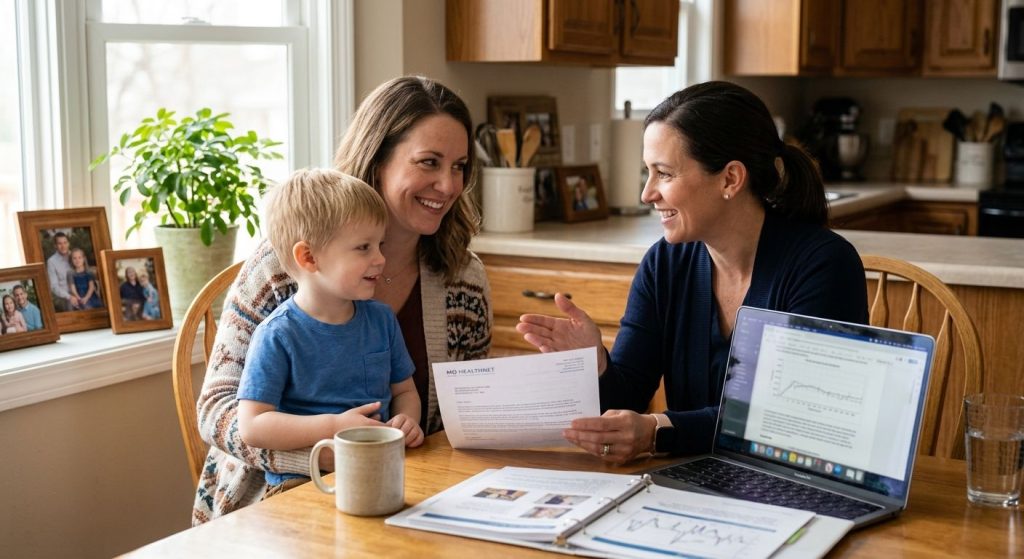
Family involvement is crucial for generalizing skills from social skills groups to real life, backed by studies showing ABA’s role in improving social cognition and engagement. At Heart Core ABA, we emphasize social skills interventions autism through parent coaching sessions, where we teach strategies like positive reinforcement and progress tracking via weekly updates.
Engage with a checklist: 1. Attend coaching to learn prompting techniques; 2. Practice social skills interventions for high-functioning autism at home, such as role-playing school scenarios; 3. Collaborate with educators for consistent routines; 4. Monitor challenges like anxiety with tailored adjustments. Evidence from reviews highlights how family-ABA partnerships enhance theory of mind and emotional regulation, with one study noting better maintenance across settings. For instance, parents in our O’Fallon program used social stories for school prep, helping a child transition smoothly to group instructions and raising hands in class. This involvement fosters real progress, real connection, ensuring your child’s heart matters in every step toward independence.
Advancing Social Growth Through ABA-Integrated Groups
Social skills groups autism represent a cornerstone of ABA therapy, blending structured social skills interventions autism with peer interactions to build essential communication and confidence. At Heart Core ABA, we integrate these groups seamlessly into our hands-on ABA therapy, fostering real progress and real connection for children on the spectrum. By recapping key insights, families in Missouri can see how these programs enhance independence through targeted activities and compassionate support.
We’ve highlighted benefits like increased peer confidence and positive family impacts, alongside best practices for incorporating autism social skills activities children both at home and in group settings. Our holistic autism social programs emphasize integrated ASD skill development, ensuring measurable outcomes with our expert team of BCBAs and RBTs. Covering areas like Kansas City, St. Louis, and Independence, we deliver personalized plans that align with early intervention needs, just as accessible options outlined in our resources.
We’re committed to your family’s journey, partnering with community organizations for comprehensive care. Explore special needs resources in St. Louis through trusted local directories, and take the next step by completing our online intake form today. Together, let’s nurture your child’s growth with hope and heart.
Resources
- Build Essential School Skills for Children with Autism Using ABA
- Discover Autism Counseling Services for Kids in St. Louis
- Learn How Personalized ABA Therapy Builds Child Independence
- Explore Hands-On ABA Therapy for Diverse Learning Children
- Access Personalized ABA Therapy Services and Support Resources
- Discover Personalized ABA Therapy Options and Resources
- Explore In-Home ABA Therapy for Learning Differences
- Explore Evidence-Based Interventions for Autism Spectrum Disorder
- Discover Effective Social Skills Interventions for High-Functioning Autism
- Find Special Needs Resources and Support in St. Louis
- Engage Kids with Autism in Fun Social Skills Activities
- Enhance Social Skills in Autism Using ABA and RFT Methods