








ABA Therapy In Missouri
Table of Contents
Fundamentals of ABA Therapy in Missouri
At Heart Core ABA, we believe in hands-on ABA therapy for children who learn differently, fostering real progress and real connection through care that comes straight from the heart. ABA therapy in Missouri is a scientifically validated approach using positive reinforcement to teach essential skills like communication, social interaction, and daily living for children with autism spectrum disorder. Endorsed by the American Academy of Pediatrics, it focuses on individualized goals and measurable progress, helping families build collaborative support systems.
Our personalized therapy plans adapt to each child’s needs, delivering consistent 1:1 instruction through our team of 42 BCBAs and 54 RBTs. In Missouri, behavioral intervention programs in Missouri offer flexible options including in-home, school-based, and center-based services, aligning with state regulations and Individualized Education Programs (IEPs). We emphasize early intervention for toddlers to maximize developmental gains, while navigating aba therapy cost in Missouri through insurance verification and Medicaid assistance. Reputable aba therapy providers in Missouri, like ours, ensure accessibility and family involvement for autism support services locally.
This guide explores the fundamentals, benefits, implementation, and best practices for starting ABA Missouri. Results may vary, so consult a healthcare professional for personalized advice. Join us as we dive deeper into how ABA can make a meaningful difference for your family.
Understanding ABA Therapy Basics
At Heart Core ABA, we believe that grasping the basics of ABA therapy empowers Missouri families to make confident decisions for their child’s development. Applied Behavior Analysis, or ABA, is an evidence-based approach that helps children with autism spectrum disorder build essential skills through structured, positive methods. In Missouri, ABA therapy in missouri aba therapy in missouri focuses on individualized plans that align with state guidelines, promoting independence and learning from early intervention onward.
Core Principles of ABA
We help families understand ABA’s foundational techniques, which emphasize positive reinforcement to encourage desired behaviors. For instance, when a child completes a task, we might offer praise or a favorite toy, reinforcing progress in a fun way. Data-driven goal setting is another key principle; therapists track behaviors daily to adjust plans, ensuring measurable improvements tailored to each child’s needs.
Discrete trial training breaks skills into small steps, like teaching a toddler to request help during playtime, while natural environment teaching integrates learning into everyday activities, such as mealtime routines in a Missouri home. These methods, supported by the Missouri Autism Guidelines Initiative, promote holistic development. For urban families in St. Louis or rural ones in the Ozarks, we adapt principles to local lifestyles, fostering real progress and real connection through hands-on ABA therapy for children who learn differently.
Parent coaching plays a vital role too, as we train caregivers to reinforce skills at home, enhancing consistency. This approach not only reduces challenging behaviors but also builds communication and social abilities, drawing from evidence-based practices recommended for developmental disabilities in the state.
Types of ABA Delivery in Missouri
In Missouri, ABA therapy delivery models vary to meet diverse family needs, from busy urban schedules to rural access challenges. We offer in-home ABA therapy for personalized comfort, school-based ABA therapy to sync with IEPs, and center-based ABA therapy for structured social practice. Each option aligns with local regulations, ensuring coordination with educational goals and family involvement.
In-home sessions bring therapy to the child’s familiar space, ideal for toddlers needing routine stability. School-based models integrate with classroom settings, supporting academic progress through collaboration with educators. Center-based programs provide group interactions and specialized tools, perfect for building peer skills. These autism intervention options in the state, including behavior analysis services locally, help address Individualized Education Programs (IEPs) while considering factors like travel and privacy.
The following table compares these models to aid decision-making:
| Model | Environment | Best For | Key Benefits |
|---|---|---|---|
| In-Home | Child’s familiar home setting | Toddlers and families preferring privacy | Tailored to daily routines |
| School-Based | Educational environment with peers | School-aged children | Collaborates with educators |
| Center-Based | Dedicated therapy facility | Social skills groups for various ages | Consistent professional oversight |
Missouri families benefit from these flexible models, as outlined in state-endorsed practices for developmental disabilities. In-home options suit those prioritizing privacy and ease, while school-based fits IEP integration for ongoing support.
When choosing, consider your child’s age and goals; for younger toddlers, in-home reduces stress and generalizes skills at home, per Missouri DMH guidelines. School-aged kids thrive in school-based for social practice, and center-based excels for group dynamics across ages. We guide families to select based on needs, ensuring aba therapy cost missouri remains manageable through insurance verification and Medicaid assistance. This personalized therapy plan fosters care that comes straight from the heart.
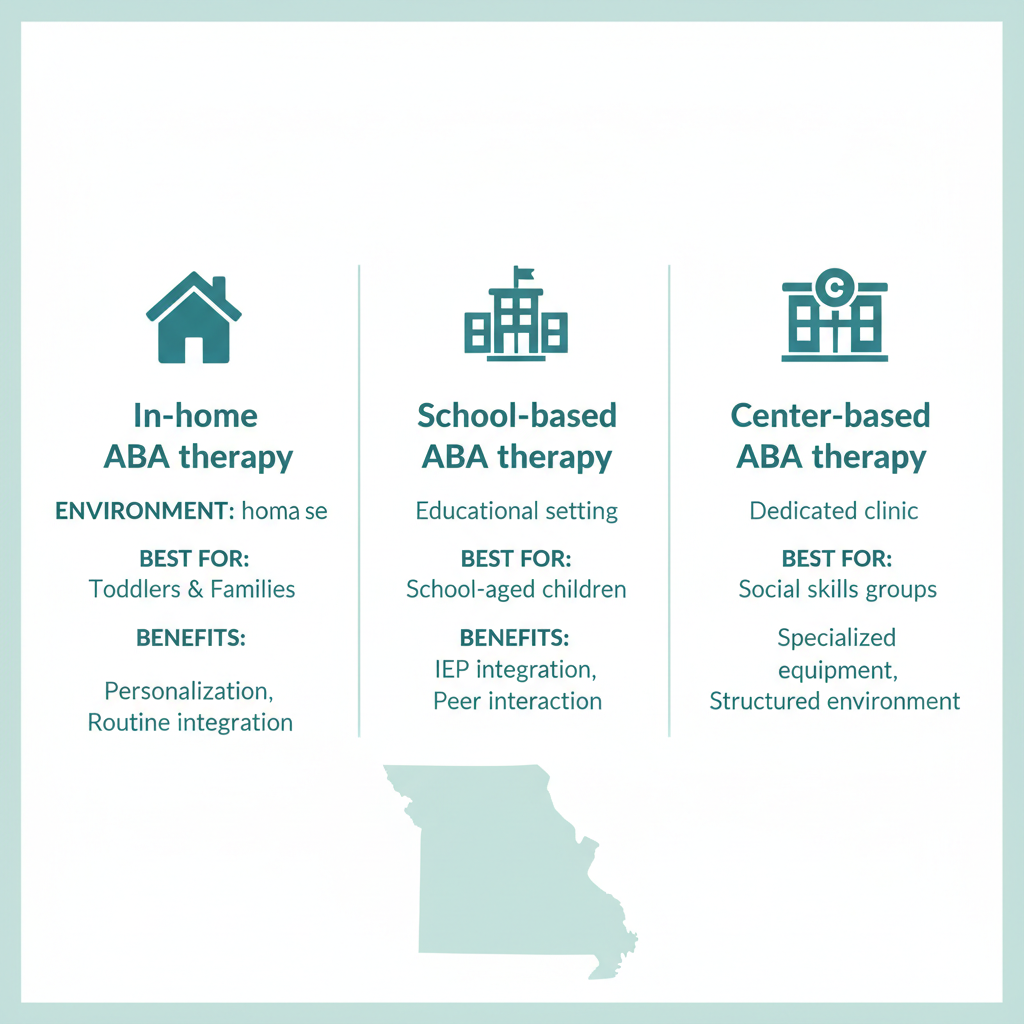
Comparison of in-home, school-based, and center-based ABA therapy models in Missouri
Building on these visuals, the infographic highlights how each model supports unique family dynamics in our communities.
Finding Qualified Providers
Selecting the right ABA therapy providers in Missouri starts with verifying credentials like Board Certified Behavior Analysts (BCBAs) for supervision and Registered Behavior Technicians (RBTs) for hands-on delivery. We prioritize BCBA-led teams with consistent RBT matches to ensure reliable, 1:1 therapy that aligns with state certification standards from the Department of Mental Health.
Look for providers offering IEP coordination and parent coaching, as these enhance outcomes through family collaboration. Evaluate experience with Missouri regulations, including service coordination and evidence-based interventions like those in the Autism Spectrum Disorders Guide. Avoid those without clear progress monitoring or insurance navigation support.
- Check for BCBA oversight in all sessions.
- Confirm RBT training and background checks.
- Ask about weekly updates and goal adjustments.
In rural areas, seek telehealth options; in cities like Kansas City, prioritize accessibility. Results may vary, so consult professionals for tailored advice. At Heart Core ABA, our network of 42 BCBAs and 54 RBTs delivers real progress through personalized plans, helping families navigate local options effectively.
Key Benefits of ABA Therapy for Autism
At Heart Core ABA, we believe in unlocking the potential of every child through evidence-based approaches tailored to their unique needs. Our ABA Therapy For Autism In Missouri emphasizes play-based learning that fosters real progress and real connection. Families often share stories of breakthroughs, like a child who once struggled with eye contact now eagerly engaging in conversations during therapy sessions. This hands-on ABA therapy for children who learn differently makes a meaningful difference in daily life.
Skill Development Advantages
Imagine a toddler discovering the joy of sharing toys on the playground or a school-aged child mastering the steps to brush their teeth independently. These milestones are at the heart of ABA’s skill-building interventions in the state, where we focus on communication, social interactions, and adaptive behaviors. Through personalized therapy plans, children gain verbal and non-verbal skills, such as using words to express wants or gestures to connect with others. We incorporate fun activities like role-playing games to teach turn-taking and empathy, helping kids navigate social cues with confidence. Adaptive routines, from dressing to meal prep, build self-reliance step by step.
Studies from the CDC highlight ABA’s efficacy, showing up to 47% improvement in IQ scores with intensive programs, alongside gains in language and daily functioning. We’ve seen these autism behavioral benefits locally through consistent practice that breaks skills into manageable parts, rewarding small successes to encourage growth. In Missouri, reputable aba therapy providers missouri deliver these techniques with care that comes straight from the heart, ensuring every session aligns with the child’s pace.
Our approach qualifies children from toddlers to school age, maximizing neuroplasticity during early years while supporting ongoing development. Results may vary, but the focus on measurable progress empowers families to celebrate each advancement.
Family and Long-Term Impacts
We often hear from parents how ABA transforms not just their child, but the entire family dynamic. Picture a mom confidently guiding her son through a bedtime routine at home, thanks to tools learned in parent coaching sessions. At Heart Core ABA, we prioritize family collaboration by training caregivers to reinforce skills outside therapy, creating a supportive network that extends learning into everyday moments.
This involvement leads to sustained progress, as families report stronger bonds and reduced stress over time. Early intervention for toddlers sets a foundation for lifelong independence, while school collaborations integrate ABA into IEPs for seamless transitions. Social skills groups provide safe spaces for peer practice, boosting confidence that carries into classrooms and communities.
In Missouri settings, state support for family-centered therapies, as outlined by the Department of Mental Health, underscores ABA’s role in holistic care. We guide families through aba therapy cost missouri considerations, emphasizing the value of outcomes like improved family harmony and long-term self-sufficiency. Though individual results may vary, our weekly updates keep everyone informed and connected.
By addressing what ages qualify for ABA therapy in Missouri, from early toddler programs to school-based support, we help families build a brighter future together.
Evidence from Missouri Programs
Local families frequently ask about real-world outcomes, and we’re happy to share insights from state-aligned initiatives. Consider a child who, after months of ABA, joins group play without hesitation, a change that opens doors to friendships and learning. Our center-based and in-home programs track progress meticulously, using data to refine strategies and celebrate gains in communication and behavior.
General evidence shows ABA enhances social engagement and adaptive skills, with many children achieving greater independence in daily activities. Parent coaching equips families to maintain these improvements at home, while IEP coordination ensures therapy complements school goals. Social skills groups foster empathy and cooperation, vital for community integration.
Drawing from Missouri DMH overviews, family-centered ABA receives strong state backing, promoting accessible services across the region. We’ve witnessed real progress in aba therapy in missouri through collaborative efforts that blend evidence-based methods with personalized care. Without promising specific guarantees, these programs highlight the potential for meaningful, lasting impacts.
Consult a healthcare professional for diagnosis and treatment recommendations, as our team verifies insurance benefits to make quality care approachable for Missouri families.
How ABA Therapy Sessions Operate
At Heart Core ABA, we deliver hands-on ABA therapy for children who learn differently through structured, engaging sessions tailored to each child’s needs. Our approach emphasizes real progress through real connection, ensuring care that comes straight from the heart. In Missouri, these sessions follow evidence-based practices to support skill development and family collaboration.
Session Structure and Techniques
ABA therapy in Missouri typically involves individualized sessions that run 20-40 hours weekly for optimal progress, as recommended by state guidelines. Our Registered Behavior Technicians (RBTs), supervised by Board Certified Behavior Analysts (BCBAs), lead one-on-one instruction in natural environments like homes or schools. Sessions incorporate techniques such as prompting to guide behaviors, fading to promote independence, and reinforcement schedules to encourage positive actions. Daily routines might include discrete trial training for skill building, naturalistic teaching during play, and social skills practice in small groups.
For example, a toddler session could start with a fun activity using toys to teach turn-taking, lasting about 2 hours with breaks.
To maximize engagement, we adapt techniques for different ages, from early intervention for little ones to more complex goals for school-aged kids.
Role of Team and Family Involvement
As trusted ABA therapy providers Missouri families rely on, our team collaborates closely from the start. BCBAs conduct initial assessments to identify strengths and areas for growth, creating personalized therapy plans that align with Individualized Education Programs (IEPs). RBTs then deliver the hands-on sessions, implementing strategies with consistency and enthusiasm. Parent coaching is integral, with weekly training sessions to help families generalize skills at home, fostering stronger bonds and daily successes.
Consider a family in Jefferson City where parents learn reinforcement techniques during a home visit, enabling them to support communication goals beyond therapy time.
We encourage open communication; families can reach out anytime for updates, ensuring everyone feels involved in the journey.
While ABA therapy cost Missouri varies by insurance and session frequency, our team assists with verification to make access easier without unexpected burdens.
Progress Monitoring and Adjustments
Monitoring is key to behavioral session processes locally, with RBTs collecting data on every target behavior during sessions. This might include tracking response times or success rates using simple charts, reviewed weekly by BCBAs to measure real progress. Goals are revised based on this data, adjusting for plateaus or new needs, such as adding social skills groups for school-aged children.
In one case, a child’s improved eye contact led to expanding verbal goals after two months of consistent tracking.
We align with Missouri schools for seamless IEP support, sharing insights to bridge therapy and education.
Therapy implementation in the Midwest thrives on these adjustments; results may vary, so we consult with healthcare professionals to refine plans. For aba therapy for kids missouri, early involvement helps qualify children from toddlers onward, answering how families can start this supportive path.
Best Practices for Effective ABA Therapy
At Heart Core ABA, we guide families through the practical steps of implementing effective ABA therapy in Missouri. Our hands-on approach focuses on real progress through personalized therapy plans that build real connections and care that comes straight from the heart. By addressing insurance hurdles, starting strong, and fostering collaboration, families can maximize outcomes for children who learn differently. We assist with everything from verification to ongoing support, ensuring therapy aligns with your child’s needs.
Navigating Insurance and Costs
Understanding insurance for behavioral therapy locally is crucial for accessing affordable autism care in Missouri. We recommend starting with a thorough verification of your plan to determine coverage details without any guarantees, as policies can vary. For aba missouri, families often inquire about the average cost of ABA therapy in Missouri, which typically ranges from $50 to $150 per hour depending on session length and provider. Factors like location and therapy intensity influence these rates, and while private-pay options exist, we help explore Medicaid and private insurance to make it more manageable.
The aba therapy cost missouri can add up quickly, but state mandates through the Department of Mental Health (DMH) require coverage for autism benefits, helping offset expenses. Prior authorization is key–contact your insurer early to confirm eligibility and limits based on medical necessity. Reimbursement rates for behavioral health services, as outlined in Missouri Department of Social Services (DSS) fee schedules, provide context for what providers like us bill, though actual family costs depend on deductibles and copays. Always verify benefits, as results may vary, and consult your healthcare professional for personalized advice.
Before diving into specifics, verifying your insurance is the first step to avoid surprises. This proactive approach ensures you understand what your plan covers for ABA services.
| Coverage Type | Eligibility | Key Features | Considerations |
|---|---|---|---|
| Medicaid | Children with autism diagnosis under MO HealthNet | Prior authorization required; covers up to 40 hours/week | Limits based on medical necessity |
| Private Insurance | Mandated coverage for autism therapies in MO | Varies by plan; often 20-40 hours | Check deductibles and copays |
This table highlights common options, drawing from DMH policies and DSS data on fee schedules, which update monthly to reflect accurate coding for services like EPSDT-covered therapies. Medicaid suits many low-income families, offering substantial hours once approved, while private plans provide flexibility but require checking specifics with providers. We advise contacting your insurer and using DSS resources to review schedules–reach out to us for assistance navigating these steps, remembering that prior authorization may be required and coverage isn’t guaranteed.
Transitioning from insurance logistics, families often find relief in knowing structured support is available. Building on this foundation, let’s explore how to initiate therapy effectively.
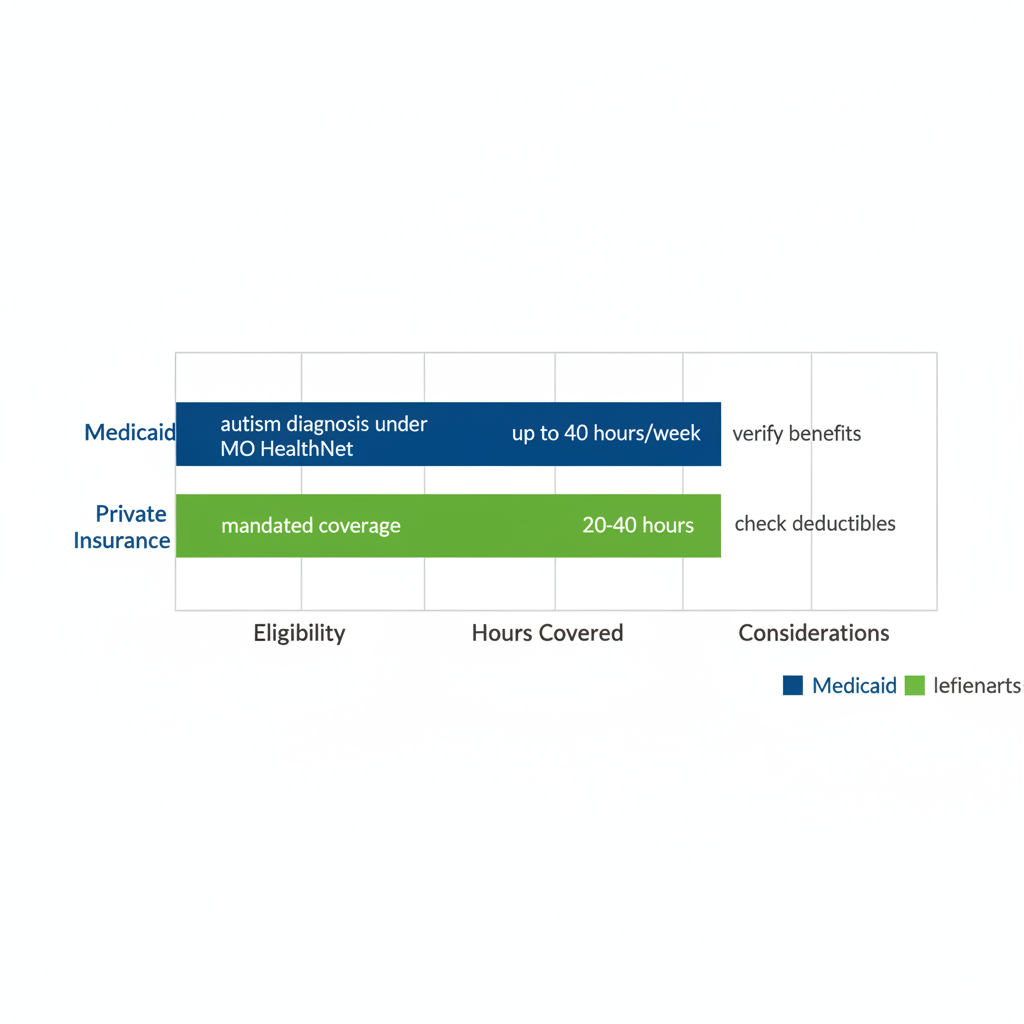
ABA therapy insurance coverage options in Missouri visualized.
This visualization underscores the variability in hours and requirements, helping families compare at a glance. With these insights, you’re better equipped to plan ahead.
Starting and Maintaining Therapy
To begin aba therapy in missouri, start with a referral from your pediatrician or developmental specialist–we connect families with qualified aba therapy providers missouri to assess needs promptly. Our process includes an initial evaluation by a Board Certified Behavior Analyst (BCBA) to create a tailored plan, followed by scheduling the first in-home or center-based session. Expect 1:1 RBT-delivered therapy focusing on skill-building through play-based methods.
Maintaining consistency is vital for progress. We suggest weekly sessions aligned with your child’s IEP, with tips like setting a dedicated therapy space and tracking daily routines. Family engagement boosts results–join our parent coaching to learn reinforcement techniques at home. In rural areas, virtual check-ins help overcome scheduling challenges. Remember, information here isn’t a substitute for professional medical advice; consult your provider for the best fit.
- Secure a diagnosis and referral.
- Contact providers for intake.
- Attend the assessment meeting.
- Begin sessions with a clear goals checklist.
These steps ensure smooth initiation, with our team handling insurance verification to ease the load.
Maximizing Outcomes Through Collaboration
Collaboration is at the heart of successful ABA, especially in coordinating with schools via IEPs. We partner closely, sharing progress reports to align therapy with classroom goals, ensuring seamless support for school-based services.
Parent coaching empowers you–our BCBAs offer hands-on training during sessions, teaching strategies for everyday challenges. Regular updates, like bi-weekly reviews, keep everyone informed, adjusting plans as needed. In Missouri, this teamwork addresses local barriers, such as access in smaller communities, through our network of 42 BCBAs and 54 RBTs.
Check off these strategies:
- Attend joint IEP meetings.
- Practice coaching techniques daily.
- Request data-driven updates monthly.
By fostering these partnerships, families see real connection and measurable gains, though results may vary.
Your Path to ABA Therapy Success in Missouri
As we wrap up this guide on aba therapy in missouri, let’s recap the essentials that make it a powerful tool for supporting children with autism. At Heart Core ABA, we focus on hands-on ABA therapy for children who learn differently, using core principles like positive reinforcement and individualized data-driven plans. Delivery models range from in home aba therapy missouri to school-based and center-based options, all tailored to build essential skills in communication, social interaction, and daily living. The benefits shine through in real progress and stronger family collaboration, helping kids thrive while empowering parents with practical strategies.
Key takeaways include verifying insurance coverage early–many plans in Missouri support these services, though aba therapy cost missouri can vary based on sessions and providers. Reach out to trusted aba therapy providers missouri for assessments, and remember to check for prior authorizations. We’re proud of our unique approach: BCBA-led teams with consistent RBT matches ensure steady support, complemented by weekly parent updates for transparent real connection and care that comes straight from the heart.
Ready to take the next step in your local autism support pathways? Explore Missouri behavioral care options through access points like the Missouri DMH Autism Centers for developmental services across the state. We’re here to help with personalized therapy plans and insurance navigation–just connect with us for guidance. Results may vary, so consult a healthcare professional for your child’s needs.
Resources












 At-Home
ABA Therapy
At-Home
ABA Therapy Best
ABA Therapists
Best
ABA Therapists BCBAs
Near Me
BCBAs
Near Me RBTs
Near Me
RBTs
Near Me