








Columbia ABA
Table of Contents
Discovering ABA Therapy in Columbia, Missouri
Welcome to our guide on aba therapy in columbia, where we at Heart Core ABA are dedicated to supporting families with children on the autism spectrum. ABA therapy in Columbia, Missouri, offers hands-on ABA therapy for children who learn differently, using play-based methods to build essential skills in comfortable environments like home or school.
Applied Behavior Analysis (ABA) is a structured, evidence-based behavioral intervention for autism in the Columbia area, rooted in positive reinforcement to teach communication, social interaction, and daily living skills. Backed by the CDC, which highlights its effectiveness for early intervention, ABA helps address the needs of about 1 in 36 children diagnosed with autism nationwide, including those in Missouri. We tailor skill-building programs for kids in Missouri starting with ABA therapy for toddlers in Columbia, Missouri, through our team of Board Certified Behavior Analysts (BCBAs) and Registered Behavior Technicians (RBTs), ensuring consistent, personalized support. Families can access ABA therapy insurance coverage in Columbia, Missouri, with our help navigating options for seamless care.
In the sections ahead, we’ll explore how ABA works, its benefits, and best practices for integration into daily life. Join us as we delve deeper into creating real progress and real connection through care that comes straight from the heart, always in collaboration with your family.
Understanding ABA Therapy Fundamentals
Applied Behavior Analysis, or ABA, forms the cornerstone of effective interventions for children with autism spectrum disorder. At Heart Core ABA, we focus on hands-on ABA Autism Therapy Columbia for children who learn differently, using evidence-based methods to foster real progress through real connection. This approach emphasizes care that comes straight from the heart, tailored to the unique needs of families in Columbia, Missouri.
What ABA Therapy Entails in Practice
ABA therapy in Columbia, Missouri, revolves around understanding and modifying behaviors through systematic observation and positive reinforcement. We see in our programs how this method builds essential skills in communication, social interaction, and daily living for children on the autism spectrum. Core principles include the use of positive reinforcement to encourage desired behaviors, such as rewarding a child with praise or a favorite activity when they successfully share toys with a peer. This creates motivation and helps generalize skills across settings.
Key elements of ABA include:
- Data collection and analysis: Therapists track behaviors daily to measure progress and make data-driven adjustments, ensuring interventions remain effective over time.
- Individualized plans: Board Certified Behavior Analysts (BCBAs) conduct thorough assessments to develop personalized therapy plans. According to the Behavior Analyst Certification Board (BACB), over 50,000 professionals worldwide hold this certification, underscoring the rigorous standards that guide our BCBA-led teams.
- Functional behavior assessments: These identify the reasons behind challenging behaviors, leading to targeted strategies that promote independence.
In practice, behavior analysis interventions locally might involve breaking down complex tasks into small, achievable steps, like teaching turn-taking during playtime. For instance, a child struggling with social cues could receive gentle prompts and reinforcements, gradually leading to autism skill development in Missouri that enhances their confidence and interactions. This structured yet flexible approach allows for measurable outcomes, setting the stage for the tangible improvements families often notice in their child’s daily life.
Eligibility and Age Groups for ABA in Columbia
Eligibility for ABA therapy typically begins as early as 18 months, aligning with guidelines from the Centers for Disease Control and Prevention (CDC) on accessing services for autism. In Columbia, Missouri, toddlers meeting developmental delay criteria–such as challenges in communication or social engagement–qualify for early intervention programs. ABA therapy for toddlers in Columbia, Missouri, focuses on foundational skills to maximize brain plasticity during these critical years.
For school-aged children up to age 13 or older, eligibility often ties to Individualized Education Program (IEP) goals, where ABA supports academic and behavioral targets in school settings. Missouri families can pursue evaluations through pediatricians or developmental centers to confirm diagnosis and need. Early signs prompting assessment include limited eye contact or repetitive actions; once identified, BCBA-led evaluations determine the intensity of services, from 10 to 40 hours weekly. Results may vary, so consulting a healthcare professional ensures the best fit. This age-inclusive framework helps children build lifelong skills, bridging to broader benefits like improved family dynamics.
Local Resources Supporting ABA Access
Missouri’s state resources, such as developmental disability centers and early intervention networks, play a vital role in coordinating ABA therapy insurance coverage in Columbia, Missouri. Families can connect with these hubs for evaluations and service referrals, easing access to Medicaid or private insurance options. We assist with verification to streamline prior authorizations, a key step often required.
Community programs through schools and nonprofits offer supplemental support, like parent training workshops that align with our caregiver coaching. These local efforts foster collaboration, ensuring personalized therapy plans integrate seamlessly. For families navigating this, starting with a BCBA assessment opens doors to comprehensive care. Verify insurance coverage details directly, as processes may vary.
As these fundamentals illustrate, ABA lays a strong foundation for growth, paving the way for the life-changing benefits we’ll explore next.
Key Benefits of ABA Therapy for Children
At Heart Core ABA, we see firsthand how Applied Behavior Analysis, or ABA therapy, transforms lives for children with autism spectrum disorder. Our hands-on approach focuses on building essential skills through play-based methods, fostering real progress and connection. In Columbia, Missouri, families benefit from our personalized plans that emphasize independence and daily functioning. Autism Therapy Columbia options like ours make these gains accessible, supporting children in reaching their potential.
Enhancing Social and Communication Skills
How can ABA therapy in Columbia, Missouri, help children connect more meaningfully? We start by targeting core challenges in autism, such as difficulty with interactions and expression. Through consistent sessions led by our RBT teams under BCBA supervision, children learn vital social cues and ways to share their thoughts.
Evidence shows ABA excels here; according to the CDC Autism Treatment Index, early ABA interventions improve communication by up to 50% in key areas. For example, techniques like prompting and reinforcement help kids master turn-taking, eye contact, and gesturing to express needs. One anonymized scenario from our programs involved a child who, after several months, initiated playdates independently, reducing isolation.
- Turn-taking in games: Builds patience and reciprocity.
- Eye contact during conversations: Enhances engagement.
- Using words or pictures to request: Boosts self-advocacy.
Locally, these autism behavior improvements in Columbia settings empower kids for school and community life, aligning with our social skills groups for ongoing practice.
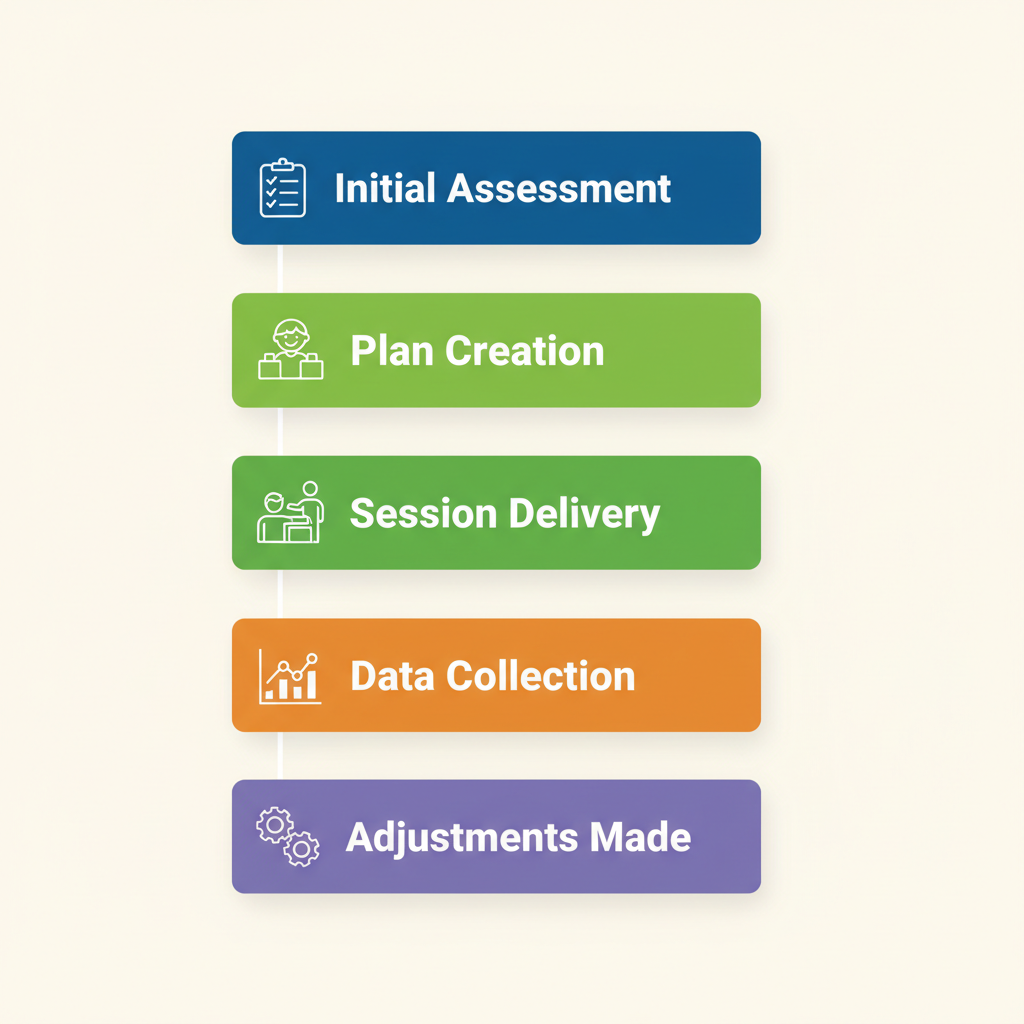
ABA therapy process: assessment, planning, delivery, monitoring, and family updates
Key benefits of ABA therapy for children with autism spectrum disorder
This infographic highlights how our structured yet fun methods lead to noticeable advancements, setting the stage for even greater impacts in early years.
Benefits for Toddlers in Early Intervention
What advantages does ABA therapy for toddlers in Columbia, Missouri, offer for foundational growth? We prioritize early intervention to catch developmental windows, using gentle, play-focused techniques to address emerging challenges before they intensify.
The CDC notes that starting ABA before age three can lead to significant reductions in challenging behaviors, with one study quoting, “Early intensive behavioral intervention results in improved adaptive behaviors and cognitive skills.” In our programs, toddlers gain through 1:1 sessions that teach basic routines, like following simple instructions or imitating actions, cutting tantrums by reinforcing positive choices.
For instance, a young client in our care began using signs to communicate wants, easing frustration and family stress. This early skill-building for Missouri kids lays groundwork for language and emotional regulation.
- Imitation of actions: Sparks learning through modeling.
- Following one-step directions: Promotes routine adherence.
- Reducing outbursts: Via positive reinforcement strategies.
In Columbia, ABA therapy insurance coverage in Columbia, Missouri, helps families access these vital services affordably, ensuring timely starts without barriers.
Long-Term Outcomes and Family Support
How do sustained ABA gains and family involvement shape brighter futures? Our programs emphasize lasting independence, with data-informed adjustments that carry over to school and home, supported by caregiver training.
Long-term studies from sources like the CDC highlight ABA’s role in boosting school readiness and social integration, often leading to better academic performance years later. We incorporate parent coaching sessions where families learn reinforcement techniques, creating a unified support system. An example from our Columbia team: A family trained in home strategies saw their child’s self-help skills, like dressing independently, solidify over time.
This holistic approach fosters confidence and reduces reliance on services long-term.
- School readiness through routine mastery: Prepares for classroom success.
- Family training for consistent reinforcement: Strengthens home dynamics.
- Adaptive behavior gains: Supports lifelong independence.
Through local programs in Columbia, Missouri, we empower families with tools for ongoing progress, remembering that results may vary and consulting professionals is key for personalized advice.
How ABA Therapy Works in Daily Sessions
At Heart Core ABA, we make ABA therapy accessible and effective for families in Columbia, Missouri, by focusing on structured yet flexible daily sessions. Our approach integrates hands-on ABA therapy for children who learn differently, ensuring real progress through real connection and care that comes straight from the heart. From initial evaluations to ongoing adjustments, every step supports personalized therapy plans tailored to your child’s unique needs.
The Role of Assessment and Planning
We begin ABA therapy in Columbia, Missouri, with thorough initial evaluations led by our Board Certified Behavior Analysts (BCBAs). These assessments identify your child’s strengths, challenges, and specific behavioral goals, often coordinating with Missouri Department of Mental Health (DMH) autism centers like the MU-Thompson Center for comprehensive insights. This process ensures ABA therapy insurance coverage in Columbia, Missouri, is verified early, helping families navigate benefits seamlessly.
The planning phase creates an individualized treatment plan, outlining targets for skill-building in communication, social interaction, and daily routines. For instance, we collaborate with schools on Individualized Education Programs (IEPs) to align therapy with educational goals. Steps include functional behavior assessments using evidence-based tools from the Behavior Analyst Certification Board (BACB), which emphasize supervision ratios like one BCBA overseeing multiple Registered Behavior Technicians (RBTs) for quality control.
Tips for families: Share detailed observations about your child’s routines to refine the plan. This adaptive foundation sets the stage for session-based behavior support locally, making therapy feel collaborative from day one.
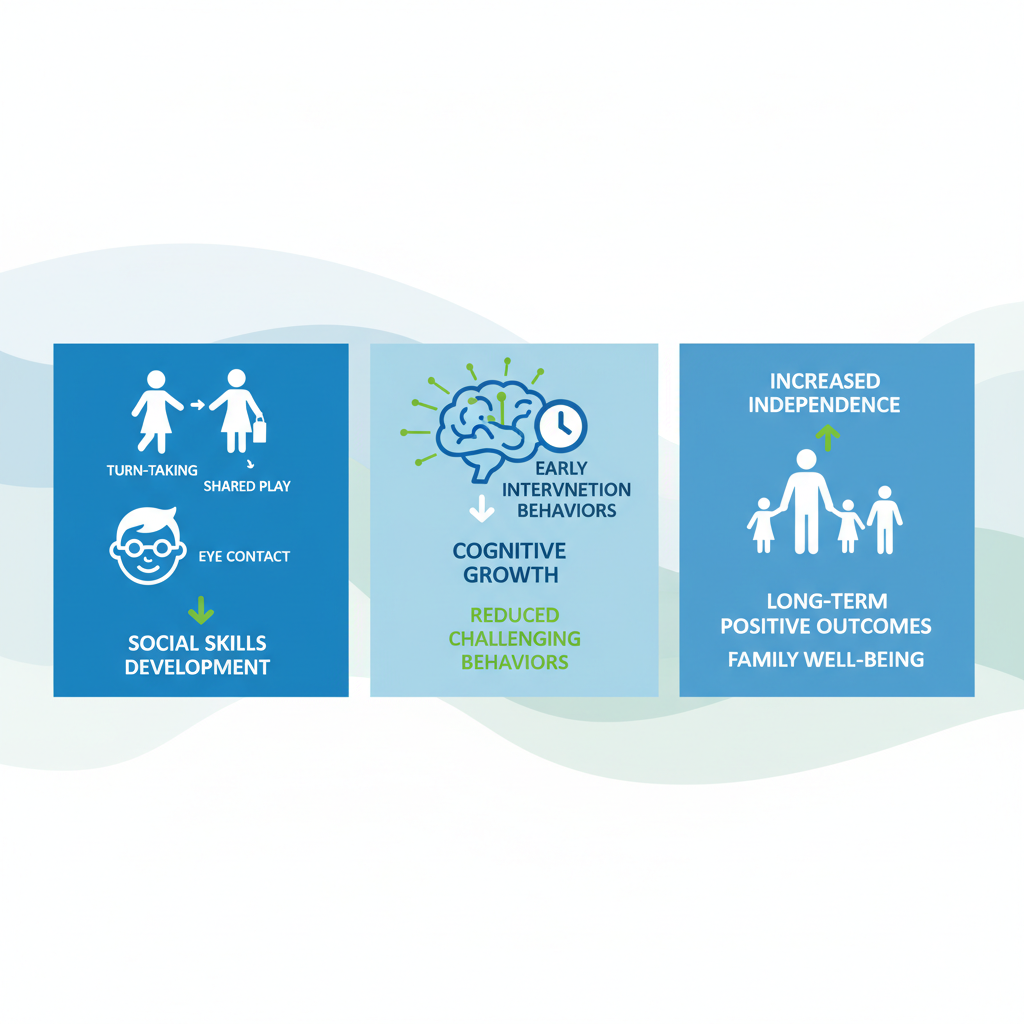
Key benefits of ABA therapy for children with autism spectrum disorder
ABA therapy process: assessment, planning, delivery, monitoring, and family updates
Building on this strong start, our assessments not only pinpoint needs but also foster family involvement, ensuring plans evolve with your child’s development. This visual overview highlights how we connect each phase for consistent support.
Session Delivery by RBTs and BCBAs
Our sessions are delivered primarily by trained RBTs under close BCBA supervision, offering flexible formats like 1:1 instruction or small social skills groups. In Columbia, we provide aba therapy for kids columbia in natural settings such as in-home environments or school-based programs, promoting comfort and generalization of skills.
Techniques include discrete trial training for structured learning and natural environment teaching through play-based activities, like using toys to encourage turn-taking. For ABA therapy for toddlers in Columbia, Missouri, early sessions might focus on imitation games during daily playtime, lasting 2-3 hours several times a week. RBTs implement these with enthusiasm, while BCBAs join for modeling and oversight, maintaining BACB standards for effective intervention.
- Warm-up with preferred activities to build rapport.
- Targeted skill practice using prompts and reinforcement.
- Cool-down with review and positive feedback.
We recommend scheduling around your toddler’s routines for maximum engagement, turning therapy into joyful, adaptive interventions in Missouri.
Progress Monitoring and Adjustments
Tracking progress is central to our ABA therapy, where RBTs collect real-time data on behaviors and skills during sessions. This includes frequency counts of target responses and ABC (antecedent-behavior-consequence) charts to analyze patterns, shared weekly with families for transparency.
Adjustments occur through BCBA-led reviews, modifying plans based on data trends–such as intensifying social goals if a child shows readiness. In Missouri, we tie this to DMH resources for sustained support, ensuring therapy remains relevant amid changes like school transitions. For example, if a toddler masters a skill at home, we extend it to community outings.
Our tips: Attend family training sessions to reinforce gains at home. This ongoing monitoring drives real progress, adapting to each child’s pace without rigid timelines.
By emphasizing family updates and IEP coordination, we ensure our hands-on approach delivers consistent, heart-centered care that evolves with your family.
Best Practices for Accessing ABA Therapy
At Heart Core ABA, we understand how overwhelming it can be to start ABA therapy for your child in Columbia, Missouri. Families often face challenges like finding the right providers and understanding costs, but with the right steps, you can navigate this process smoothly. We focus on hands-on ABA therapy for children who learn differently, emphasizing real progress through real connection and care that comes straight from the heart.
Finding Qualified Therapists in Columbia
Selecting the right therapists is crucial for effective ABA therapy in Columbia, Missouri. Local provider selection in Missouri requires verifying credentials to ensure your child receives quality care. Without proper qualifications, therapy may not yield the personalized therapy plan your family needs.
To find qualified professionals, start by confirming that providers hold Board Certified Behavior Analyst (BCBA) certification from the Behavior Analyst Certification Board. Look for Registered Behavior Technicians (RBTs) who are supervised by BCBAs, as they deliver the day-to-day 1:1 therapy. We recommend searching through state directories and reaching out to autism support networks. Here are key steps:
- Contact the Missouri Department of Mental Health (DMH) for approved centers like the MU-Thompson Center for Autism in Columbia.
- Schedule interviews to discuss experience with autism spectrum disorder and alignment with IEPs.
- Verify insurance verification and Medicaid assistance to match your needs.
For reliable options, explore aba autism therapy columbia providers who offer BCBA assessment and supervision. Resources include DMH listings and local autism advocacy groups, which can connect you with vetted options. Remember, results may vary, so consult a healthcare professional for guidance.
Navigating Insurance and Costs
Understanding ABA therapy insurance coverage in Columbia, Missouri, helps families manage financial barriers. Costs can be significant, with studies showing lifetime expenses for autism care averaging over $3 million compared to about $272,000 for typical development, largely due to therapies like ABA that may run up to $47,000 annually. However, options like Medicaid and private plans often help, though coverage may vary by provider and policy.
Begin by verifying benefits through your insurer or a service that handles insurance verification. In Missouri, Medicaid covers ABA for eligible children under prior authorization. Private insurance options for ABA therapy in Columbia may require documentation of medical necessity. Follow these steps for approval:
- Gather your child’s diagnosis and referral from a qualified physician.
- Submit a prior authorization request, including assessment details.
- Appeal denials if needed, using resources from the CDC on accessing services.
General factors like session hours influence out-of-pocket costs, so discuss limits early. Access strategies for autism therapy include DMH programs for low-income families. Always verify insurance coverage, as prior authorization may be required, and information here is not a substitute for professional advice.
Starting and Maintaining Therapy
Launching ABA therapy for toddlers in Columbia, Missouri, sets the foundation for long-term success. Initial hurdles include assessments and family involvement, but in-home options make it accessible for young children. We prioritize early intervention for toddlers with play-based, personalized therapy plans.
Start with a comprehensive BCBA assessment to tailor goals to your child’s needs, aligning with school IEPs where possible. Opt for in-home ABA therapy to ease transitions, especially for toddlers. Maintain engagement through weekly parent updates and caregiver coaching. Key tips include:
- Attend initial sessions to learn techniques and build consistency.
- Schedule regular progress reviews to adjust the plan.
- Incorporate family training to reinforce skills at home.
For ongoing support, leverage social skills groups and school-based ABA therapy. Resources like the CDC’s treatment guidelines and local DMH centers offer tips on family roles. Best in-home ABA for toddlers in Columbia focuses on natural environments. Consult professionals, as results may vary.
Embracing ABA Therapy for Your Family’s Journey
As we wrap up this guide on ABA therapy in Columbia, Missouri, it’s clear that hands-on ABA therapy for children who learn differently offers real progress through personalized therapy plans. From understanding the core principles of skill-building and early intervention to navigating eligibility and benefits like improved communication and independence, families can embrace family-centered interventions that foster real connection. We’ve explored how these programs operate in everyday settings, emphasizing the importance of local autism support in Missouri to address challenges like those highlighted by organizations such as Hope for Three, which advocate for essential resources amid the financial realities of autism care. If you’re ready to find support, reach out to an aba therapist columbia mo in the community.
Key takeaways include:
- Early ABA therapy for toddlers in Columbia, Missouri, supports foundational skill growth when started young.
- ABA therapy insurance coverage in Columbia, Missouri, often eases access, with verification helping families begin smoothly.
- Collaborating with qualified professionals ensures tailored, effective support for your child’s unique needs.
At Heart Core ABA, we’re committed to care that comes straight from the heart, guiding you every step with our BCBA-led teams and weekly updates. Consult a healthcare professional to discuss options, and remember, results may vary, but with the right partnership, your family’s journey holds endless potential for growth and joy. Let’s take that first step together toward brighter tomorrows.
Resources












 At-Home
ABA Therapy
At-Home
ABA Therapy Best
ABA Therapists
Best
ABA Therapists BCBAs
Near Me
BCBAs
Near Me RBTs
Near Me
RBTs
Near Me