








ABA St Louis
Table of Contents
Exploring ABA Therapy Options in St. Louis
Navigating autism support in St. Louis can feel daunting for families, especially with over 1 in 36 children diagnosed, as noted by the CDC. At Heart Core ABA, we understand these challenges and are dedicated to providing accessible ABA Therapy St Louis options. Our hands-on ABA therapy for children who learn differently emphasizes real progress through evidence-based methods, fostering skills and family connections right here in your community.
Applied Behavior Analysis, or ABA, is a scientific approach that uses positive reinforcement to teach vital skills and manage challenging behaviors, making it ideal for early childhood autism. We connect families with ABA therapy providers in St. Louis offering personalized services like 1:1 sessions led by Registered Behavior Technicians under Board Certified Behavior Analyst supervision, along with parent coaching and IEP coordination. Our ABA early intervention in St. Louis targets preschool and school-aged children through in-home, school-based, or center-based programs, including insurance verification for Medicaid and private plans. For many parents, starting therapy raises questions about commitment and fit, but a simple consultation often brings clarity–one St. Louis family shared how our play-based sessions helped their toddler engage more confidently, building that real connection we care about.
Ahead, we’ll explore ABA fundamentals, benefits, and practical tips to guide your journey with behavioral support services in St. Louis and autism intervention programs locally, empowering collaborative progress together.
Key Principles of ABA Therapy
At Heart Core ABA, we believe understanding the key principles of ABA therapy empowers families to make confident choices for their child’s growth. Rooted in behavioral science, ABA focuses on individualized strategies that promote skill development and positive behaviors. In St. Louis, these principles adapt seamlessly to local needs, supporting children with autism spectrum disorder through evidence-based methods. Learn more about ABA Therapy St Louis MO. Let’s explore the core elements that make ABA effective.
Core Components of ABA
ABA therapy in St. Louis builds on foundational techniques designed to teach essential skills in natural, everyday settings. We emphasize positive reinforcement, where desired behaviors are encouraged through rewards, like praising a child for sharing toys during playtime to build social interactions. Data collection is another cornerstone; therapists track progress meticulously to adjust plans for real progress.
Key techniques include:
- Discrete trial training (DTT): Breaking skills into small steps with clear prompts and immediate feedback, ideal for learning routines like getting dressed.
- Natural environment teaching (NET): Embedding lessons into daily activities, such as practicing turn-taking during family meals for organic skill-building.
These components ensure hands-on ABA therapy for children who learn differently, fostering independence without overwhelming structures. By focusing on measurable outcomes, we help families see tangible advancements in communication and daily living skills.
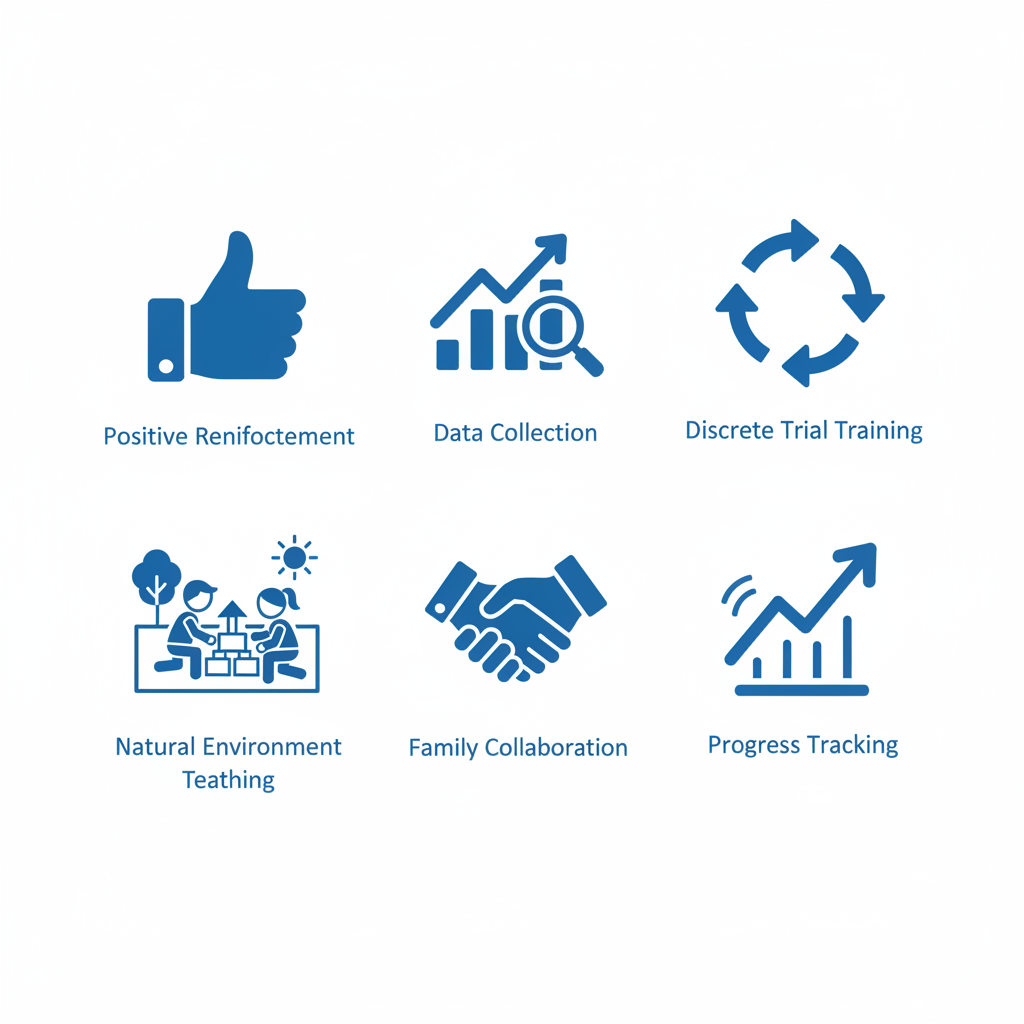
Icons of core principles in ABA therapy for skill development
This visual representation highlights how these building blocks interconnect, creating a supportive framework for child development in our community.
ABA in the St. Louis Context
In the St. Louis area, ABA principles align closely with Missouri’s autism services, making behavior analysis support locally accessible and family-centered. We at Heart Core ABA integrate state guidelines from the Department of Mental Health (DMH), which outline eligibility for early intervention programs starting at 18 months. For instance, ABA early intervention in St. Louis targets toddlers aged 18-36 months, using play-based methods to address developmental delays early on.
Missouri Medicaid covers ABA for qualified children, often requiring prior authorization that our team helps navigate. Private insurers follow similar processes, and we verify benefits to ease the burden on families. This local adaptation emphasizes collaboration with schools and IEPs, ensuring therapy complements educational goals. Autism behavioral programs in Missouri prioritize individualized plans, promoting real connection through caregiver coaching and home-based sessions. Results may vary, and we always recommend consulting healthcare professionals for personalized advice. By weaving in these regional resources, ABA becomes a practical tool for St. Louis families seeking sustainable support.
Role of Professionals in Delivery
Delivering effective ABA requires a dedicated team, with Board Certified Behavior Analysts (BCBAs) leading assessments and Registered Behavior Technicians (RBTs) providing hands-on implementation. Our BCBAs, holding advanced degrees and rigorous certification, design personalized therapy plans based on comprehensive evaluations, ensuring care that comes straight from the heart.
RBTs, trained and supervised by BCBAs, deliver 1:1 sessions with consistent techniques, like using reinforcement during social skills groups. This supervision model guarantees quality and adaptability, with weekly updates for parents. When choosing ABA therapy providers in St. Louis, look for those offering BCBA-led teams and insurance assistance, as we do at Heart Core ABA. Our approach includes family training to extend learning beyond sessions, building a partnership for long-term success. Verify insurance coverage, as prior authorization may be required, and remember this information is not a substitute for professional medical advice.
Advantages of ABA Therapy for Children
At Heart Core ABA, we see firsthand how Applied Behavior Analysis, or ABA therapy, transforms lives in St. Louis communities. This evidence-based approach focuses on building essential skills through positive reinforcement and personalized strategies, helping children with autism spectrum disorder achieve real progress. By integrating hands-on techniques tailored to each family’s needs, aba therapy st louis mo supports not just the child but the entire household, fostering connections that last a lifetime.
Skill Development Through ABA
ABA therapy in St. Louis excels at unlocking potential in communication, social interaction, and daily living skills for children on the spectrum. We witness families thriving as kids learn to express needs verbally or through gestures, reducing frustration and building confidence. Socially, children practice turn-taking and sharing in play settings, which translates to smoother interactions at local parks or playgroups.
Key gains include:
- Communication boosts: From non-verbal toddlers forming first words to school-aged children holding conversations, studies from the CDC show up to 47% improvement in IQ scores with consistent ABA.
- Social interaction progress: Behavioral gains from local therapy help kids recognize emotions and join group activities, vital for St. Louis community events.
- Daily living skills: Mastering tasks like dressing or eating independently empowers children, making routines less challenging for busy families.
These developments create a foundation for independence, aligning with early autism support in the area and addressing parents’ hopes for meaningful advancement.
Family and Long-Term Benefits
One of the most rewarding aspects of our work is empowering families through parent coaching, which extends ABA’s impact beyond sessions. We train caregivers to reinforce skills at home, leading to sustained progress that strengthens family bonds and reduces daily stresses. In Missouri, this coordination often ties into school Individualized Education Programs (IEPs), ensuring seamless support from therapy to classroom.
Notable benefits encompass:
- Parent coaching effects: Hands-on guidance helps parents implement strategies, fostering real connection and confidence in managing behaviors.
- Long-term outcomes: Children maintain gains over time, with reduced challenging actions like tantrums, promoting stability as they grow.
- Cost considerations: ABA therapy providers in St. Louis offer sessions at 20-60 hours per week, typically $50-150 per hour, often covered by insurance or Medicaid–verify your benefits for personalized estimates.
This holistic approach not only saves time and resources in the long run but also builds a supportive network, emphasizing care that comes straight from the heart. Results may vary, so consulting professionals ensures the best fit.
Age-Specific Advantages
Tailoring ABA to a child’s age maximizes its effectiveness, whether through early intervention or school-year support in St. Louis. For toddlers, ABA early intervention in St. Louis targets foundational skills during critical developmental windows, qualifying many for Missouri’s DMH programs that emphasize play-based learning to spark curiosity and adaptability.
Age-group distinctions highlight:
- Toddler benefits (ages 2-4): Focus on basic imitation and language sparks rapid gains, answering what early ABA offers by preventing skill gaps and easing transitions to preschool.
- School-aged advantages (ages 5-18): Builds on academics and peer relations, coordinating with IEPs for classroom success and social integration at local schools.
- Overall flexibility: Personalized therapy plans adapt to milestones, supporting what age groups benefit most through consistent, 1:1 instruction from our BCBAs and RBTs.
We prioritize these tailored paths to deliver real progress, always reminding families that individual outcomes depend on consistent engagement and professional guidance.
Implementing ABA Therapy Effectively
At Heart Core ABA, we believe in making ABA therapy accessible and effective for families in St. Louis. Our approach focuses on hands-on ABA therapy for children who learn differently, building real progress through real connection and care that comes straight from the heart. By understanding how we deliver sessions, integrate into daily life, and start early, parents can feel confident in the process.
Session Structures and Techniques
We design sessions around your child’s interests with a personalized therapy plan, typically lasting 10 to 40 hours per week depending on needs. In St. Louis programs, aba therapy st louis often includes one-on-one instruction where a Registered Behavior Technician (RBT) works closely with the child under BCBA supervision. These practical behavioral sessions locally emphasize techniques like pivotal response training, which uses natural opportunities to teach skills during play, and scripting to help with social dialogues.
Group activities and social skills groups offer peer practice in a supportive setting, fostering interactions in small teams. Play-based methods turn learning into fun, incorporating toys and games to build communication and daily routines. For example:
- Discrete Trial Training: Breaking skills into small steps with clear prompts and rewards.
- Natural Environment Teaching: Embedding lessons in everyday play for better retention.
- Errorless Learning: Guiding responses to ensure success and boost confidence.
This structure helps children make meaningful strides in a friendly, engaging way.
Integrating ABA in Home and School
Flexibility is key in our services, so we offer in-home ABA therapy that’s convenient for Missouri families, allowing therapy in a familiar environment to reduce anxiety and promote consistency. Home-based autism therapy in Missouri means RBTs visit your space, tailoring sessions to daily routines like mealtime or bedtime.
For school-based delivery, we collaborate on Individualized Education Programs (IEP) to support learning goals during school hours. ABA therapy providers in St. Louis like us provide consultations, training teachers on techniques, and monitoring progress to bridge home and classroom. Center-based options add socialization through structured group play, balancing one-on-one focus with peer exposure.
Pros of each setting include:
- In-Home: Personalized comfort and family involvement.
- School-Based: Real-world application with IEP coordination.
- Center-Based: Opportunities for group skills and professional oversight.
We ensure seamless transitions, keeping you updated weekly for that real connection.
Early Intervention Processes
For toddlers aged 18 to 36 months–the best age to start early intervention ABA in St. Louis–our process begins with a comprehensive assessment by a Board Certified Behavior Analyst (BCBA). This evaluates strengths, challenges, and developmental milestones, often qualifying through Missouri Department of Mental Health (DMH) resources like local autism centers for guidance.
Next comes goal-setting, where we craft a personalized therapy plan focusing on communication, social skills, and self-help. Sessions follow with hands-on, play-based ABA early intervention in St. Louis, delivered 1:1 or in small groups to build foundational abilities. Ongoing support includes progress monitoring every few weeks, adjusting as needed with parent coaching for home reinforcement.
Think of it as a simple flowchart:
- Assessment: Initial evaluation and DMH qualification.
- Goal-Setting: Define targets with family input.
- Implementation: Weekly sessions in home or center.
- Monitoring: Track data and refine for real progress.
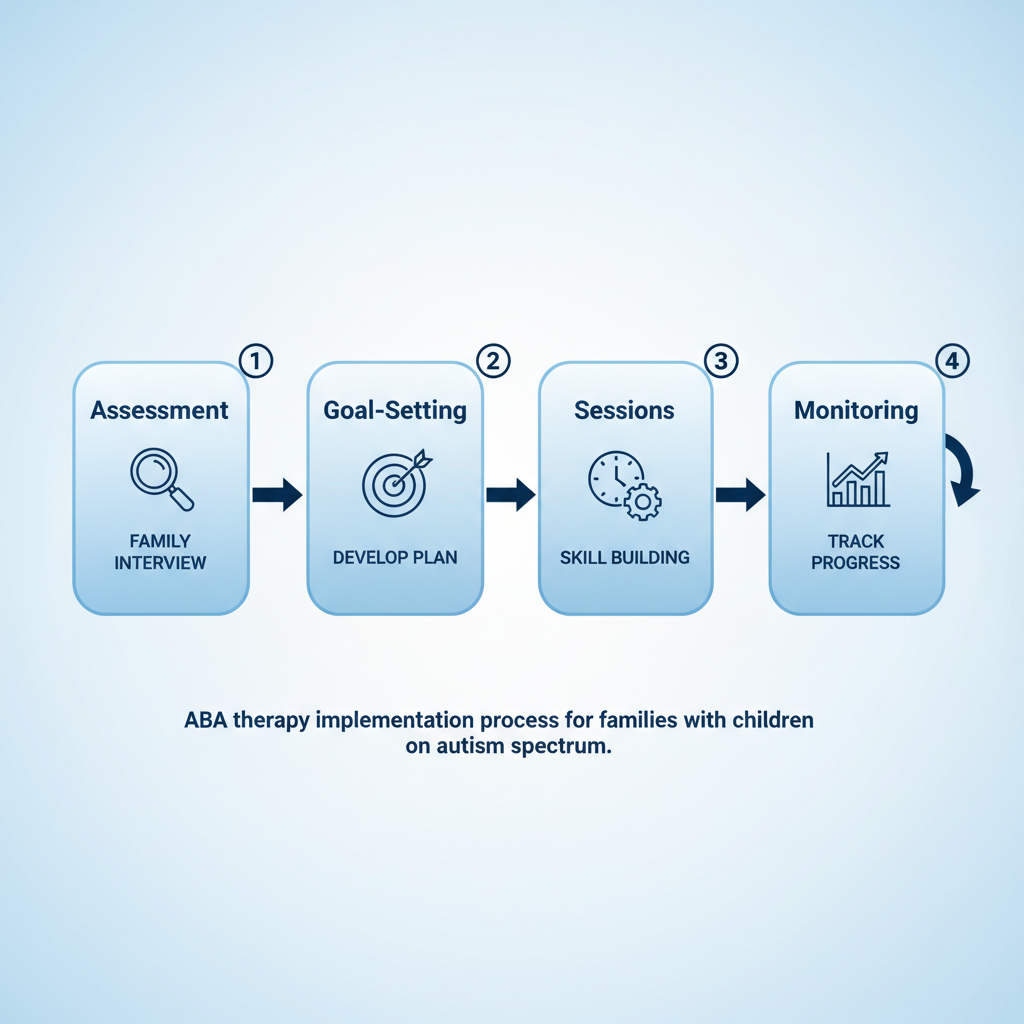
Step-by-step ABA therapy implementation process for effective family support
This structured path ensures early gains, with our team providing the heart-centered support Missouri families deserve. Results may vary, and we recommend consulting a healthcare professional for personalized advice.
Selecting and Maximizing ABA Services
At Heart Core ABA, we understand how overwhelming it can be to select the right support for your child with autism. Our hands-on ABA therapy for children who learn differently emphasizes real progress through real connection, and we’re here to guide families in St. Louis every step of the way. This section shares practical steps to choose providers, manage costs, and stay involved, drawing from our model of consistent staffing and regular family updates to ensure care that comes straight from the heart.
Choosing Qualified Providers
Finding the right ABA therapy providers in St. Louis starts with evaluating credentials and fit. Look for Board Certified Behavior Analysts (BCBAs) who oversee therapy plans, and check Registered Behavior Technicians (RBTs) for proper training and ratios–ideally 1:1 for personalized sessions. We help families verify these through initial consultations. For aba st louis, contact local centers like the MU-Thompson Center or SSM Cardinal Glennon via the Missouri Department of Mental Health resources.
To answer ‘How to choose an ABA therapy provider in St. Louis?’, use this sample checklist:
- BCBA Experience: Confirm at least 1,500 supervised hours and specialization in autism.
- RBT Consistency: Ask about staff retention to avoid disruptions in therapy.
- Assessment Process: Inquire about free initial evaluations to tailor a personalized therapy plan.
- Local Behavioral Experts: Seek those familiar with Missouri autism service selection, like our team offering in-home and school-based options.
Contact providers directly for assessments–many, including us, offer virtual intakes. This empowers you to find partners committed to measurable skill-building. Results may vary, so consult professionals for the best match.
Navigating Insurance and Costs
Securing ABA services in Missouri involves careful financial planning, and we assist with insurance verification to ease the process. Start by checking your plan’s coverage for autism treatments through your insurer or the Missouri Department of Mental Health guidelines, which outline Medicaid benefits for eligible families.
Follow these numbered steps for verification:
- Gather Diagnosis Documents: Obtain your child’s autism evaluation to submit for benefits.
- Contact Insurers: Call to confirm ABA coverage, including session limits and copays–many accept major private plans alongside Medicaid.
- Prior Authorizations: Work with providers for approvals; we coordinate this to avoid delays.
- Appeals if Denied: If needed, appeal with medical necessity letters from BCBAs.
For ‘What insurance do ABA therapy providers in St. Louis accept?’, know that most handle a range, but verify specifics. Private pay options exist for flexibility, typically $100-$200 per hour. Verify insurance coverage and that prior authorization may be required–information here isn’t a substitute for professional advice. This approach helps families qualify without surprise expenses.
Tips for Family Involvement
Active participation amplifies ABA outcomes, especially in ABA early intervention in St. Louis for toddlers. We encourage collaboration through weekly updates and goal-sharing sessions to align with your child’s Individualized Education Programs (IEPs).
Here are bolded tips for effective involvement: Share Daily Insights: Log behaviors at home to inform therapy adjustments–our parent coaching reinforces this. Practice Skills Together: Join home sessions for hands-on techniques, building consistency beyond clinic time. Track Progress Milestones: Use provider apps or journals to celebrate gains, addressing ‘How do I find an ABA therapist for my child in St. Louis?’ by focusing on responsive teams. Align with IEPs Locally: Coordinate with schools for seamless support in Missouri programs.
For younger kids, early intervention maximizes developmental windows. Engage as a team to foster real connection and progress. Consult healthcare professionals for tailored strategies, as outcomes vary by individual needs.
Next Steps for ABA Support in St. Louis
As we wrap up this guide on ABA therapy in St. Louis, remember the core principles of Applied Behavior Analysis: breaking down skills into manageable steps to foster meaningful growth in communication, social interactions, and daily routines. We’ve explored the evidence-based benefits, from improved independence to stronger family bonds, and practical tips for implementation, like choosing qualified providers and leveraging early intervention. Heart Core ABA’s hands-on approach emphasizes real progress through personalized therapy plans tailored to each child’s unique needs.
Key takeaways include the importance of starting ABA early intervention in St. Louis to maximize developmental gains, while actively involving families through parent coaching and regular updates. Don’t overlook insurance options–we’re here to help navigate coverage, including Medicaid, to make support accessible. For additional guidance, explore the Missouri Department of Mental Health’s list of autism centers, such as the MU-Thompson Center, which connect families to trusted local autism resources.
Ready to take the next step toward St. Louis behavioral support? Reach out to ABA therapy providers in St. Louis for an initial assessment and build a customized plan. Whether seeking autism counseling for kids st louis or ongoing therapy, we’re committed to care that comes straight from the heart. Contact us today–your child’s journey starts with that first connection.
Resources












 At-Home
ABA Therapy
At-Home
ABA Therapy Best
ABA Therapists
Best
ABA Therapists BCBAs
Near Me
BCBAs
Near Me RBTs
Near Me
RBTs
Near Me