Table of Contents
Enhancing Communication Through ABA Therapy
At Heart Core ABA, we understand the challenges many children with autism face in developing communication skills, such as speech delays or reliance on nonverbal cues. Communication ABA therapy offers a supportive path forward, using evidence-based how ABA therapy works to build verbal expression, social interactions, and independence through hands-on approaches tailored to each child’s needs.
Core principles like positive reinforcement and individualized goal-setting form the foundation of our programs. We address common hurdles, including nonverbalism, with techniques such as functional communication training ABA and PECS for nonverbal autism. These ABA strategies for speech development empower children to request toys verbally or express emotions clearly. Our Board Certified Behavior Analysts (BCBAs) lead assessments and create personalized plans, while Registered Behavior Technicians (RBTs) deliver compassionate, data-driven sessions in natural environments in Missouri and Illinois, including St. Louis.
From initial evaluation to ongoing progress tracking, we prioritize family involvement for real progress and connection. As we guide families through these steps, preparing effectively sets the stage for meaningful advancements in your child’s communication journey.
Preparing for Effective Communication ABA Therapy
We understand preparing for communication ABA therapy can feel overwhelming, but our streamlined process at Heart Core ABA makes it straightforward and supportive. Whether in home or school settings across Missouri and Illinois, including cities like St. Louis and Kansas City, these initial steps help families build a strong foundation for your child’s progress in speech-focused ABA. By gathering key information upfront, we tailor interventions like functional communication training aba to address early signs of communication needs in toddlers, such as limited eye contact or delayed babbling.
To get started, follow this checklist:
- Contact us: Complete our online intake form on heartcoreaba.com to connect with our team for a free consultation.
- Verify benefits: Provide insurance details for our quick verification process—typically completed within 48 hours, per our BCBA assessment guidelines.
- Prepare documents: Gather medical records, recent evaluations, and a list of your child’s daily routines to inform initial steps in autism communication programs.
- Involve family: Share observations about communication challenges, like struggles with nonverbal cues, to guide goal-setting during the board certified behavior analyst-led in-home assessment.
Preparation matters because it ensures personalized plans that track progress from the start, answering questions like how ABA supports toddler language skills or helps nonverbal children express needs. Early intervention, as shown in our resources, boosts outcomes by 30% in social communication for young children. For a smooth launch, create a quiet home space and discuss expectations with us—we match consistent RBTs for continuity. Once prepared, begin with assessment—our first key action.
Conducting the Initial Communication Assessment
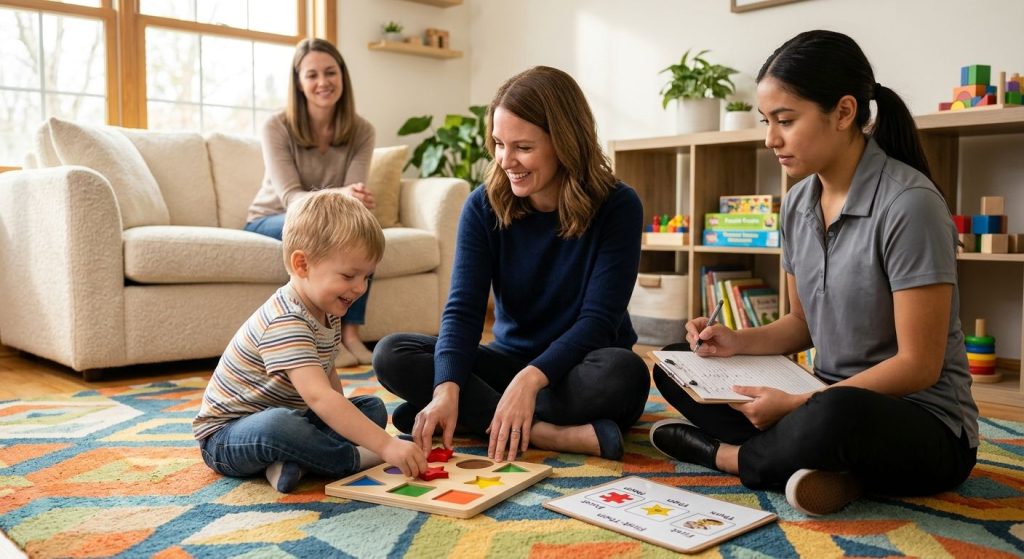
We’ll guide you through the initial assessment for communication ABA therapy, where our experienced Board Certified Behavior Analysts (BCBAs) evaluate your child’s current skills in their natural home environment. Serving families in Missouri and Illinois areas like St. Louis and Kansas City, this hands-on process identifies communication strengths and needs to build personalized plans for real progress and connection.
Instructions for Assessment Day:
- Schedule your in-home visit with one of our 42 BCBAs, typically lasting 1-2 hours. We’ll observe verbal and nonverbal cues during play interactions, noting responses without implying any diagnosis.
- Participate in a family interview about daily routines to gather insights on current communication levels.
- Our team collects data using tools like checklists for speech delays and pecs for nonverbal autism, establishing a baseline communication analysis for evaluating speech skills in ABA. This includes exploring functional communication training aba techniques tailored for toddlers.
Why It Matters: This step ensures therapy aligns with your child’s unique needs, answering how ABA therapy develops communication in children through targeted insights. By setting clear baselines, we prioritize goals that foster confidence and independence.
Preparation Tips: Create a calm space by minimizing distractions and have examples of your child’s routines ready. Relax; our compassionate approach focuses on observation to support your family’s journey.
With baselines set, next define clear objectives.
Setting Personalized Communication Goals
At Heart Core ABA, we work hand-in-hand with you to set personalized communication goals that fit your child’s unique needs in our Missouri programs. This collaborative process starts with reviewing assessment data alongside our Board Certified Behavior Analysts (BCBAs) to identify strengths and areas for growth. We prioritize goals like requesting items or responding socially, using SMART criteria adapted for ABA therapy—specific, measurable, achievable, relevant, and time-bound. Parents play a key role in selecting these objectives, ensuring they align with family priorities and daily routines, such as building skills for playdates in Springfield or school interactions in St. Louis.
Why focus on tailored goals? They drive real progress by addressing your child’s developmental level, fostering confidence and independence through hands-on ABA therapy. This approach, informed by best practices in goal setting, creates meaningful connections that matter most to your family.
Here are some tips for defining speech objectives:
- For toddlers: Use functional communication training ABA to teach simple requests, like pointing to a toy with PECS for nonverbal autism.
- For older children: Target advanced communication ABA therapy goals, such as greeting peers during social skills groups.
Goals in hand, let’s apply FCT to bring them to life.
Implementing Functional Communication Training
At Heart Core ABA, we implement functional communication training ABA to help children with autism replace challenging behaviors with practical ways to express needs, especially during in-home sessions in St. Louis and surrounding Missouri areas. This approach in communication ABA therapy begins by identifying preferred responses, such as pointing to a picture or saying a simple word, to teach functional responses like manding for a favorite toy or snack. Our trained RBTs, under BCBA oversight, use prompting techniques—starting with full guidance and fading to independence—to build these skills, adapting for nonverbal toddlers through gestures or devices. We collaborate with families to incorporate learner and caregiver preferences, ensuring the chosen communication method feels natural and effective.
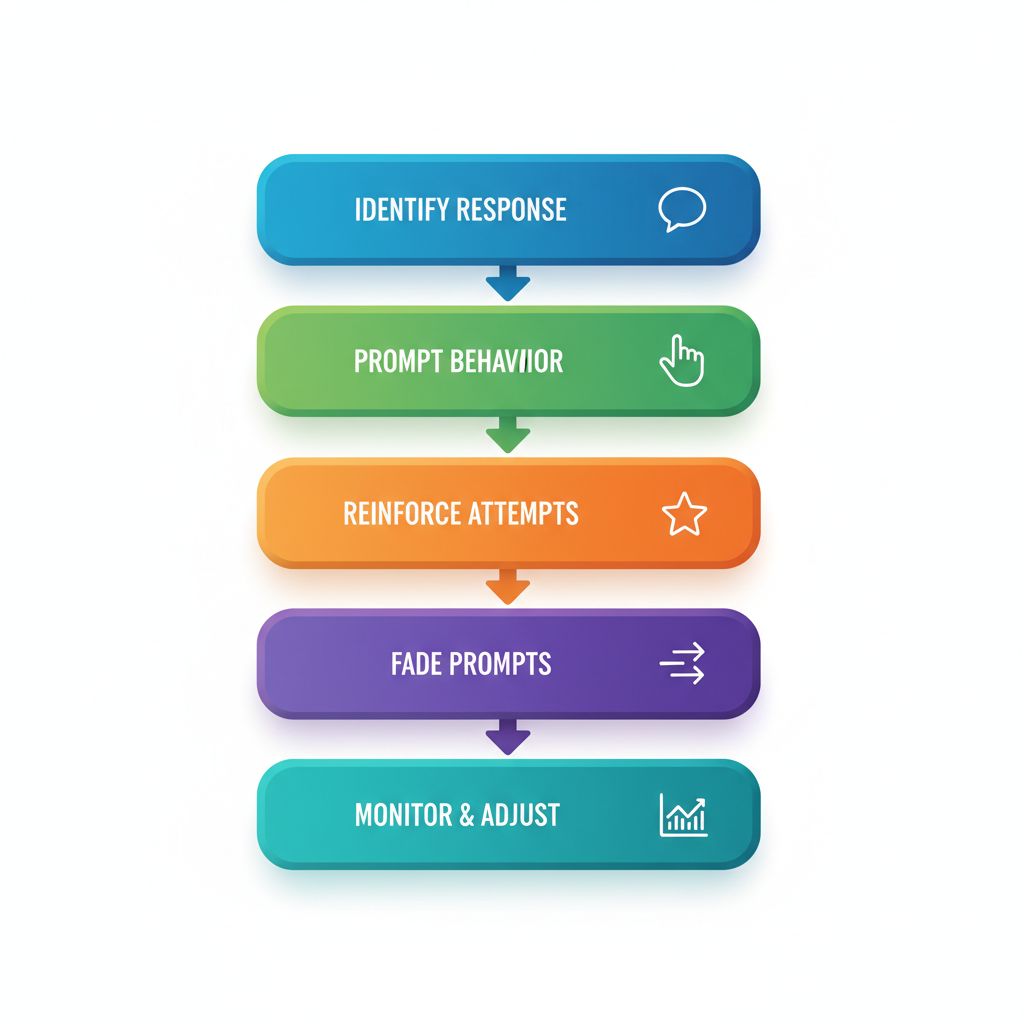
We find this empowers children to communicate more clearly, often leading to noticeable reductions in tantrums or frustration as they learn to voice wants instead. By tracking progress weekly, families see improvements in speech development and overall behavior during ABA sessions.
For success, reinforce new responses immediately with the preferred item, and adjust based on preference assessments to maintain motivation. Vary scenarios in home settings to generalize skills. FCT lays the groundwork for better expression; next, explore visual aids to further support nonverbal children.
Introducing the PECS System for Nonverbal Support
At Heart Core ABA, we recommend starting simple with the Picture Exchange Communication System (PECS) as a key part of our hands-on ABA therapy. This picture-based communication tool helps nonverbal children initiate requests and exchanges right in their home environment. Ideal for families in our Illinois and Missouri locations, like St. Louis or St. Charles, PECS integrates seamlessly with functional communication training in ABA to build essential skills.
PECS unfolds in six phases: First, children learn to exchange a picture for a desired item with a communicator’s help. Next, they travel to request independently. Phase three introduces picture discrimination, while phase four adds sentence structure using a sentence strip. Phases five and six focus on responding to questions and commenting. RBTs lead these sessions, using basic materials like laminated picture cards and a communication book.
Why choose PECS for nonverbal autism? It empowers toddlers to express needs, often paving the way for verbal speech through consistent communication ABA therapy. Studies show it boosts initiation and reduces frustration, fostering real progress and connection in young learners.
For tips, monitor progress weekly with data on exchanges and exchanges per session. Customize pictures to your child’s interests, and pair with parent coaching for home practice. We blend PECS with FCT to reinforce functional responses, ensuring personalized success in building communication, confidence, and independence.
Building Imitation Skills for Language Growth
At Heart Core ABA, we prioritize hands-on ABA therapy to build imitation skills as a key precursor to verbal communication. Our imitation skills in ABA approach starts with motor imitation, like copying gestures such as waving or clapping, and progresses to verbal tasks, such as echoing simple sounds. For toddlers receiving early intervention in Columbia or St. Louis, we use structured prompts like physical guidance that fade over time, alongside naturalistic play. Games like mirror movements or toy imitation keep sessions engaging, directly addressing speech development techniques while tying into tools like PECS for nonverbal autism.
These skills play a vital role in receptive language growth, enabling children to understand and respond to instructions, which enhances overall communication ABA therapy. By fostering imitation early, as ABA experts emphasize through strategies like reciprocal imitation training, we support foundational learning that boosts social interactions and independence.
We love using fun activities, such as contingent imitation during playtime, to reinforce these behaviors naturally. Track progress with weekly data on response accuracy to adjust plans. Imitation supports growth; now measure it.
Tracking Progress in Communication Skills
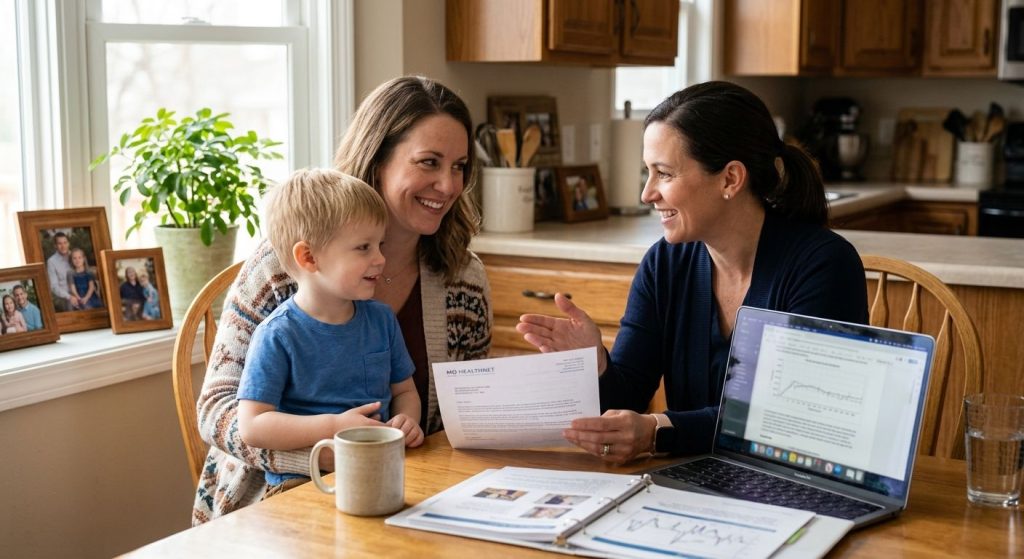
At Heart Core ABA, we believe in hands-on ABA therapy that delivers real progress through careful monitoring. In communication ABA therapy, we track advancements using structured tools like ABC data, which records the antecedents, behaviors, and consequences of your child’s interactions. This helps us measure language advancements accurately. For instance, during functional communication training ABA, we log how often your child uses words or signs to request items. Similarly, with PECS for nonverbal autism, we graph exchanges of picture cards to visualize gains over time. Our team provides weekly parent updates featuring these simple graphs, showing trends in skills like manding or labeling. These methods allow us to adjust plans promptly, ensuring personalized support for your child’s success.
Tracking progress is essential because it reveals what works best for your child. By spotting trends in the data, we can refine techniques to build communication, confidence, and independence. Parent involvement strengthens this process, as your insights help us tailor therapy effectively.
Here are practical tips: Review weekly graphs together to discuss successes, like increased PECS initiations. Share observations from home to inform adjustments. Celebrate small wins to motivate continued growth. Data guides us; involve parents next through our coaching sessions.
Engaging Parents Through Coaching Sessions
At Heart Core ABA, we provide hands-on guidance through parent coaching sessions that complement our receptive language strategies autism. These weekly meetings focus on reinforcing communication skills at home, using functional communication training aba techniques to build confidence and independence. We model simple role-plays, like prompting a child to request a favorite toy with pictures or words, ensuring families feel supported in our family-centered model.
This approach fosters consistency across environments, accelerating progress in communication aba therapy. By involving parents, we create family-supported communication growth, making everyday interactions more effective and reducing frustration for children.
For home tips, practice pecs for nonverbal autism by setting up visual schedules for meals or playtime. Share observations during feedback loops so we can adjust strategies together. Coaching strengthens these foundations; next, we’ll address common hurdles in implementation in practice.
Troubleshooting Common Communication Challenges
In our hands-on ABA therapy, we’ve noticed that communication ABA therapy can sometimes hit roadblocks, especially for children working on building communication, confidence, and independence. Families in areas like St. Louis, Missouri, or O’Fallon, Illinois, often face stalls in progress, such as plateaus where a child resists using tools or shows frustration during sessions. These challenges, like sudden drops in engagement with functional communication training aba or fading interest in pecs for nonverbal autism, are common but manageable with the right adjustments.
Identifying these issues early helps prevent setbacks. For instance, signs of a stall in functional communication training aba might include the child avoiding exchanges or only using basic responses inconsistently. With pecs for nonverbal autism, watch for repeated errors in picture sequencing or reluctance to initiate requests. Overcoming speech barriers in ABA could manifest as tantrums when prompts are too repetitive, signaling the need for environmental changes.
Here are practical solutions we’ve implemented successfully in our in-home services:
- Vary prompts and settings: If a child plateaus, switch from verbal cues to visual ones, or move sessions to different rooms to reignite interest, drawing from cost-effective receptive strategies like match-to-sample techniques that build understanding without overwhelming the learner.
- Involve a board certified behavior analyst: Our BCBAs review progress and modify plans, such as intensifying parent coaching to reinforce skills at home or introducing new AAC methods to differentiate from PECS, ensuring tailored support for nonverbal toddlers.
- Parent troubleshooting: Track daily responses and note patterns, like successful functional communication examples (e.g., handing a card for ‘juice’), then share with your therapist for quick tweaks.
Adjustments like these foster iterative progress, turning potential frustrations into breakthroughs that align with your child’s unique needs. They matter because consistent communication builds real connections in everyday life.
For tips, reach out to our team in Missouri or Illinois—we’re here to help refine your plan. With challenges managed, reflect on your journey toward personalized success.
Advancing Your Child’s Communication Journey
At Heart Core ABA, we guide families through communication ABA therapy with a clear path from initial assessments to personalized coaching. We start with in-home evaluations led by our Board Certified Behavior Analysts, then develop tailored plans incorporating techniques like functional communication training aba and pecs for nonverbal autism. These methods build foundational skills, fostering sustained speech development in ABA while emphasizing real progress in everyday settings.
Key takeaways include measurable gains in independence, where children gain confidence through hands-on ABA therapy. Families play a vital role, receiving weekly updates to track advancements and adjust strategies. With over 2,500 sessions annually across Missouri and Illinois, including robust programs in St. Louis, we focus on long-term autism communication support without promises of cures, just steady growth.
We’re here to support your family’s progress. Take the next step by completing our intake form or contacting us today for compassionate, family-centered care that builds communication, confidence, and independence.
Resources
- Learn How ABA Therapy Builds Essential Life Skills
- Access ABA Programs and Board Certified Analyst Details
- Explore Therapy Processes and Manage Site Cookies Effectively
- Navigate Programs and Find Local ABA Support Areas
- Discover Social Skills Groups for Autism Development
- Customize Cookies and Explore ABA Therapy Resources
- Enable Analytical Insights for Better Therapy Experiences
- Enhance FCT in ABA with Learner Preferences
- Foster Imitation Skills for Autism Independence and Learning
- Build Receptive Language Strategies for Autistic Children